Info
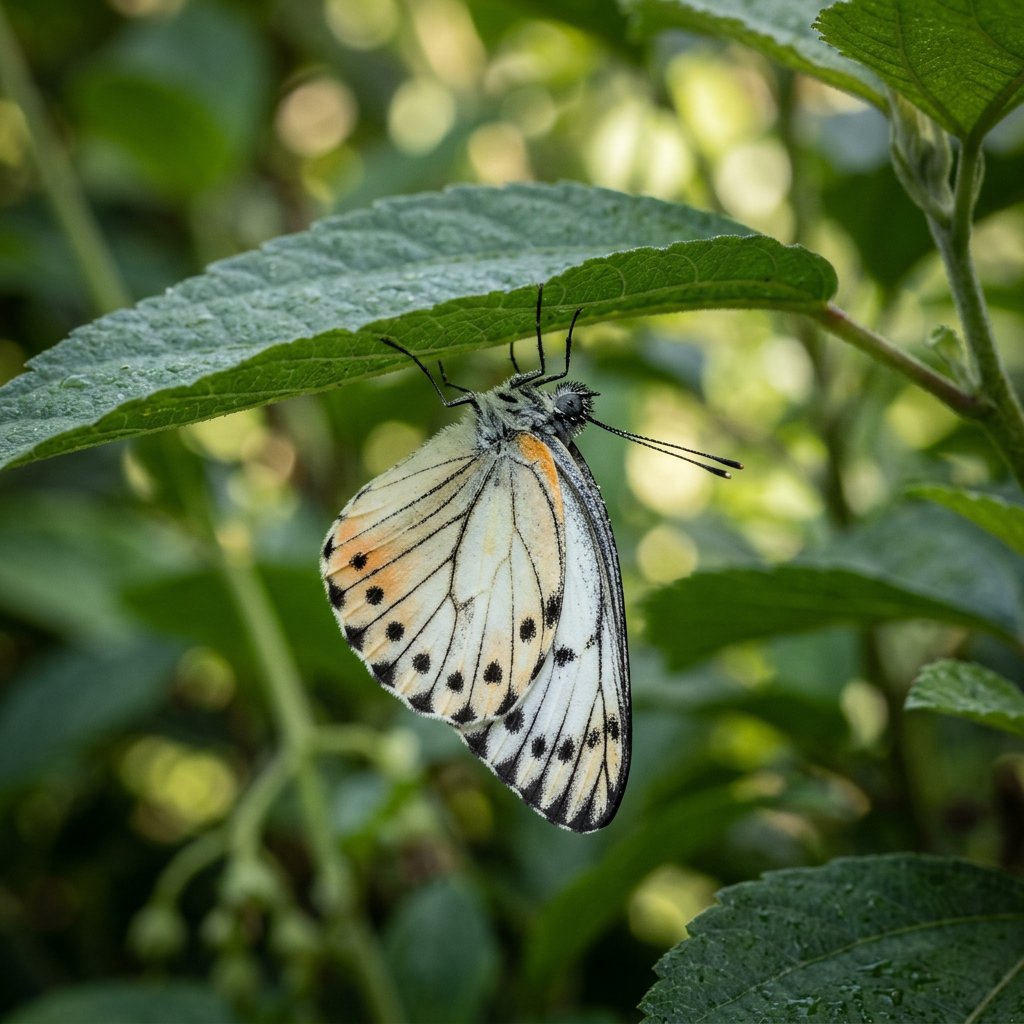
Known as the Common Dotted Border, this delicate butterfly is a frequent and welcome visitor to gardens across Sub-Saharan Africa. With its slow, almost "lazy" fluttering flight, it looks like a piece of white tissue paper caught in a gentle breeze. Its name comes from the perfectly placed black "ink" dots that line the edges of its wings, making it one of the easiest butterflies for beginners to identify.
🔍 How to Identify
- 🦋 Wing Color: The upper side of the wings is typically a snowy white or soft cream, providing a high-contrast background for its markings.
- ⚫ The "Dotted" Border: Look closely at the outer margins of both the forewings and hindwings; you will see a neat row of distinct black spots at the ends of the veins.
- 🟠 The Hidden Splash: On the underside of the wings, near the body (the base), there is a vibrant bright orange or yellow patch that is often visible when the butterfly is at rest with its wings closed.
🌿 Habitat & Ecology
- 🌺 Garden Friend: This butterfly is a "friend" to gardeners and is a prolific pollinator, moving slowly from flower to flower to sip nectar.
- 🍃 The Mistletoe Connection: Unlike many butterflies that favor common garden weeds, the larvae of the Common Dotted Border specialize in eating Mistletoe (Viscum species). This makes them a unique link in the local ecosystem, often found hovering near trees where mistletoe grows as a parasite.
- 🛡️ Aposematic Warning: Their slow flight isn't due to weakness; it’s a sign of confidence! Because their bodies contain bitter toxins derived from the mistletoe they ate as caterpillars, they are unpalatable to birds and don't need to fly fast to escape.
⚠️ Safety & Toxicity
- 🟢 Status: Completely harmless to humans and pets.
- 🚫 No Sting or Bite: This insect has no stingers, mandibles for biting, or irritating hairs. It can be safely observed at close range.
- 👅 Bitter Taste: While not "poisonous" to touch, they are chemically defended. If a curious pet were to catch one, they would likely find it extremely bitter and spit it out immediately.
✨ Fun Fact
The Common Dotted Border is a master of "advertising." Its bright colors and slow movement are a biological neon sign that tells predators, "I taste terrible, don't even bother trying!" This survival strategy is known as aposematism.
More Details








