Info
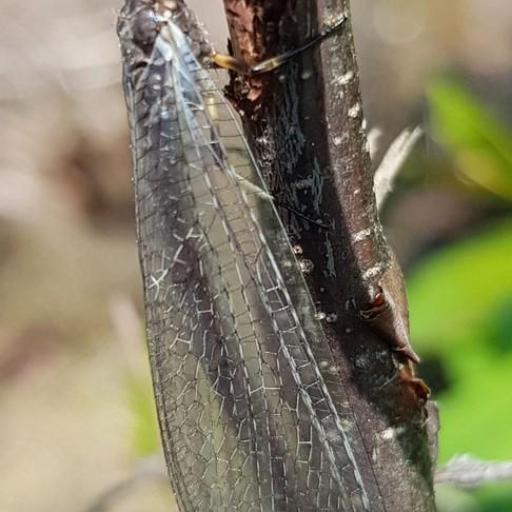
Commonly known as the Antlion, Myrmeleon formicarius is the ultimate "Dr. Jekyll and Mr. Hyde" of the insect world. While the adult looks like a delicate, fluttering damsel of the night, its larval form is a ferocious, sand-dwelling predator that earns its name by devouring ants in clever pitfall traps. Despite their fierce "lion" moniker and alien-like mandibles, they are completely harmless to humans and play a fascinating role in the ecosystem.
🔍 How to Identify
- ⚔️ The Mandibles (Larva): The young antlion has a plump, bristly body and a flat head equipped with two enormous, sickle-shaped jaws used to inject enzymes into prey.
- 📡 Clubbed Antennae (Adult): Unlike dragonflies or damselflies which have tiny antennae, the adult Antlion has prominent, thick, club-shaped antennae that curve at the ends.
- 🕸️ Lacy Wings: The adults possess four long, translucent, darkly-veined wings that they fold roof-like over their slender bodies when resting.
🌲 Habitat & Ecology
- ⏳ The Sand Pit Architect: The larvae are famous for digging perfect, funnel-shaped pits in dry, loose sand—often under forest overhangs or building eaves. They hide at the very bottom, buried in the sand, waiting for an ant to slide down the crumbling walls.
- 🌙 Nighttime Flutterers: While the larvae are active hunters 24/7, the adults are nocturnal and rather weak fliers. You’ll often find them resting on vegetation during the day or circling porch lights at night during the mid-summer months.
- 🐜 Ant Specialist: Their diet primarily consists of ants and other small ground-dwelling arthropods. Once the prey falls into the pit, the larva throws sand at it to cause a "landslide," ensuring the victim can’t climb out.
⚠️ Safety & Toxicity
- 🛡️ Status: Completely harmless to humans and pets.
- 🤏 Details: While the larva’s mandibles look intimidating, they are designed for tiny insects. If you pick one up, it might give a tiny, insignificant nip, but it has no stinger, no venom for humans, and does not carry diseases. They are beneficial "pest controllers" for your garden’s ant population.
✨ Fun Fact
In many parts of the world, Antlion larvae are called "Doodlebugs." This nickname comes from the winding, "doodled" trails they leave in the sand as they wander around looking for the perfect spot to dig their next trap!
More Details








