Info
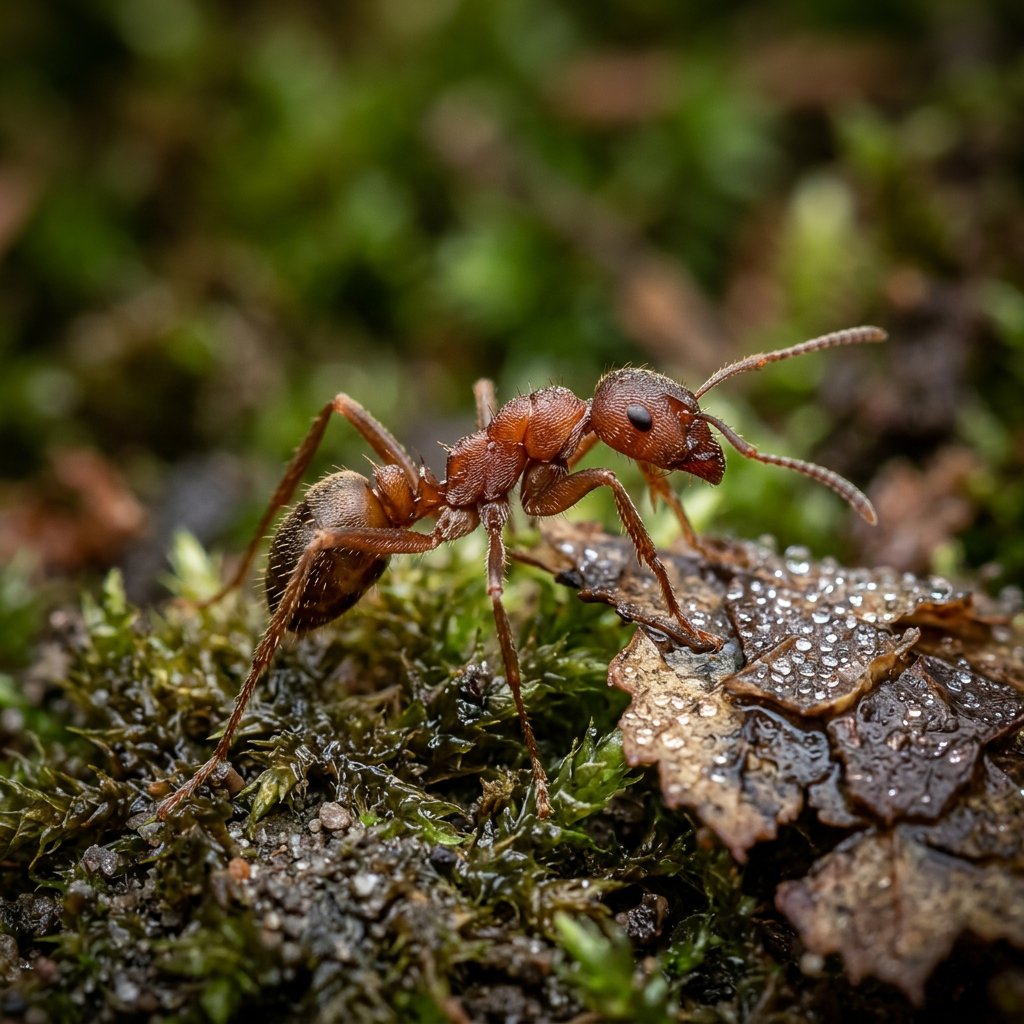
Meet the fiery "Common Red Ant," a small but mighty architect of the undergrowth. Often called the European Fire Ant, these insects are famous for their bold personalities and their tendency to defend their territory with a surprising "zip." While they may look like your average garden resident, they carry a secret weapon that sets them apart from their more passive cousins.
🔍 How to Identify
- 🔴 Coloration: A distinctive deep reddish-amber to rusty-brown color spans their entire body, though their heads may appear slightly darker or more matte than their shiny abdomens.
- 📏 Body Structure: These ants are relatively small, usually measuring between 4mm and 6mm. If viewed through a hand lens, you will notice two distinct "nodes" (small humps) on the thin waist connecting the thorax to the abdomen.
- ⚔️ The Stinger: Unlike many common garden ants that only bite and spray acid, Myrmica rubra possesses a visible, functional stinger at the very tip of its abdomen used for subduing prey and defense.
🌲 Habitat & Ecology
- 💧 Moisture Lovers: You won't usually find these ants in dry, sandy pavement cracks. They prefer "wet feet," nesting in damp soil, under decaying logs, beneath mossy stones, or in lush, overgrown gardens.
- 🐜 The Multi-Queen Strategy: Unlike some ant species that serve a single monarch, a single Myrmica rubra colony often hosts multiple queens. This "polygynous" lifestyle allows them to bounce back quickly from disturbances and expand into massive "super-colonies."
- 🍭 Honeydew Farmers: They are expert agriculturalists. They "farm" aphids by protecting them from predators like ladybugs; in return, the ants "milk" the aphids for a sugary substance called honeydew.
⚠️ Safety & Toxicity
- 🔥 The Sting: As the name "Fire Ant" suggests, they are quite aggressive. When disturbed, they don't just run away—they swarm and sting. The sensation is very similar to a brush with a stinging nettle, causing a sharp burning feeling and a small, itchy red welt.
- 🧒 Kids & Pets: While the venom is not generally dangerous to humans or animals, the experience is unpleasant. It is best to wear gloves when gardening in damp areas and keep curious pets away from large nests in tall grass to avoid multiple stings.
✨ Fun Fact
Myrmica rubra has a fascinating relationship with certain rare butterflies. The caterpillars of the Maculinea butterfly mimic the scent and sounds of ant larvae; the ants are so thoroughly fooled that they carry the caterpillars into their own nest and feed them like their own royalty!
More Details








