Info
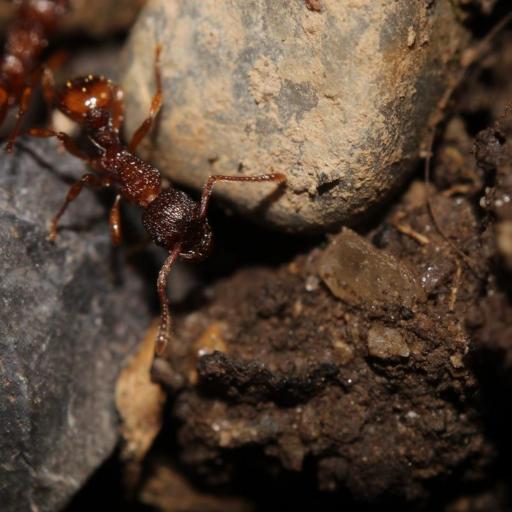
Known as the Rough Red Ant, Myrmica ruginodis is a resilient little architect of the forest floor and damp garden corners. Often mistaken for its more aggressive cousin, the Common Red Ant (M. rubra), this species is a vital "clean-up crew" for the ecosystem. While they are small, their social structures are complex, often featuring multiple queens living in harmony within a single colony.
🔍 How to Identify
- 🎨 Rugose Texture: Its scientific name comes from the "rugose" or wrinkled appearance of its thorax, which looks like it has been finely etched with tiny parallel grooves.
- ⚔️ Thoracic Spines: If you look closely with a hand lens, you’ll see two prominent, sharp spines pointing backward from the middle of its body.
- 🔴 Rust-Red Hue: They typically sport a deep, reddish-brown color that helps them blend into fallen leaves and decaying wood.
🌲 Habitat & Ecology
- 🍂 Shade Seekers: Unlike many ants that crave the baking sun, M. ruginodis prefers cool, moist environments. You will most likely find them under stones, inside rotting logs, or tucked into thick moss.
- 🐄 Aphid Herders: These ants are skilled "farmers." They protect colonies of aphids from predators like ladybugs, "milking" the aphids for a sugary substance called honeydew which serves as a primary energy source.
- 🐜 Predatory Instincts: While they love sugar, they are also active hunters, scavenging for small invertebrates and dead insects to provide protein for their developing larvae.
⚠️ Safety & Toxicity
- 🐝 Stinging Capability: Unlike common black garden ants, European Red Ants possess a functional stinger. If the nest is disturbed, they will defend it vigorously.
- 💥 The Sensation: A sting from M. ruginodis feels very similar to a brush with a stinging nettle—a sharp, burning prick followed by a small, itchy red bump.
- 👶 Low Risk: While uncomfortable, the sting is not dangerous to humans or pets unless there is a rare, specific allergy to ant venom.
✨ Fun Fact
These ants are surprisingly musical! They have a specialized "scraper" on their waist that they rub against their abdomen to produce high-pitched sounds (stridulation). While we can’t hear it without a microphone, they use these "songs" to communicate distress or to lead sisters to a delicious food source.
More Details








