Info
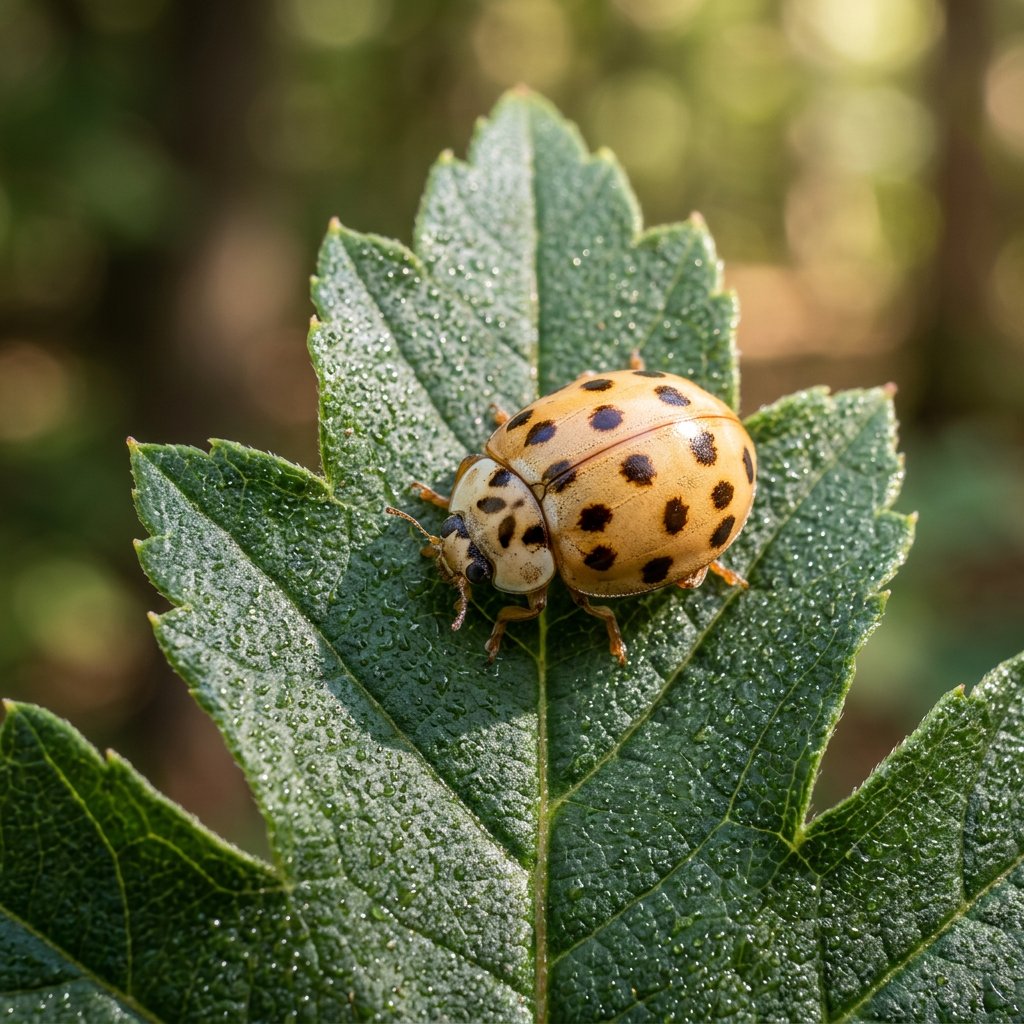
Known as the 18-spot Ladybird, this elegant beetle is the "special forces" unit of the ladybird world. While its cousins roam your rose bushes, this species is a specialist of the treetops, spending most of its life high in the canopy of coniferous forests. It is a gardener’s friend, though you’ll likely need a ladder or a pair of binoculars to see one in action!
🔍 How to Identify
- 🐞 The Spot Count: It features exactly 18 creamy-white spots arranged across a warm, brownish-orange or brick-red back.
- ⚪ The "M" Mark: Look at the pronotum (the shield behind the head); it has distinct white markings that often resemble a blurred "M" or a pair of white "shoulders."
- 📏 Body Shape: It is small and oval, roughly 4–5mm in length, and slightly more elongated than the common round garden ladybirds.
🌲 Habitat & Ecology
- 🌲 Conifer Specialist: This insect is almost exclusively found on Scots Pine and other evergreen trees. It is perfectly evolved to navigate the needle-thin branches where it hunts specialized pine aphids.
- 🏠 Canopy Dweller: Because it prefers the "penthouse" of the forest, it is often under-recorded by nature watchers. It rarely descends to ground level unless it is blown down by heavy winds or searching for a crevice in the bark to overwinter.
⚠️ Safety & Toxicity
- ✅ Harmless: The 18-spot ladybird is completely safe for humans and pets. They do not sting and are not known to bite.
- 🧪 Reflex Bleeding: Like most ladybirds, if it feels threatened, it may exude a tiny drop of pungent yellow fluid from its leg joints. This "reflex blood" tastes terrible to birds but is harmless to us—just wash your hands if you get some on you!
✨ Fun Fact
Even though it is considered a common species, the 18-spot ladybird was once thought to be rare simply because entomologists weren't looking high enough in the trees to find them!
More Details








