Info
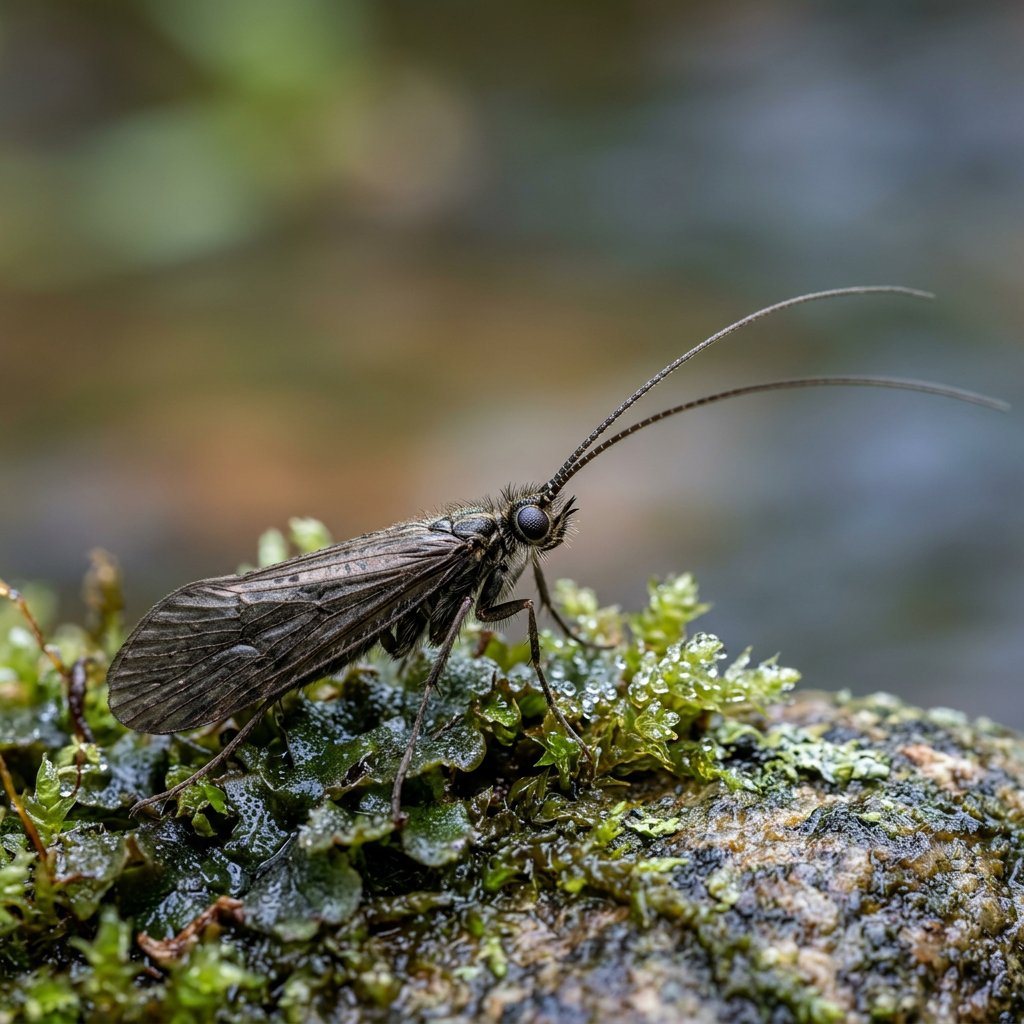
Often called the Black Silver-horn, Mystacides nigra is a delicate, jet-black caddisfly that looks like a tiny, elegant shadow dancing over the water’s surface. While they are frequently mistaken for small moths due to their fluttery flight, these "Long-horned" insects belong to the order Trichoptera—a group of "hairy-winged" insects that are essential indicators of a healthy environment.
🔍 How to Identify
- 📏 Extraordinary Antennae: The most striking feature is their antennae, which can be two to three times the length of their entire body, held out in a wide "V" shape.
- 🖤 Velvety Black Color: Unlike many of its brown or tan cousins, this species is almost entirely midnight black, often showing a subtle metallic blue or purple sheen under direct sunlight.
- 📐 Wing Structure: When resting, they fold their hairy wings vertically over their back in a steep, tent-like shape, hiding their body completely.
🌲 Habitat & Ecology
- 💧 Clean Water Lovers: You will find these insects near the margins of still or slow-moving freshwater, such as lakes, ponds, and clean rivers. They are highly sensitive to pollution, so seeing them is a sign of high water quality.
- 💃 Aerial Acrobatics: During the day and at dusk, males perform a unique "bobbing" dance in large swarms over the water to attract females, moving rhythmically up and down.
- 🏗️ Master Architects: Before they take flight, the larvae live underwater and build protective "houses" out of sand grains and silk. They are vital cleaners of the ecosystem, feeding on decaying organic matter.
⚠️ Safety & Toxicity
- 🛡️ Completely Harmless: These insects do not bite, sting, or carry diseases. They lack functional mouthparts to bite humans, as their short adult life is focused entirely on reproduction.
- 🐾 Pet Friendly: They are non-toxic to pets. In fact, they are a primary food source for trout, birds, and bats, making them a "snack" rather than a threat in the natural food chain.
✨ Fun Fact
Caddisfly larvae are such skilled builders that some artists have given them gold leaf and tiny pearls in aquariums. The larvae naturally incorporate these materials into their protective cases, creating "living jewelry." While Mystacides nigra prefers sand and silt, it shares this incredible innate architectural talent!
More Details








