Info
Often called the "True Armyworm," Mythimna unipuncta is famous for its dramatic and slightly intimidating lifestyle. When food runs out, thousands of these caterpillars march in unison across lawns and fields like a tiny, hungry infantry. While the adult moth is a subtle master of camouflage, the larvae are the real stars—or villains—of the story, capable of turning a lush green field into a brown wasteland in just a few days.
🔍 How to Identify
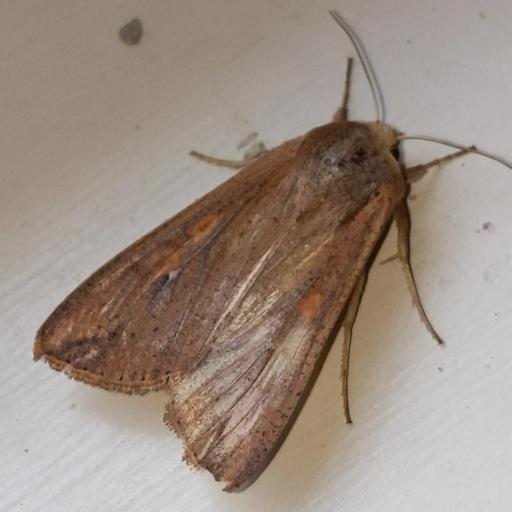
- 🦋 The "Unipuncta" Mark: The adult moth is a drab tan or reddish-brown, but it carries a "rank" on its wings: a single, distinct white dot (unipuncta) located right in the center of each forewing.
- 🐛 Striped Soldiers: The caterpillars are easily recognized by their colorful racing stripes. They have a dark grey or green body with prominent orange, white, and black longitudinal lines running from head to tail.
- 🌑 Hidden Faces: During the day, both the moths and the caterpillars are masters of hide-and-seek. The moths rest with their wings folded flat, looking exactly like a piece of dried grass or a dead leaf.
🌲 Habitat & Ecology
- 🌾 The Grain Glutton: This insect is a specialist in the grass family. It thrives in hay fields, corn crops, and suburban lawns. If it looks like grass, they will likely try to eat it.
- 🌬️ Long-Distance Travelers: These moths are incredible athletes. They don't survive harsh winters in northern climates; instead, they use high-altitude winds to migrate hundreds of miles north every spring to find fresh territory.
- 🌙 Night Raiders: They are strictly nocturnal. If you see your lawn looking ragged but can't find the culprit during the day, look closely at the base of the grass blades at dusk—that’s when the "army" emerges to feed.
⚠️ Safety & Toxicity
- 🛡️ Status: Completely harmless to humans and pets, but a major "foe" to the gardener.
- 🚫 No Sting or Bite: Despite their "army" name, they have no weapons. They do not sting, bite, or possess irritating hairs. They are safe to handle, though they may wiggle vigorously if picked up.
- 🐾 Pet Safety: If your dog or cat decides to snack on one, there is no cause for alarm; they are non-toxic. The primary risk is the potential for pesticides if you are treating a lawn for an infestation.
✨ Fun Fact
When a massive "army" of these caterpillars moves through a field, you can actually hear them! The sound of thousands of tiny mandibles chewing through grass blades creates a faint, rhythmic "crinkling" or "rustling" noise that can be heard on a quiet night.
More Details








