Info
Known as "Lineblues," these delicate butterflies are the hidden gems of the tropical and subtropical world. While they look like tiny scraps of blue paper fluttering near the ground, their survival strategy is a masterpiece of evolutionary trickery. Belonging to a diverse genus found across Asia and Oceania, they are frequent visitors to gardens, darting between flowers with surprising speed.
🔍 How to Identify
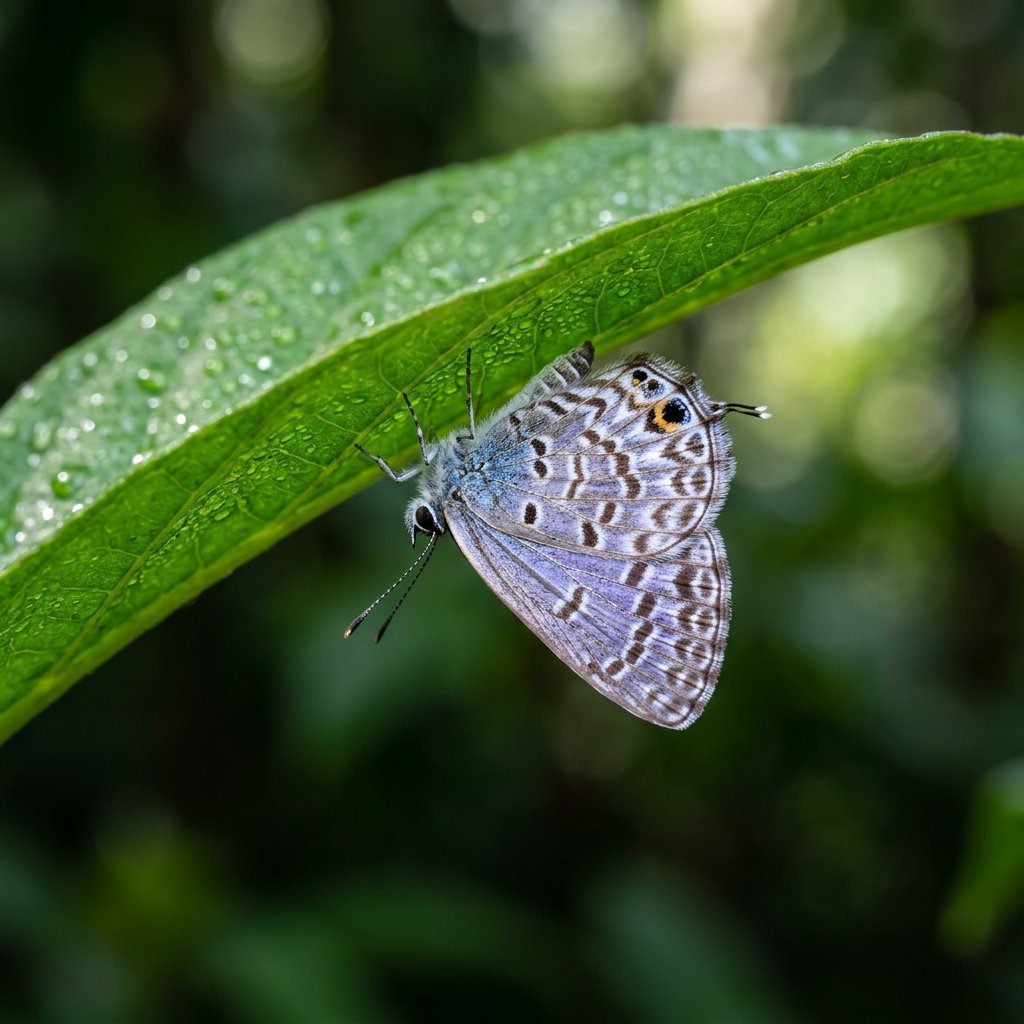
- 🦋 Underside Striations: Their name comes from the intricate, wavy white lines (striae) that crisscross a brownish-grey background on the underside of their wings.
- 🎨 Iridescent Upperside: When they open their wings to sunbathe, males reveal a stunning metallic blue or violet sheen, while females typically have broader dark borders around a lighter blue center.
- 👁️ The "False Head": Look closely at the bottom of the hindwings; they feature tiny, thread-like tails and dark eyespots that mimic a second head to confuse predators.
🌲 Habitat & Ecology
- 💧 Puddling Behavior: You will often find groups of male Lineblues gathered on damp soil or mud. This is called "puddling"—they are drinking mineral-rich water to improve their reproductive success.
- 🐜 Ant Alliances: The caterpillars of many Nacaduba species have a fascinating "secret handshake" with ants. They secrete a sugary liquid that ants love; in exchange, the ants act as aggressive bodyguards for the caterpillars.
- 🌸 Low-Flying Pollinators: They prefer to stay close to the ground, feeding on the nectar of small wildflowers and shrubs, making them excellent pollinators for garden floor species.
⚠️ Safety & Toxicity
- ✅ Harmless Friend: Lineblues are completely safe for humans and pets. They do not possess a stinger, nor do they bite.
- 🌿 Non-Toxic: Unlike some butterflies (like the Monarch) that eat toxic plants to become poisonous, Lineblues are generally non-toxic, relying entirely on camouflage and mimicry for protection.
✨ Fun Fact
✨ The "tails" on their hindwings actually wiggle in the wind, mimicking antennae. A bird or lizard will often strike at these tails thinking it’s the butterfly's head, allowing the Nacaduba to escape with only a minor wing tear instead of a fatal injury!
More Details








