Info
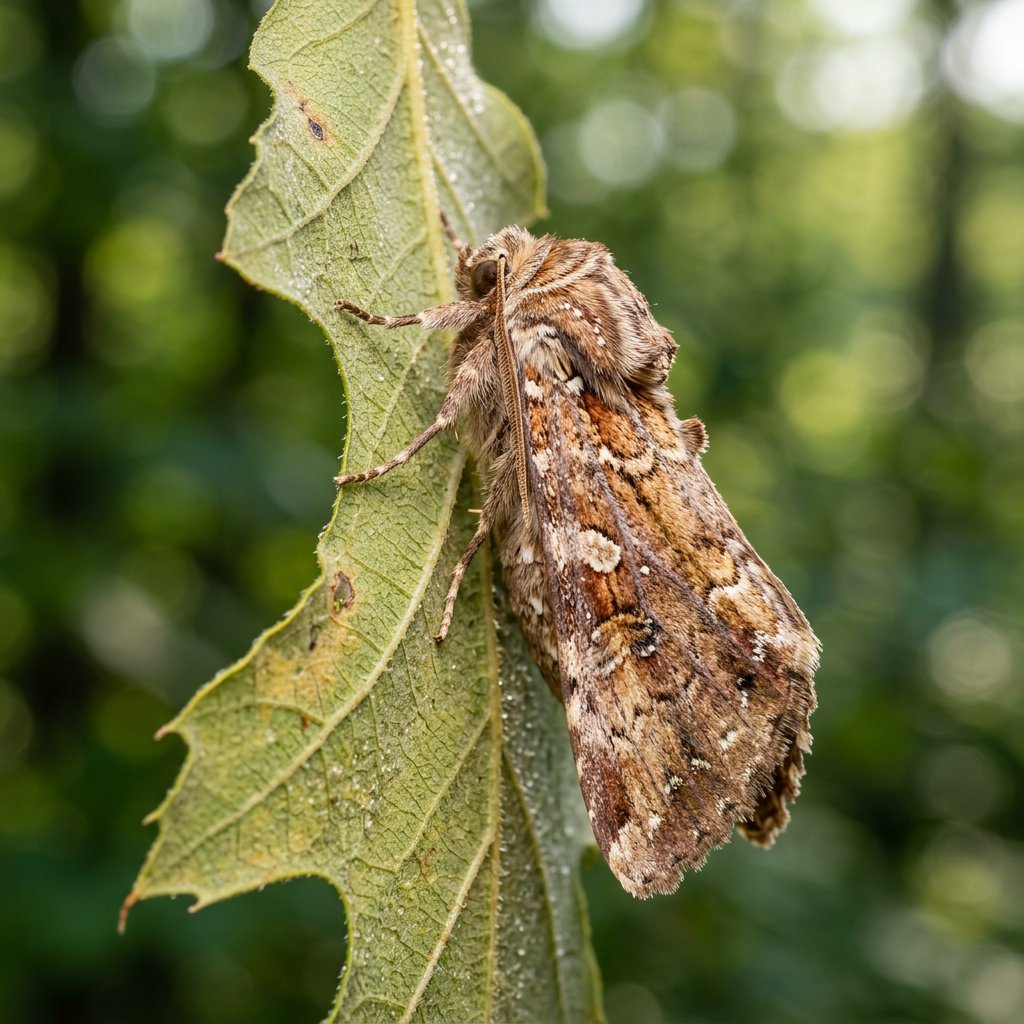
The White-dotted Prominent (Nadata gibbosa) is a master of disguise that looks more like a piece of toasted parchment than a living creature. Found across North America, this moth is a favorite among backyard naturalists for its "regal" appearance, featuring a thick, furry mane that makes it look like a tiny, winged lion. Its name "gibbosa" comes from the Latin word for "humped," referring to its distinctively peaked back.
🔍 How to Identify
- 🦋 The "Twin" Spots: The most reliable marker is the pair of small, bright white dots located near the center of each tan or yellowish-brown forewing.
- 🦁 The Thoracic Hump: When resting, the moth displays a very high, pointed tuft of hair on its thorax (the "mane") that mimics a jagged leaf edge or a broken twig.
- 🐛 The "Big-Headed" Larva: The caterpillar is a brilliant lime green, exceptionally plump, with a large, smooth head and a faint yellow line running down its side to blend in with leaf veins.
🌲 Habitat & Ecology
- 🌳 Deciduous Gourmet: These insects are forest dwellers that rely heavily on hardwood trees. You will most likely find them near Oak, Maple, Birch, and Poplar trees, which serve as the primary food source for their hungry larvae.
- 🌙 Nocturnal Stealth: The adults are strictly nocturnal and are highly attracted to light. During the day, they remain perfectly still; their wing shape and color are evolved to make them look exactly like a dried, fallen leaf to avoid predators.
⚠️ Safety & Toxicity
- ✅ Gentle Neighbor: The White-dotted Prominent is completely harmless. It does not bite, sting, or carry any known pathogens.
- 🐶 Pet & Human Safe: Unlike some "hairy" caterpillars that have stinging bristles, the Nadata gibbosa caterpillar is smooth and safe to touch, posing no threat to curious children or pets.
✨ Fun Fact
When the caterpillar feels threatened, it doesn't run; it pulls its head back and inflates its thoracic segments, making its "face" look much larger and more intimidating to birds!
More Details








