Info
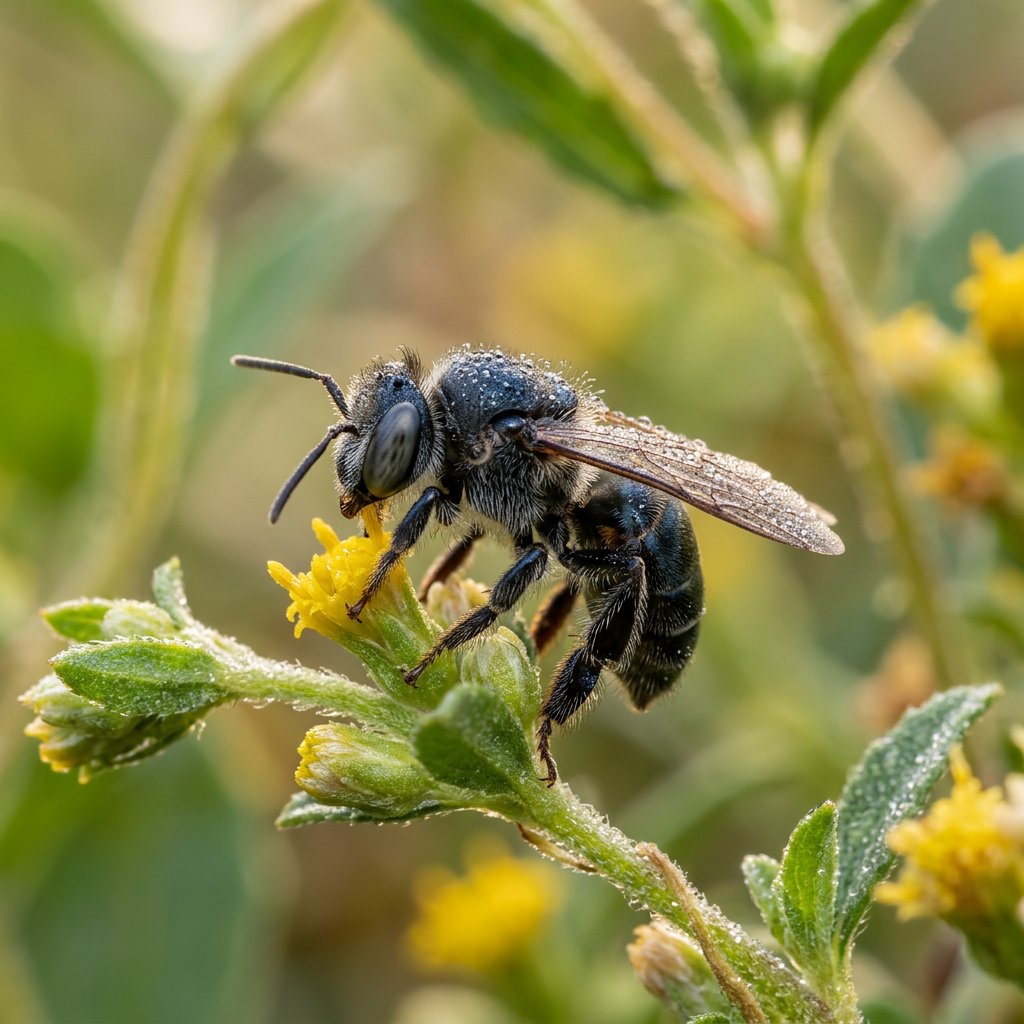
Often called the "Mexican Stingless Bee," this tiny architect is one of nature’s most gentle pollinators. Native to the tropical regions of Mexico and Central America, these bees are famous for their complex social lives and their lack of a functional stinger. They are the ultimate "garden friends," focusing entirely on flower health rather than defense.
🔍 How to Identify
- 🐝 Size and Shape: These are miniature bees, usually only 4 to 5 millimeters long—much smaller than a common honeybee and often mistaken for small flies.
- ✨ Thorax Texture: Their middle section (thorax) has a distinctively "pitted" or punctured appearance, looking almost like it was tapped with a tiny needle.
- 🏠 The Entrance Tube: The most reliable way to identify them is by their nest. They build a long, fragile, trumpet-shaped entrance tube made of wax and resin (propolis) that sticks out from tree hollows or wall crevices.
🌲 Habitat & Ecology
- 🌸 Master Pollinators: They are generalist foragers, meaning they aren't picky eaters. They visit a massive variety of native wildflowers and fruit trees, playing a critical role in maintaining tropical biodiversity.
- 🍯 Medicinal Honey: While they produce much less honey than the European honeybee, their "liquid gold" is highly prized in traditional medicine for its purported antibacterial properties and use in treating eye conditions.
- 🏰 Hidden Colonies: Unlike the massive hanging combs of other bees, these colonies are tucked away in cavities, using a complex internal structure of "pots" to store honey and pollen.
⚠️ Safety & Toxicity
- ✅ Stingless Status: These bees have a vestigial stinger that cannot pierce skin. They are 100% "sting-free" and safe to have around children and pets.
- 🦷 Defensive Buzzing: If their nest is directly disturbed, they won't sting, but they may swarm around your head, crawl into your hair, or give tiny, harmless "nips" with their mandibles to scare you away.
- 🛡️ Non-Toxic: They do not produce venom that affects humans or animals, making them ideal neighbors for high-traffic garden areas.
✨ Fun Fact
Nannotrigona perilampoides are master chemists! They collect sticky resins from various trees and mix them with wax to create "propolis." This material is so strong and antimicrobial that it acts as both the glue for their home and a built-in disinfectant to keep the hive germ-free.
More Details








