Info
Meet the tiny "eco-warrior" of the wetlands! Often called the Loosestrife Seed Weevil, this miniature beetle is a specialized biological control agent. While many gardeners worry about beetles eating their plants, this little snout-nosed insect is a celebrated hero, recruited by scientists to help save native marshes from being choked out by invasive flowers.
🔍 How to Identify
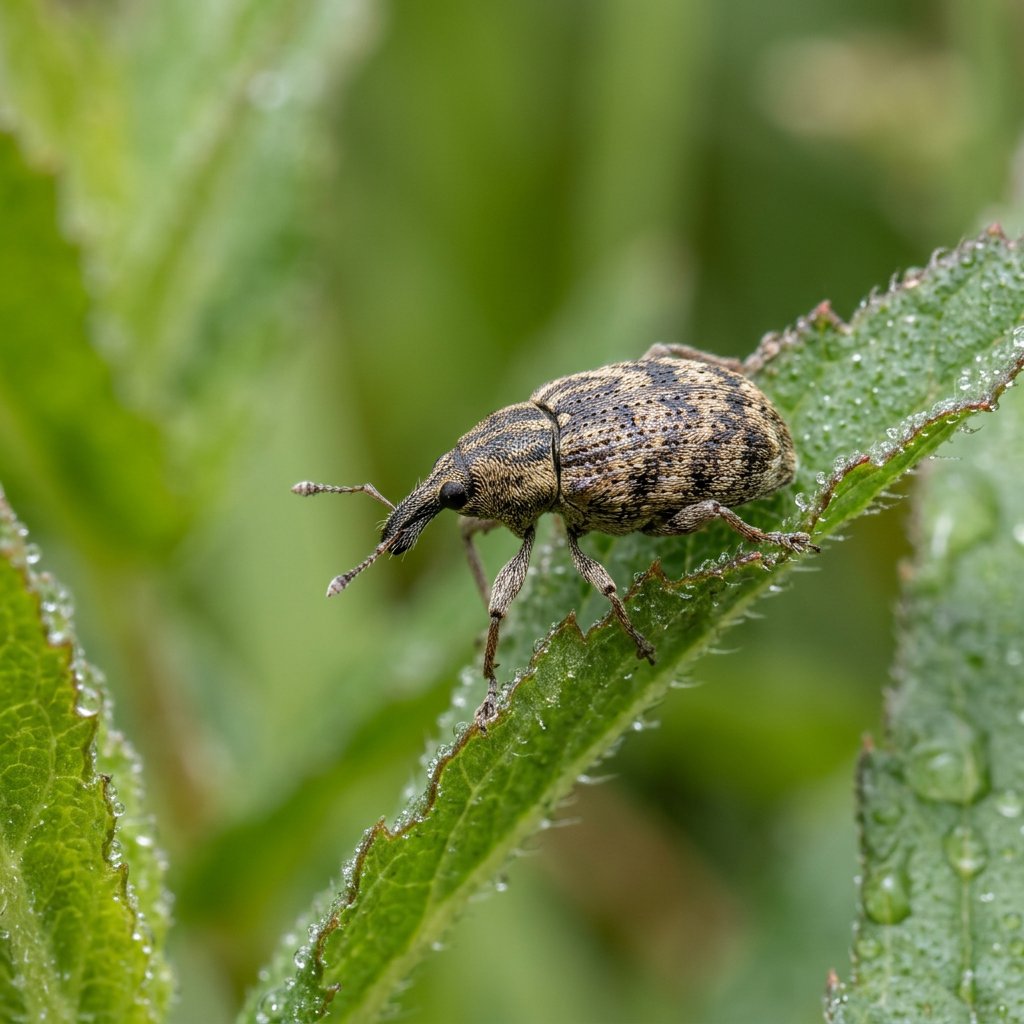
- 🪲 The "Snout": Like all true weevils, it features a distinct, downward-curving rostrum (snout) that it uses to drill into plant tissue.
- 🎨 Marbled Armor: Its species name, marmoratus, comes from the "marbled" pattern of tan, brown, and black scales across its wing covers, which provide excellent camouflage against dried flower buds.
- 📏 Miniature Stature: It is exceptionally small—roughly the size of a sesame seed (1.5 to 2mm). You’ll need a keen eye or a magnifying glass to see its intricate patterns.
🌲 Habitat & Ecology
- 🌿 A Host Specialist: This insect is a "monophagous" feeder, meaning it lives almost exclusively on Purple Loosestrife (Lythrum salicaria). You will find them clinging to the spikes of purple flowers in wetlands, ditches, and lake shores.
- ⚔️ The Seed Destroyer: While the adults nibble on the leaves, the real "work" happens when the females lay eggs in the flower buds. The developing larvae eat the internal parts of the bud, preventing the plant from releasing thousands of invasive seeds.
- 🦟 Wetland Resident: Because it follows its host plant, it is most active in damp, sunny environments during the late spring and summer months.
⚠️ Safety & Toxicity
- 🛡️ Completely Harmless: This weevil is a "friend" to humans. It possesses no stinger, does not bite, and does not carry any diseases.
- 🚫 Garden Safe: Unlike some generalist pests, you don’t need to worry about them attacking your vegetable patch or prize roses. If the Loosestrife disappears, the weevils move on or die off rather than switching to your garden plants.
✨ Fun Fact
Despite its tiny size, this weevil is a world traveler! It was originally native to Europe and Asia but was intentionally "hired" and moved to North America in the 1990s as part of a massive effort to restore biodiversity to clogged waterways.
More Details








