Info
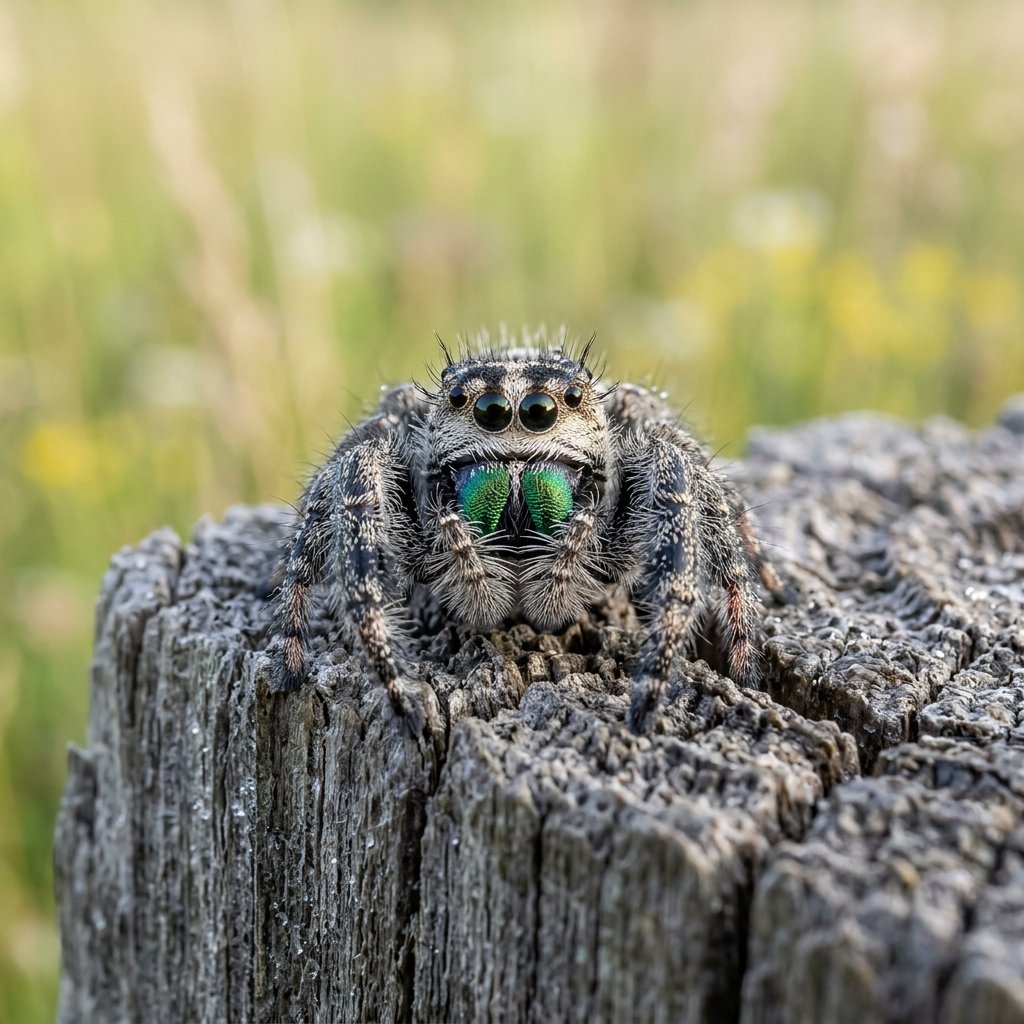
The Gray Wall Jumper (Naphrys pulex) is often called the "flea jumper" because of its tiny size and incredible leaping ability. These charismatic little spiders are the curious explorers of the backyard, known for their massive, soulful eyes and robotic-like movements. In many cultures, jumping spiders are seen as signs of good luck or "tiny scholars" because they seem to stop and study humans with genuine interest.
🔍 How to Identify
- 👀 The "Goggles": They possess four pairs of eyes, but the two massive, forward-facing primary eyes give them a "cute" or "attentive" expression.
- 🧥 Mottled Camouflage: Their bodies are covered in a sophisticated pattern of gray, black, and white scales, designed to help them disappear against tree bark or stone walls.
- 📏 Micro-Sized: They are exceptionally small, usually no larger than a grain of rice (about 5–7mm), making them easy to miss until they move.
🌲 Habitat & Ecology
- 🕸️ The Active Hunter: Unlike most spiders, the Gray Wall Jumper does not spin a web to catch food. Instead, it acts like a tiny lion, stalking its prey (like gnats and flies) and pouncing with incredible precision.
- 🍂 Leaf Litter Explorer: While they are often found on sun-warmed walls or fences, their natural home is among dry leaves and forest floors where their gray coloration makes them nearly invisible to predators.
⚠️ Safety & Toxicity
- ✅ Harmless Neighbor: These spiders are considered "friends" to humans. They are not aggressive and will almost always choose to jump away rather than interact.
- 🕷️ Low Risk: While they do have venom (used to hunt tiny insects), it is not medically significant to humans or pets. A bite is extremely rare and usually less painful than a mosquito bite, occurring only if the spider is accidentally crushed.
✨ Fun Fact
Jumping spiders like Naphrys pulex have such high-quality vision that they can see the craters on the moon (if they were large enough to care) and can even perceive colors that humans cannot, including ultraviolet light!
More Details








