Info
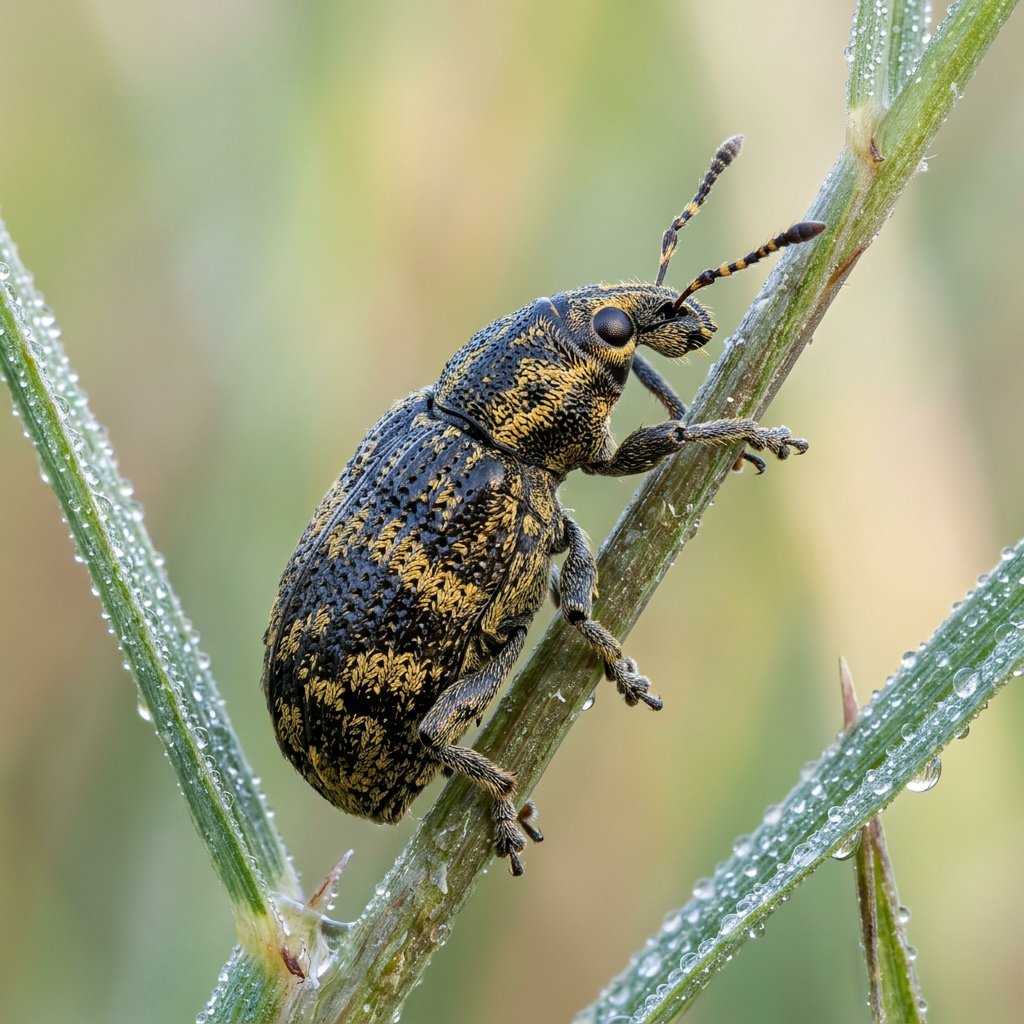
Often called the Fruit Tree Weevil or affectionately nicknamed "Burrito" in its native South America, this beetle is a master of camouflage with a specialized look. While it might look like a tiny, armored tank, it is a significant figure in the world of agriculture, known for its slow-moving nature and its "long-nosed" silhouette that is characteristic of the weevil family.
🔍 How to Identify
- 👃 The Broad Snout: Unlike some weevils with needle-thin noses, this species has a short, stout rostrum (snout) that gives its head a boxy, powerful appearance.
- 🎨 Yellow Markings: Its name xanthographus means "yellow writing." Look for distinct, pale yellow or lime-green longitudinal stripes and markings etched against its dusty brown or grey body.
- 🛡️ Fused Wing Covers: The elytra (hard wing covers) are rounded and textured. Interestingly, these covers are often fused together because this insect is entirely flightless.
🌲 Habitat & Ecology
- 🍇 The Orchard Explorer: You will most likely find them in vineyards, citrus groves, or berry patches. They are generalist herbivores, meaning they aren't picky eaters and will munch on over 50 different types of plants.
- 🪵 A Two-Stage Life: Their life is a tale of two worlds. The larvae live entirely underground, feeding on plant roots, while the adults crawl up the stems to feast on the edges of leaves, creating a distinct "notched" pattern.
- 🚶 Slow Travelers: Since they cannot fly, their dispersal is slow. They rely on hitchhiking on nursery plants or simply walking from one tree to the next.
⚠️ Safety & Toxicity
- ✅ Non-Toxic: The Fruit Tree Weevil is completely harmless to humans and pets. It does not bite, sting, or carry venom.
- 🪴 Plant Pest: While safe for you to handle, they are "foes" to the garden. A large population can weaken a tree’s root system (via larvae) and defoliate the canopy (via adults), making them a headache for fruit lovers.
✨ Fun Fact
Because these weevils cannot fly, many organic farmers protect their trees by wrapping the trunks with "sticky skirts" or slippery plastic bands. The weevils reach the barrier, can't fly over it, and are forced to turn back!
More Details








