Info
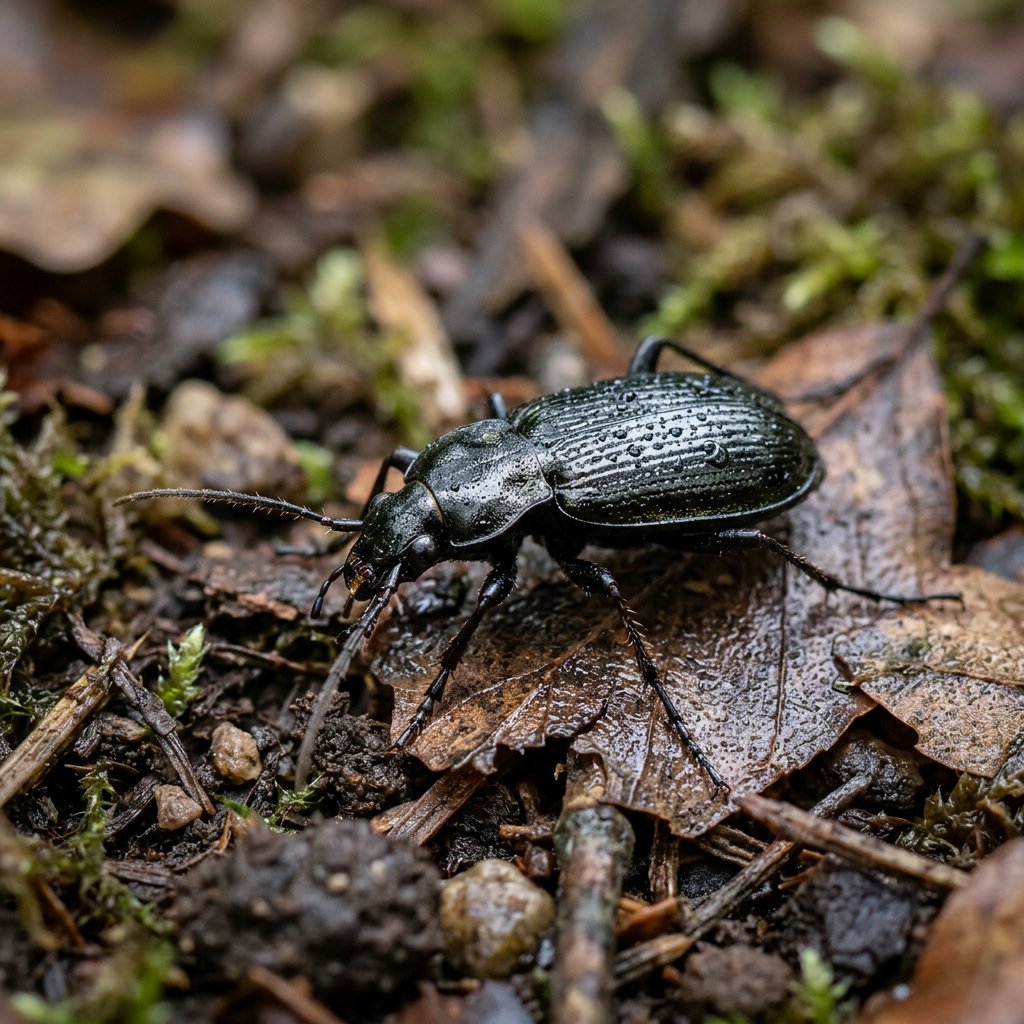
Known as the European Gazelle Beetle or simply the Common Ground Beetle, Nebria brevicollis is the unsung hero of your backyard. While its dark, scurrying form might startle you when you flip over a garden pot, it is actually an elite predator that keeps pest populations in check. Think of this beetle as a nocturnal security guard, patrolling the soil surface to ensure your plants stay safe from tiny invaders.
🔍 How to Identify
- 🖤 Sleek Armor: It possesses a glossy, pitch-black body with a slightly flattened shape, allowing it to squeeze into tight crevices under bark or stones.
- 🦵 Reddish Accents: While the main body is dark, the "feet" (tarsi) and the segments of its antennae often display a subtle reddish-brown tint.
- 📏 Heart-Shaped Frame: The segment behind the head (the pronotum) is distinctly broad and slightly heart-shaped, a classic trait that distinguishes it from other similar ground beetles.
🌲 Habitat & Ecology
- 🪲 The Gardener's Ally: These beetles are voracious hunters. They feast on garden nuisances like small slugs, aphids, and springtails, making them one of the best "free" organic pest controls available for your flower beds.
- 🌙 Nocturnal Patrol: They are primarily active at night. During the day, they retreat to cool, damp micro-habitats like leaf litter, mulch, or log piles to prevent dehydration.
- 🍂 Leaf Litter Specialist: While common in urban gardens, they are most at home in deciduous woodlands where the thick layer of decaying leaves provides an endless buffet of soil-dwelling prey.
⚠️ Safety & Toxicity
- ✅ Harmless Helper: Nebria brevicollis is entirely harmless to humans. It does not possess a stinger and carries no venom.
- 🤏 Defensive Pinch: If handled roughly, it may attempt a tiny pinch with its mandibles. However, these are designed for soft-bodied insects and are rarely strong enough to break human skin.
- 🐾 Pet Safety: They are non-toxic to inquisitive dogs or cats, though their hard chitinous shell is generally unappealing to pets.
✨ Fun Fact
✨ Winter Warrior: Unlike many insects that hibernate deeply or die off when the frost hits, Nebria brevicollis is remarkably cold-tolerant. It remains active much later into the autumn than other species and is often the very first beetle to emerge and start hunting in the early spring.
More Details








