Info
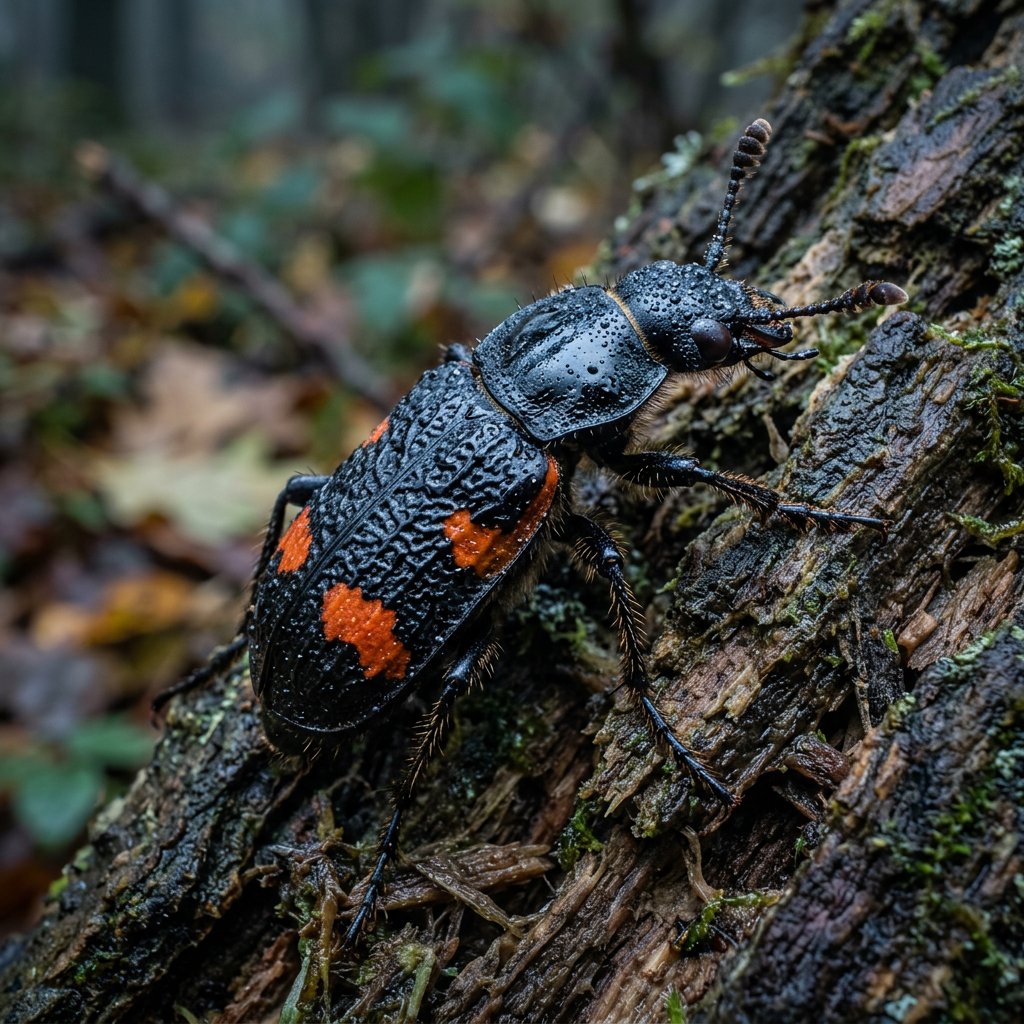
Often called the Shore Sexton Beetle, this nocturnal scavenger is nature’s most dedicated undertaker. While its name and diet might sound a bit grim, it plays a vital role in recycling nutrients by breaking down large animal remains. Despite the "shore" in its name, you can find this industrious insect anywhere large meals—and the cycle of life—are present.
🔍 How to Identify
- 🪲 Flattened Frame: A large, robust beetle (15–25mm) with a noticeably flat, oval body designed for crawling under carcasses.
- 🧡 Orange-Tipped Antennae: Their black antennae end in three distinct orange or reddish-yellow segments, which act as highly sensitive "smell receptors" for finding food.
- 🦵 Thickened Thighs: Males are easily identified by their powerful, swollen hind legs, which they use to grapple with rivals and hold onto mates.
🌲 Habitat & Ecology
- 🌊 The Shoreline Connection: While commonly found near coasts feeding on washed-up fish or seals, they are equally at home in inland forests and wetlands near larger animal remains.
- 🔦 Night Owls: These beetles are strictly nocturnal. If you see a large, dark beetle bumping against your porch light or window at night, it’s likely a Shore Sexton looking for a way back into the dark.
- 🧹 Carcass Specialists: Unlike smaller burying beetles that hide mice underground, Necrodes littoralis specializes in larger carcasses, where they live and breed directly within the decaying tissue.
⚠️ Safety & Toxicity
- 🛡️ Harmless but Smelly: They are not aggressive and do not possess a sting or a dangerous bite. However, if handled, they may release a foul-smelling liquid as a defense mechanism.
- 🧼 Sanitation Warning: Because their life revolves around decay, they can carry various bacteria. It is best to observe them without touching; if contact occurs, wash your hands thoroughly.
- 🐾 Pet Safety: They pose no direct threat to pets, though their "stinky" defense might be unpleasant for a curious dog's nose.
✨ Fun Fact
- 🧳 The Mite Express: These beetles often carry tiny, hitchhiking mites on their bellies. This is a "symbiotic" relationship: the beetle gives the mites a ride to a carcass, and in exchange, the mites eat the eggs of competing flies, ensuring the beetle's own larvae have the food all to themselves!
More Details








