Info
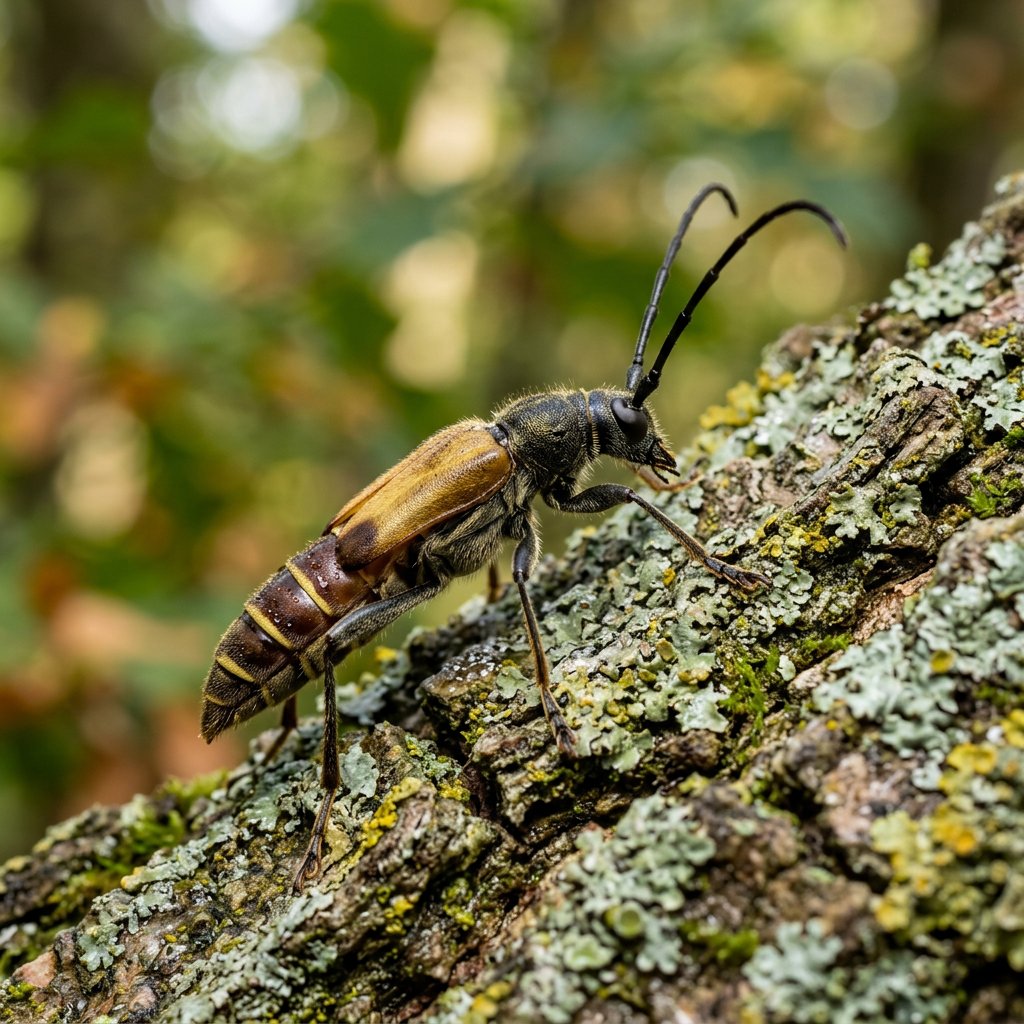
Often called the Greater Wasp Beetle, Necydalis major is one of nature's most impressive actors. At first glance, you might mistake it for a large, intimidating hornet, but this insect is actually a harmless member of the longhorn beetle family. It has evolved this "scary" appearance to trick predators into leaving it alone while it searches for nectar in sunlit forest clearings.
🔍 How to Identify
- 🪽 Truncated Wing Covers: Unlike most beetles that have long, hard shells (elytra) protecting their backs, this beetle has very short elytra that barely cover its shoulders, leaving its long flight wings exposed.
- 🐝 Mimicry Coloring: It features a long, slender body with a mix of black and reddish-brown tones, designed to imitate the warning colors of a large wasp or hornet.
- 📏 Elongated Build: It has a notably thin, "waisted" appearance and very long legs, which further enhances its resemblance to a stinging insect.
🌲 Habitat & Ecology
- 🪵 The Nursery of Decay: The larvae of this beetle are essential recyclers. They spend several years developing inside the dead or dying wood of deciduous trees like Willow, Poplar, and Oak, helping break down old timber.
- 🌸 Summer Pollinator: You are most likely to spot adults during the hot months of June and July. They leave the shade of the trees to visit flowers, where they feed on pollen and nectar, acting as important local pollinators.
⚠️ Safety & Toxicity
- 🛡️ Harmless Imposter: Despite its frightening "hornet" look, Necydalis major is completely harmless. It possesses no stinger, no venom, and is not aggressive toward humans.
- 🐕 Pet & Child Safe: This insect is safe to have around the garden. While it may startle a curious pet or child with its size and flight, it cannot bite or sting. It relies entirely on its "costume" for protection.
✨ Fun Fact
✨ This beetle is so dedicated to its disguise that it doesn't just look like a wasp—it acts like one! When it flies, it holds its body in a specific way and moves with a jerky, hovering motion to mimic the exact flight pattern of a hornet, making the illusion nearly perfect to birds.
More Details








