Info
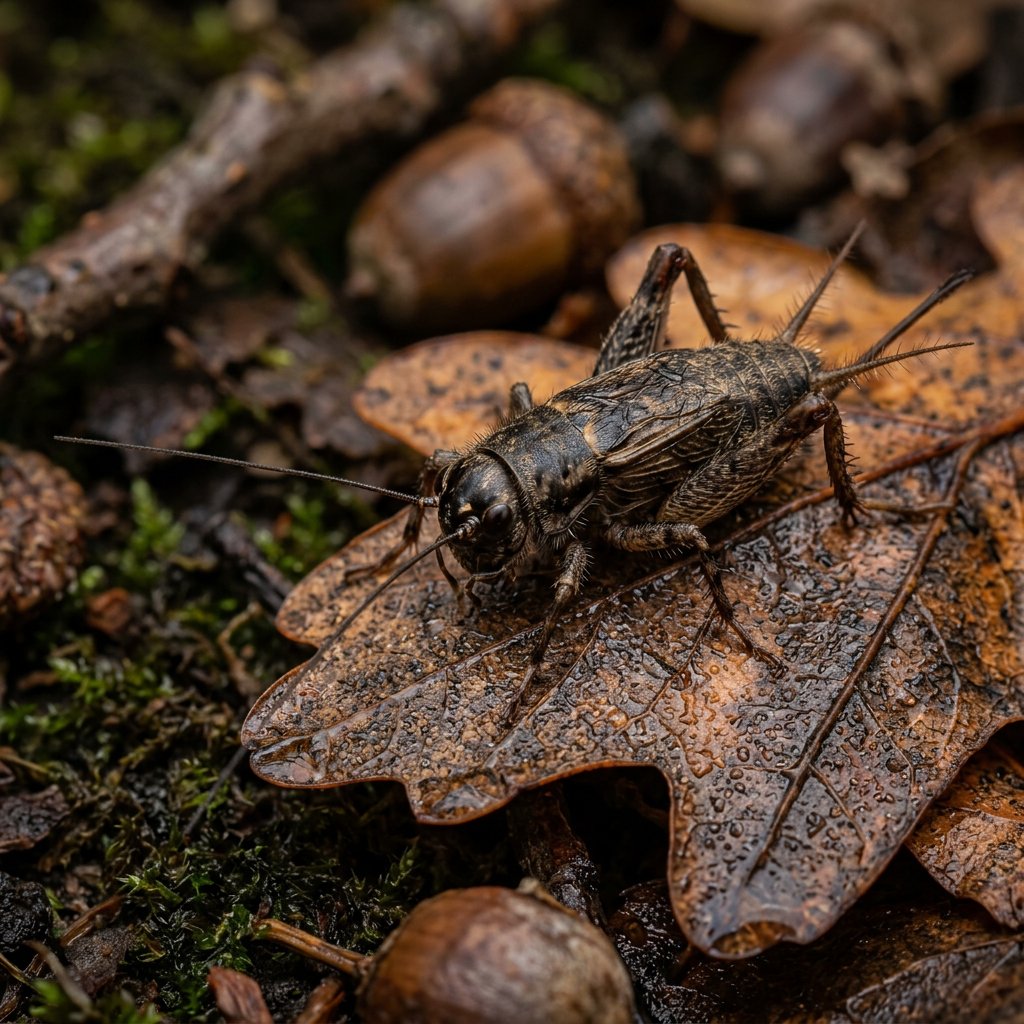
Despite what the name might suggest to a gardener, Nemobius sylvestris is not a plant, but rather the charming Wood Cricket. This tiny, flightless insect is the hidden heartbeat of the forest floor, spending its life scuttling through the "duff" (leaf litter) of ancient woodlands. Often called the "Oak Cricket," it is a master of camouflage and a vital component of the woodland ecosystem.
🔍 How to Identify
- 📏 Small Stature: These are among the smallest crickets, usually measuring only 7–11mm in length—about the size of a fingernail.
- 🎨 Dark Camouflage: They sport a deep, matte chocolate-brown or blackish color, which allows them to vanish instantly against damp, decaying leaves.
- 🪶 Vestigial Wings: Unlike many crickets, they have very short, stunted wings. They are completely flightless and rely on their powerful hind legs to hop away from danger.
🌲 Habitat & Ecology
- 🍂 Leaf Litter Specialist: They are rarely found far from the shade of deciduous trees. They have a particular "love affair" with Oak leaves, which provide the perfect temperature and humidity for their survival.
- 🍴 The Forest's Janitor: They are primarily scavengers. Their diet consists of decaying leaves, fallen fruit, and fungi, playing a crucial role in breaking down organic matter into rich soil.
- 🎵 Soft Purring: If you sit quietly in an Oak wood on a warm afternoon, you might hear a soft, rhythmic "tiki-tiki-tiki" sound. Unlike the loud, piercing chirp of field crickets, the Wood Cricket’s song is a gentle, high-pitched purr.
⚠️ Safety & Toxicity
- 🛡️ Status: Completely Harmless.
- 🌿 Details: These crickets do not bite, sting, or carry any diseases. They are beneficial "friends" of the environment and pose no threat to humans, pets, or garden plants. In fact, their presence is often a sign of a healthy, undisturbed woodland ecosystem.
✨ Fun Fact
Most crickets complete their life cycle in a single year, but Nemobius sylvestris is a "slow-burner." It has a unique two-year life cycle, spending its first winter as an egg tucked in the soil and its second winter as a juvenile nymph hidden deep under the frost-line in the leaf litter.
More Details








