Info
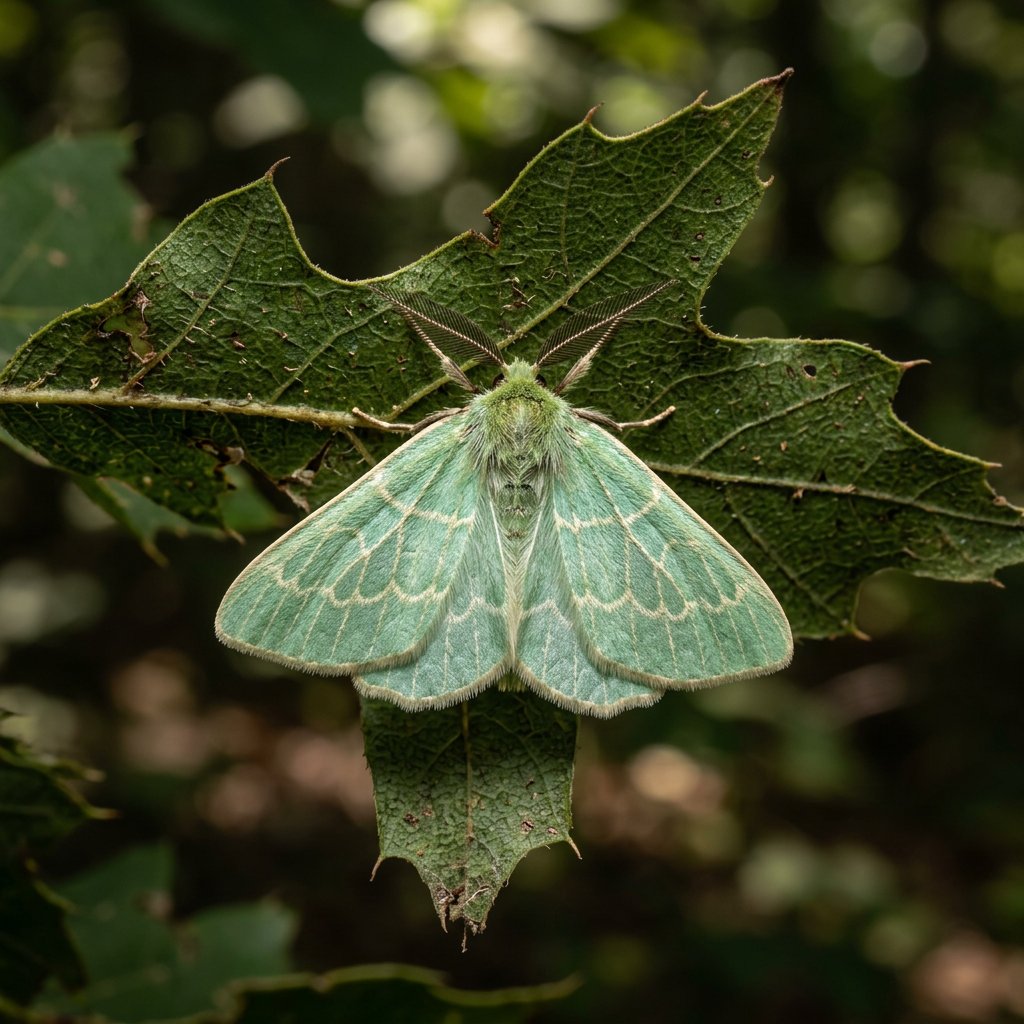
Often called the "Emerald Moth," insects of the Nemoria genus are true masters of disguise. While the adults look like vibrant, fresh green leaves that have just drifted from a tree, their larvae are some of nature’s most creative "dress-makers." These moths are the ultimate hide-and-seek champions of the forest canopy and garden shrubs.
🔍 How to Identify
- 🦋 The Wings: Adults possess rich, emerald-green wings, often decorated with delicate, thin white or yellowish wavy lines (called "costal" margins).
- 📐 Resting Posture: Unlike many moths that fold their wings like a tent, Nemoria species typically rest with their wings spread perfectly flat against a leaf to eliminate shadows.
- 🐛 The "Cloaked" Larvae: The caterpillars are classic "inchworms." However, many species in this genus have specialized hooks on their backs used to attach bits of flowers or leaves to themselves as camouflage.
🌲 Habitat & Ecology
- 🎭 Master of Mimicry: The caterpillars are famous for their "self-decorating" behavior. By sticking pieces of their host plant to their bodies, they become nearly invisible to birds and predatory wasps.
- 🌳 Forest Dwellers: You are most likely to find them in deciduous woodlands or gardens with plenty of host trees like Oak, Birch, or Walnut, where they blend seamlessly into the greenery.
⚠️ Safety & Toxicity
- ✅ Harmless: Nemoria moths and their caterpillars are completely safe. They do not sting, bite, or possess the irritating "urticating" hairs found on some other moth larvae.
- 🐾 Pet Friendly: They are non-toxic to curious cats or dogs. If your pet manages to catch one, the only thing at risk is the moth's beautiful green wings.
✨ Fun Fact
One species, Nemoria arizonaria, is a biological marvel; the caterpillars look completely different depending on the season. Those born in the spring eat oak flowers and grow to look like fuzzy yellow catkins, while those born in the summer eat leaves and look exactly like green twigs!
More Details








