Info
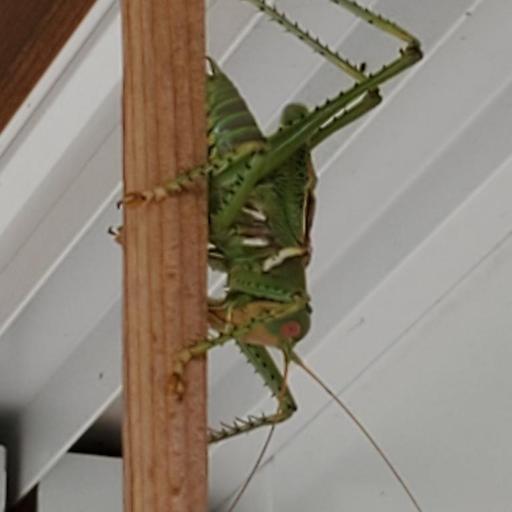
Often called the "Red-eyed Devil" of the desert, Neobarrettia is not your typical peaceful leaf-muncher. These large, charismatic katydids are the fierce warriors of the arid scrublands, known for their intimidating defensive displays and striking features. Encountering one among the cacti feels like a brush with a miniature prehistoric predator.
🔍 How to Identify
- 👁️ Piercing Eyes: Most species feature prominent, vivid red or dark eyes that give them an alert and somewhat menacing expression.
- ⚔️ Spiny Armor: Their front legs are lined with sharp, noticeable spines, which they use as "raptorial" limbs to snatch and hold onto their prey.
- 🦋 The "Startle" Wings: While their outer wings are usually leaf-green for camouflage, they have hidden inner wings with bold black and white patterns that they flare out when threatened.
🌲 Habitat & Ecology
- 🦗 The Apex Hunter: Unlike most katydids that eat plants, Neobarrettia is primarily carnivorous. It stalks other insects, spiders, and even small lizards, using its powerful mandibles to deliver a crushing bite.
- 🌵 Nighttime Vocalist: They thrive in the thorny brush of the Southwestern US and Mexico. At night, males climb to the tops of mesquite or acacia trees to produce a loud, rhythmic "shhh-shhh-shhh" sound to attract mates.
⚠️ Safety & Toxicity
- 🩹 Mechanical Bite: They are not venomous, but they are very high-spirited. If you try to pick one up, they will defend themselves with a very strong, painful bite that can easily break the skin.
- 🛡️ Aggressive Posture: When approached, they don't usually run; they stand tall on their back legs, open their bright wings, and gape their jaws. This is a bluff to scare off birds, but it’s a clear sign for humans to "look, but don't touch."
✨ Fun Fact
When a Neobarrettia catches a grasshopper, it often begins eating its prey while it is still alive, starting at the neck to quickly disable the victim's nervous system—proving that even in the insect world, the desert is a tough neighborhood!
More Details








