Info
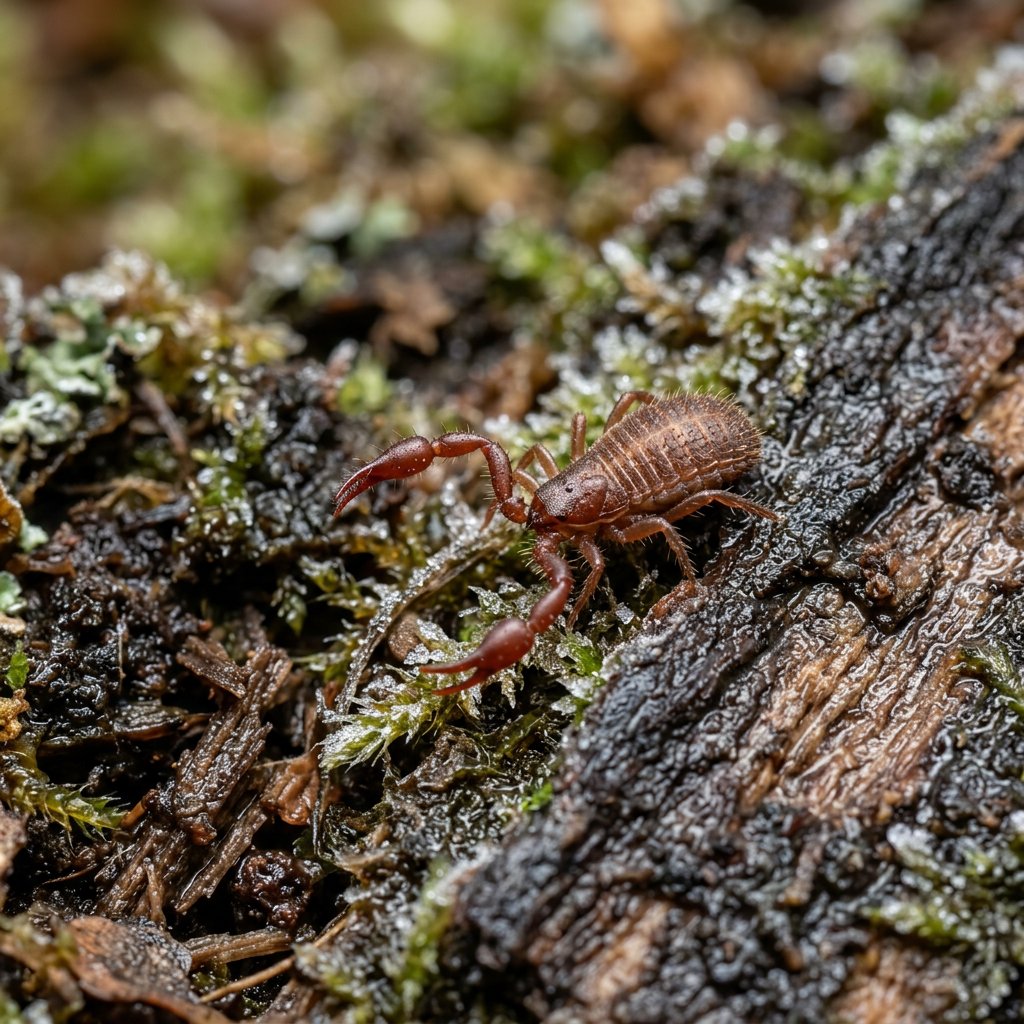
Often called the Moss Pseudoscorpion, this tiny creature looks like a miniature lobster that lost its tail. Despite its prehistoric, slightly intimidating appearance, it is a silent guardian of the garden floor and forest soil. It belongs to the arachnid family, making it a cousin to spiders, yet it lacks the venomous stinger that gives true scorpions their fearsome reputation.
🔍 How to Identify
- 🦀 The "Pincers": Its most striking feature is a pair of oversized, powerful pedipalps (claws) used for hunting and sensing its environment.
- 🚫 Tail-less Body: Unlike a true scorpion, the abdomen is rounded and flat at the end, with absolutely no stinger or "tail" structure.
- 🕵️ Microscopic Scale: They are incredibly small, typically measuring only 2 to 4 millimeters in length, meaning you’ll likely need a magnifying glass to see their reddish-brown bodies clearly.
🌲 Habitat & Ecology
- 🍂 The Leaf Litter Jungle: These creatures thrive in damp, dark environments. You will most often find them deep within moss cushions, under decaying logs, or inside the rich "O-horizon" (top layer) of forest soil.
- 🐜 Miniature Predator: They are voracious hunters of "micro-pests." Their diet consists almost entirely of springtails, mites, and small larvae, helping to keep the soil ecosystem in a healthy balance.
- 🕸️ Silk Spinners: Interestingly, they can produce silk from a gland in their jaws. They don't use it for webs to catch food, but rather to build tiny, protective "igloos" for molting or surviving the winter.
⚠️ Safety & Toxicity
- ✅ Harmless Friend: Neobisium carcinoides is completely harmless to humans and pets. They do not bite people, they are not decorative pests, and they possess no venom that can affect mammals.
- 🛡️ Gentle Nature: Even if you were to pick one up, their tiny claws are far too small and weak to break human skin. They are considered "beneficials" because they consume the mites that might otherwise harm your indoor or outdoor plants.
✨ Fun Fact
✈️ The Tiny Hitchhiker: Because they are so small and have no wings, these pseudoscorpions practice a behavior called "phoresy." They will grab onto the leg of a larger flying insect, like a fly or a beetle, and hitch a ride to a new habitat—essentially using other bugs as a free taxi service!
More Details








