Info
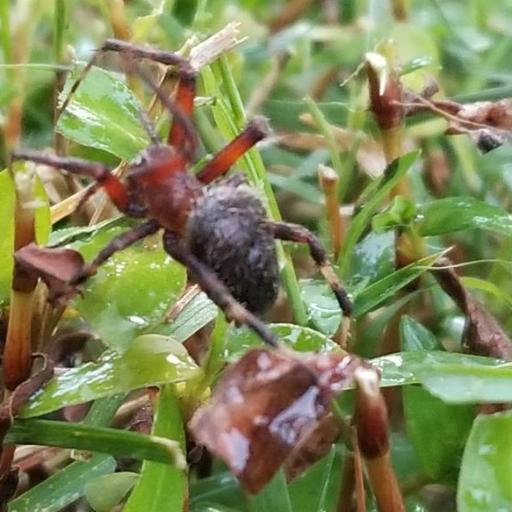
Often called the Hentz Orbweaver or Spotted Orbweaver, this common spider is the classic "architect" of the backyard. While its large size and hairy legs might give some gardeners a momentary fright, it is a gentle giant and an essential ally in controlling flying pests. In many parts of North America, these spiders are the silent guardians of porches and patios, appearing almost like magic as the sun goes down.
🔍 How to Identify
- 🕸️ The Abdomen: It features a large, bulbous abdomen that ranges from rusty red to a dusty gray-brown. Look for a faint pattern on the top that resembles a cross or a series of light-colored spots.
- 🕷️ Bristly Legs: The legs are noticeably hairy or "spiny." These bristles aren't just for show—they help the spider sense vibrations in its web and navigate sticky silk without getting stuck.
- 🔘 Underside Markings: If you get a look at its belly, you’ll see two white, bell-shaped marks (often described as inverted "L" shapes) against a darker background.
🌲 Habitat & Ecology
- 🌙 Night Owl Habits: Unlike some spiders that sit in their webs all day, the Spotted Orbweaver is primarily nocturnal. It usually hides in a curled leaf or under a porch eave during the day and builds its massive, circular web at dusk.
- 🦟 Natural Pest Control: They are voracious eaters of "nuisance" insects. Their diet consists mostly of moths, mosquitoes, and flies that are active at night, making them a free and organic pest control service for your home.
- 🏡 Strategic Placement: You’ll often find them near outdoor lights. They aren't attracted to the light itself, but they are smart enough to know that light attracts their favorite snacks.
⚠️ Safety & Toxicity
- 🛡️ Status: Harmless and non-aggressive.
- 🐶 Details: These spiders have no interest in humans or pets. They will almost always choose to flee or drop to the ground if disturbed. While they are technically venomous (as almost all spiders are), their venom is very weak; a bite is rare and typically no more painful than a mild bee sting, resulting only in slight redness or swelling.
✨ Fun Fact
The Spotted Orbweaver is a master of recycling! Every morning, many individuals will actually eat their own web. By consuming the silk, they "recharge" the proteins in their bodies, which they then use to spin a brand-new, strong web again the following evening.
More Details








