Info
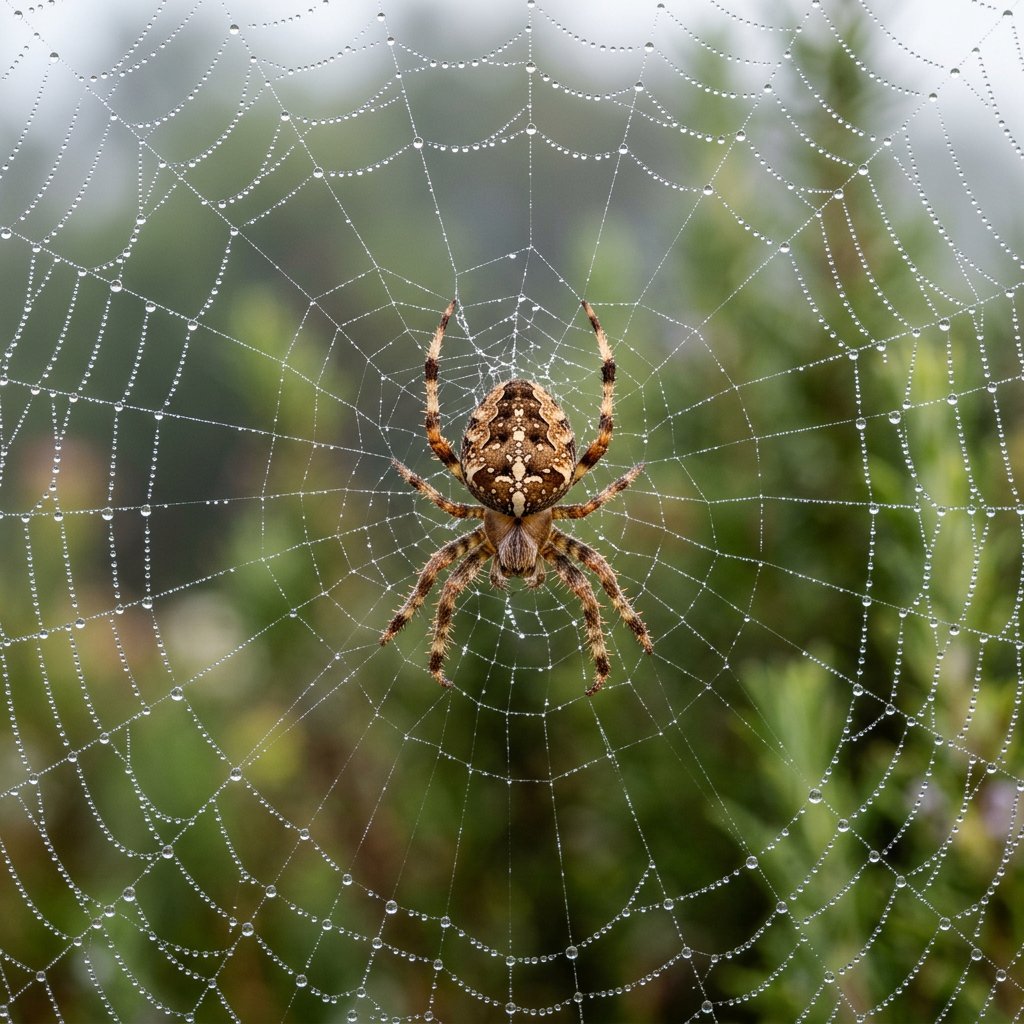
Often called the Subfusca Orb-weaver, this spider is a master of nighttime architecture and a silent guardian of your garden. While its spiny legs and cryptic, earth-toned patterns might look intimidating to some, it is a non-aggressive "friend" that specializes in capturing pesky flying insects. These spiders are famous for their "vanishing act," appearing at dusk to build massive webs and hiding in plain sight during the day.
🔍 How to Identify
- 🕸️ The Abdomen: It features a large, slightly triangular or heart-shaped abdomen, usually colored in shades of tawny brown, grey, or rust to blend in with dried leaves and bark.
- 🖋️ The Pattern: Look for a dark, wavy "folium" (leaf-like mark) on the back, often outlined by lighter lines that help break up its silhouette against a background.
- 🌵 The Legs: Its legs are robust and covered in short, stiff spines (macrosetae), which help it navigate the sticky silk of its web without getting trapped.
🕸️ Habitat & Ecology
- 🦟 The Natural Exterminator: As an orb-weaver, its primary diet consists of moths, mosquitoes, and flies. By sitting at the center of its "bullseye" web, it keeps local insect populations in check without the need for chemicals.
- 🌓 The Night Shift: This species is largely nocturnal. During the day, it often retreats to a nearby leaf or crevice, tucking its legs in to look like a harmless bump of dirt or bird dropping.
- 🏗️ Web Recycling: To keep their silk strong and "sticky," these spiders often consume their own web every morning to recycle the proteins, then rebuild a fresh one the following evening.
⚠️ Safety & Toxicity
- 🛡️ Status: Harmless and non-aggressive. They are shy creatures that would much rather flee or drop to the ground than confront a human.
- 🐝 Details: While they do possess venom (like almost all spiders), it is very weak and not medically significant to humans or pets. A bite—which usually only occurs if the spider is squeezed—is typically less painful than a common bee sting and results in minor, localized redness.
✨ Fun Fact
Orb-weavers like Neoscona subfusca are highly sensitive to vibrations; they can "hear" through their legs. By feeling the tension in the silk lines, they can tell exactly how large a trapped insect is and where it is located on the web without even looking!
More Details








