Info
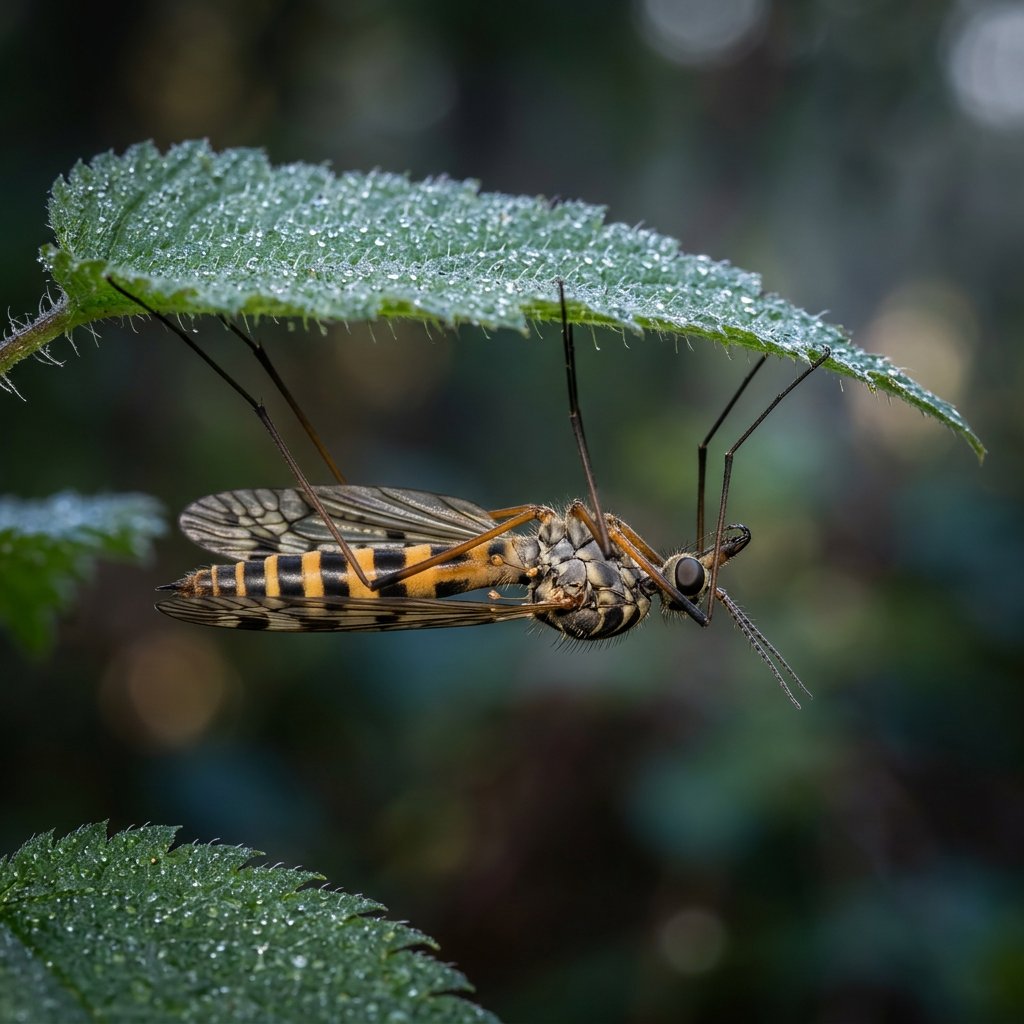
Commonly known as the Saffron Crane Fly, this striking insect is a master of mimicry. At first glance, its bold yellow-and-black stripes might make you jump, thinking a large wasp has entered your space, but this leggy visitor is a gentle giant. It spends most of its short adult life dancing over damp meadows and garden borders, playing a harmless but vital role in the ecosystem.
🔍 How to Identify
- 🐝 Wasp-like Pattern: The abdomen is vividly marked with alternating bands of deep black and bright saffron-yellow or orange, designed to trick predators into thinking it stings.
- 🦵 Spindly Stilts: Like all crane flies, it possesses exceptionally long, fragile legs that often seem too heavy for its body, leading to a clumsy, bobbing flight style.
- 🪟 Clear Wings: It has a single pair of transparent wings, often featuring a small, dark smoky smudge (stigma) near the front edge.
- 📍 The "Stinger" Illusion: Females have a pointed tip at the end of their abdomen; while it looks intimidating, it is merely an ovipositor used for tucking eggs into soft soil or wood.
🌲 Habitat & Ecology
- 💧 Moisture Seekers: You are most likely to spot them in damp woodlands, lush gardens, or near riverbanks where the soil remains moist and rich.
- 🍂 Nature’s Recyclers: While the adults rarely eat (occasionally sipping nectar for energy), their larvae—known as "leatherjackets"—live underground or in decaying wood, where they help break down organic matter.
- 🦇 The Food Web: Because they are slow and lack any real defense, they are a primary "snack" for birds, bats, and spiders, making them a sign of a healthy, biodiverse garden.
⚠️ Safety & Toxicity
- 🛡️ Completely Harmless: Despite its "danger" colors, the Saffron Crane Fly is 100% non-toxic and incapable of biting or stinging.
- 🚫 Pet & Child Safe: They do not carry diseases and pose no threat to curious pets or children. If one wanders indoors, simply let it crawl onto a piece of paper and move it back outside to the grass.
✨ Fun Fact
The Saffron Crane Fly belongs to a group of insects that practice "autotomy." If a predator grabs one of their long legs, the fly can voluntarily shed the limb to escape, surviving just fine with five (or even four) legs!
More Details








