Info
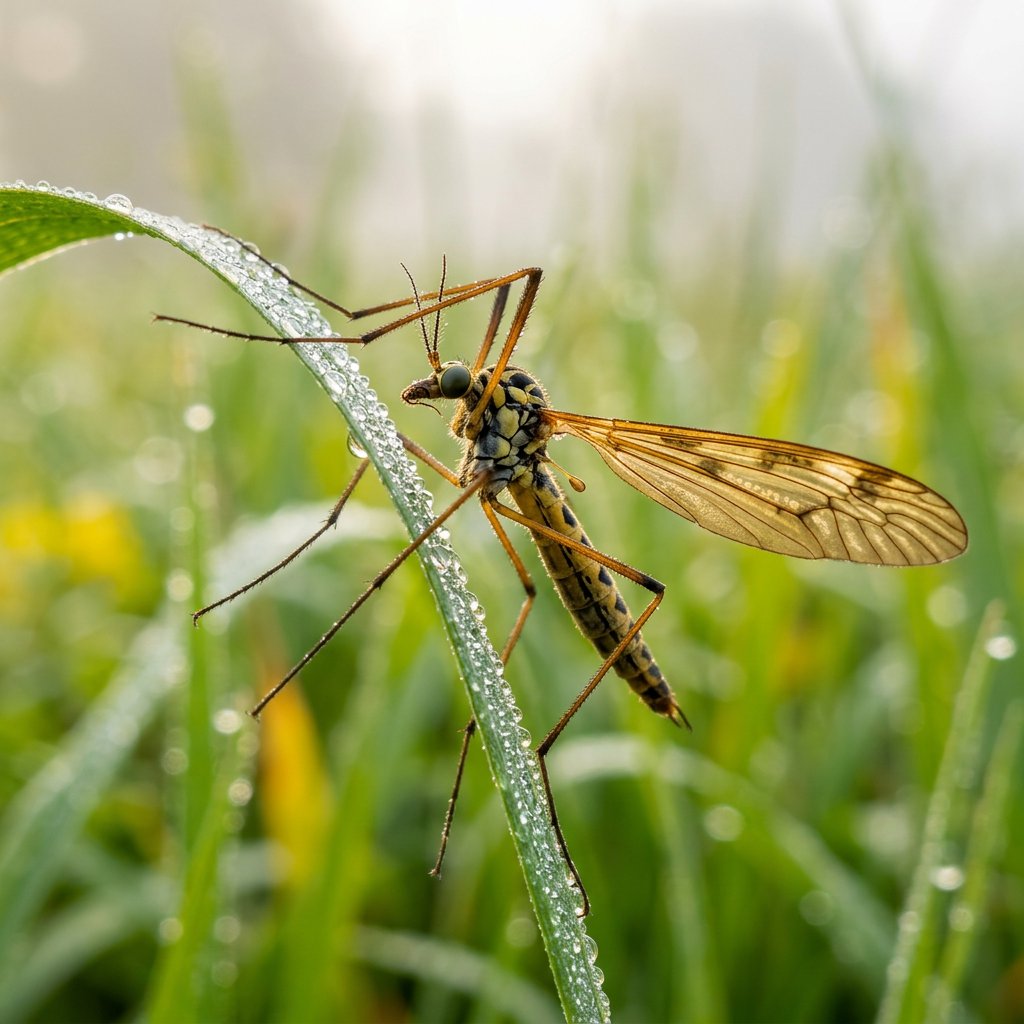
Often mistaken for a giant "mosquito on steroids" or a misplaced wasp, the Tiger Crane Fly is a gentle giant of the summer garden. Its striking yellow-and-black patterns are a clever ruse designed to trick predators into thinking it has a nasty sting. In reality, these leggy insects are harmless nomads that spend most of their short adult lives dancing over lawns and through damp woodlands.
🔍 How to Identify
- 🐯 Tiger Stripes: Its most defining feature is the bold yellow body accented with jet-black stripes and spots, mimicking the "danger" signals of a yellowjacket.
- 📐 V-Shaped Thorax: If you look closely at its back (the thorax), you’ll see a distinct V-shaped seam or suture, which is the hallmark of the crane fly family.
- 🎋 Spindly Stilts: It possesses six incredibly long, fragile legs that seem almost too cumbersome for its body, often trailing behind it awkwardly during flight.
🌲 Habitat & Ecology
- 🍂 Nature’s Recyclers: While the adults are mostly decorative, their larvae (known as "leatherjackets") live in soil or leaf litter. They play a crucial role in the ecosystem by breaking down decaying organic matter.
- 💧 Moisture Seekers: You will most likely spot them in damp meadows, gardens with tall grass, or near the edges of ponds, as they require moisture to keep their delicate bodies from drying out.
- 🦋 Short-Lived Adults: The adult Tiger Crane Fly lives for only a few days. During this time, they rarely eat, focusing almost entirely on finding a mate and laying eggs in the soil.
⚠️ Safety & Toxicity
- 🛡️ Completely Harmless: Despite their intimidating size and "wasp-like" appearance, Tiger Crane Flies do not have a stinger and their mouthparts are incapable of biting humans or pets.
- 🏠 Home Visitors: They are often attracted to porch lights at night. If one wanders into your house, there is no need for alarm; they are not "giant mosquitoes" and do not drink blood or spread disease.
✨ Fun Fact
Tiger Crane Flies are masters of the "clean break." If a predator grabs them by a leg, they can voluntarily shed that limb to make a quick escape—a defensive tactic known as autotomy. They can survive just fine with a few missing legs!
More Details








