Info
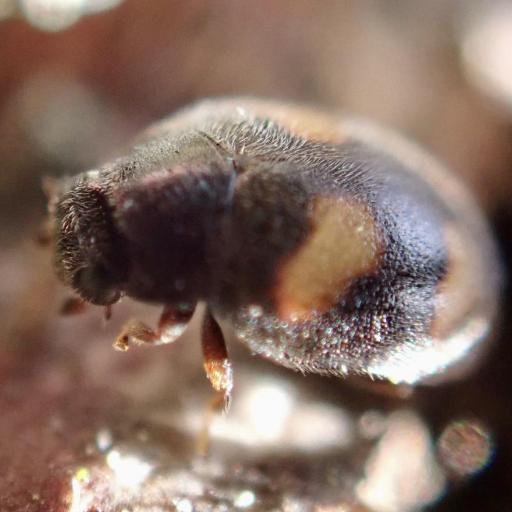
The Four-spotted Lady Beetle (Nephus quadrimaculatus) is a tiny, unsung hero of the garden. Often mistaken for a mere speck of dirt due to its minuscule size, this beetle is actually a specialized predator that works tirelessly behind the scenes. While its larger, bright-red cousins get all the fame, this dark-cloaked "mini-ladybug" is a fierce defender against some of the most stubborn garden pests.
🔍 How to Identify
- 🐞 The "Four Eyes" Pattern: Its most defining feature is its dark, almost black wing covers (elytra) marked with four distinct reddish-orange or yellowish spots.
- 📏 Microscopic Scale: Unlike common ladybugs, this species is incredibly small—usually measuring only 1.5 to 2 millimeters. You might need a magnifying glass to see its beautiful patterns clearly!
- ☁️ Velvety Texture: If you look closely, the body isn't shiny like a typical ladybug; it is covered in very fine, short hairs (pubescence), giving it a matte, velvety appearance.
🌲 Habitat & Ecology
- 🍽️ The Mealybug Specialist: This beetle is a "friend" to any gardener. Its primary diet consists of mealybugs and scale insects, which are notorious for sucking the life out of ornamental plants and fruit trees.
- 🌿 Ivy & Shrub Dweller: You are most likely to find them tucked away in dense foliage, particularly on European Ivy (Hedera helix) or inside the crevices of bark where their prey likes to hide.
- 🛡️ Biological Bodyguard: Because they are so effective at controlling pest populations, they are often used in integrated pest management (IPM) to reduce the need for chemical pesticides.
⚠️ Safety & Toxicity
- ✅ Harmless to Humans: These beetles are completely safe. They do not bite, sting, or carry any diseases that affect humans or household pets.
- 🛡️ Natural Defense: Like many lady beetles, they may secrete a tiny drop of bitter fluid (reflex bleeding) if they feel threatened, but this is only harmful to small birds or spiders looking for a snack.
✨ Fun Fact
Despite being a beetle, the larvae of Nephus quadrimaculatus are masters of disguise. They often cover themselves in white, waxy secretions that mimic the appearance of the very mealybugs they are hunting—allowing them to walk right into a colony and feast undetected!
More Details








