Info
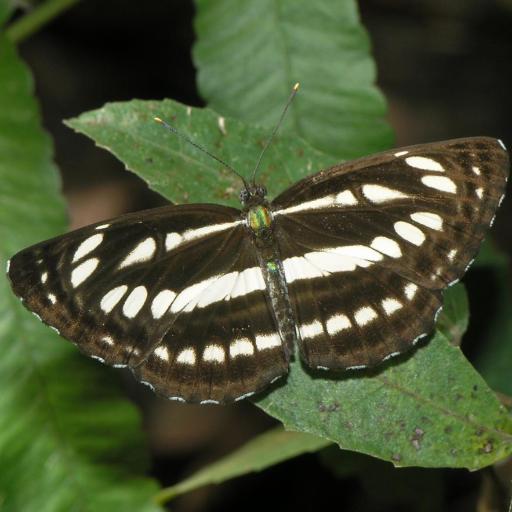
The Common Sailer (Neptis hylas) is a medium-sized butterfly famous for its distinct "flap-flap-glide" movement. Often found dancing through tropical gardens and forest edges across Asia, it gets its name from the way it seems to sail effortlessly through the air. With its striking "checkerboard" pattern, it is a favorite among backyard naturalists and macro photographers.
🔍 How to Identify
- 🦋 Wing Pattern: The upper side of the wings is deep black with three distinct horizontal rows of white spots and bands, giving it a crisp, high-contrast appearance.
- 🍂 Golden Underside: When the butterfly closes its wings, the underside reveals a beautiful golden-brown or orange-rufous background patterned with the same white bands.
- 📏 Size & Shape: It has a relatively flat, triangular wing shape with a wingspan of about 5 to 6 centimeters, allowing it to remain aerodynamic while gliding.
🌿 Habitat & Behavior
- 🥗 A Varied Diet: While the adults frequent various nectar-rich flowers for energy, the caterpillars are particularly fond of plants in the legume (Fabaceae) and mallow (Malvaceae) families.
- ✈️ The Sailing Flight: Unlike many butterflies that flutter erratically, the Common Sailer moves in a very predictable, rhythmic pattern. It takes a few quick wing beats and then holds its wings flat to glide for several feet.
- ☀️ Sun Bathing: You will often find them resting on the upper surface of leaves with their wings spread wide open, soaking up the morning sun to regulate their body temperature.
⚠️ Safety & Toxicity
- ✅ Harmless Friend: The Common Sailer is completely safe for humans and pets. It does not possess a stinger, nor does it bite.
- 🐛 Caterpillar Context: While the adult butterfly is harmless, the caterpillars are camouflaged to look like dry leaves or bird droppings to avoid predators, but they do not have stinging hairs like some other larvae.
✨ Fun Fact
The Common Sailer is a master of "mimicry." Several other butterfly species, such as the Common Sergeant, have evolved nearly identical wing patterns to confuse predators, but you can tell the Sailer apart by looking for the specific arrangement of the three white bands on its hindwings!
More Details








