Info
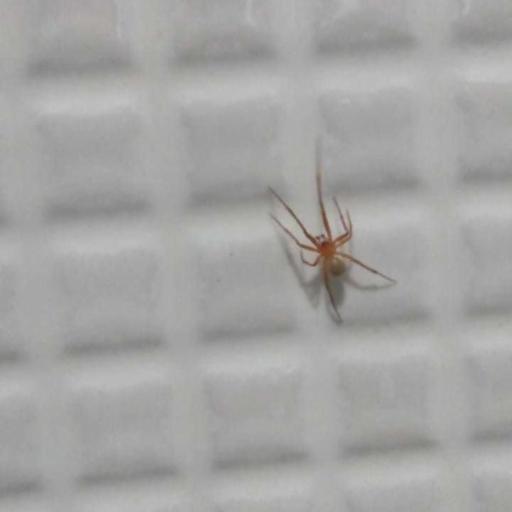
Commonly known as the Red House Spider, this tiny arachnid is a cosmopolitan roommate often found hiding in the shadows of pantries and closets. While its fiery coloration might look intimidating, it is a quiet, non-aggressive predator that prefers to keep your home free of unwanted pests like ants and mosquitoes. In many regions, they are considered "beneficial roommates" due to their tireless hunting habits.
🔍 How to Identify
- 🕷️ The "Marble" Body: They possess a very round, bulbous abdomen (globose) that resembles a tiny, dark marble perched on spindly legs.
- 🦵 Rusty Legs: Their legs and head region (cephalothorax) are a distinct reddish-brown or deep orange, which contrasts with their darker, cream-patterned abdomen.
- 🕸️ Tangle Webs: Instead of the classic circular "orb" web, they build messy, three-dimensional "cobwebs" tucked away in corners or behind furniture.
🏠 Habitat & Ecology
- 🐜 The Indoor Hunter: These spiders are "synanthropic," meaning they have evolved to live alongside humans. You’ll rarely find them deep in the woods; they much prefer the stable climate of your kitchen, bathroom, or garage.
- 🦟 Natural Exterminator: They serve as an excellent chemical-free pest control. Their messy webs are death traps for common household nuisances like silverfish, flies, and even small cockroaches.
⚠️ Safety & Toxicity
- 🛡️ Harmless Resident: The Red House Spider is incredibly shy. If disturbed, its first instinct is to drop from its web and play dead or scurry into a crack rather than bite.
- 🩹 Minor Irritation: While they do have venom to paralyze their tiny prey, it is not medically significant to humans. A rare bite might cause slight redness or itching similar to a mosquito bite, but it poses no threat to healthy adults or pets.
✨ Fun Fact
Because of their round abdomens and messy webs, they are frequently mistaken for the dangerous Brown Widow or Redback spider. However, the Red House Spider lacks the bright "hourglass" marking on its belly, making it a safe (and helpful) lookalike!
More Details








