Info
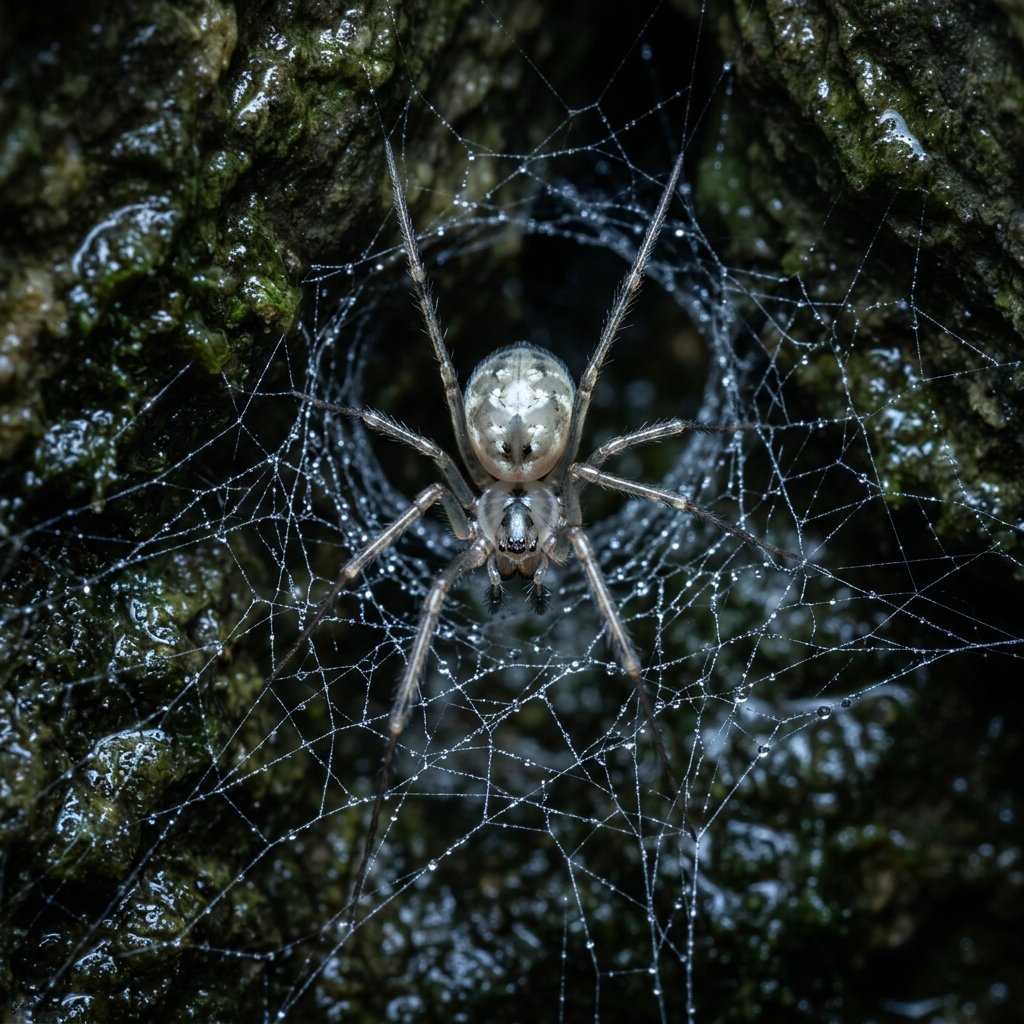
Known as the Cave Cobweb Spider, Nesticus cellulanus is a master of the shadows. While it looks like it belongs in a gothic novel or a forgotten dungeon, it is actually a common resident of suburban cellars, drains, and damp garden crevices. Often mistaken for its cousin the common cellar spider, this species is much more robust and features striking, intricate patterns that look like tiny hand-painted markings.
🔍 How to Identify
- 🕷️ The Abdomen: The body is globular, shiny, and pale yellow or light grey. It typically features a distinct dark longitudinal stripe or a series of spots running down the center.
- 🦵 The Legs: Long and somewhat translucent, the legs are marked with dark rings at the joints, giving them a "banded" appearance that helps them blend into rocky textures.
- 🕸️ The Web: It doesn't spin a classic "wheel" web. Instead, it creates a messy, three-dimensional "scaffold" of tangled silk, usually close to the ground or in the corners of damp walls.
🌲 Habitat & Ecology
- 🌑 Lover of Darkness: As a "troglophilic" species, it thrives in high-humidity, low-light environments. You are most likely to spot them in caves, mine shafts, damp basements, or under large, rotting logs in the forest.
- 🦗 The Trip-Wire Hunter: This spider hangs upside down in its web. It attaches sticky "gum-foot" lines to the ground; when a crawling insect like a woodlouse or a beetle hits the line, it snaps, pulling the prey up into the air where the spider can safely wrap it.
⚠️ Safety & Toxicity
- 🛡️ Status: Harmless to humans and pets.
- 🩹 Details: While these spiders possess venom to subduing their insect prey, their fangs are too small and weak to pierce human skin. They are incredibly shy and will almost always retreat into a crack or drop to the ground if they feel the vibration of a human approaching.
✨ Fun Fact
Unlike many spiders that rely on sight, Nesticus cellulanus is highly specialized for life in the dark. It is extremely sensitive to air currents and vibrations, allowing it to "see" its environment through its legs, detecting the flutter of a gnat's wing from several inches away.
More Details








