Info
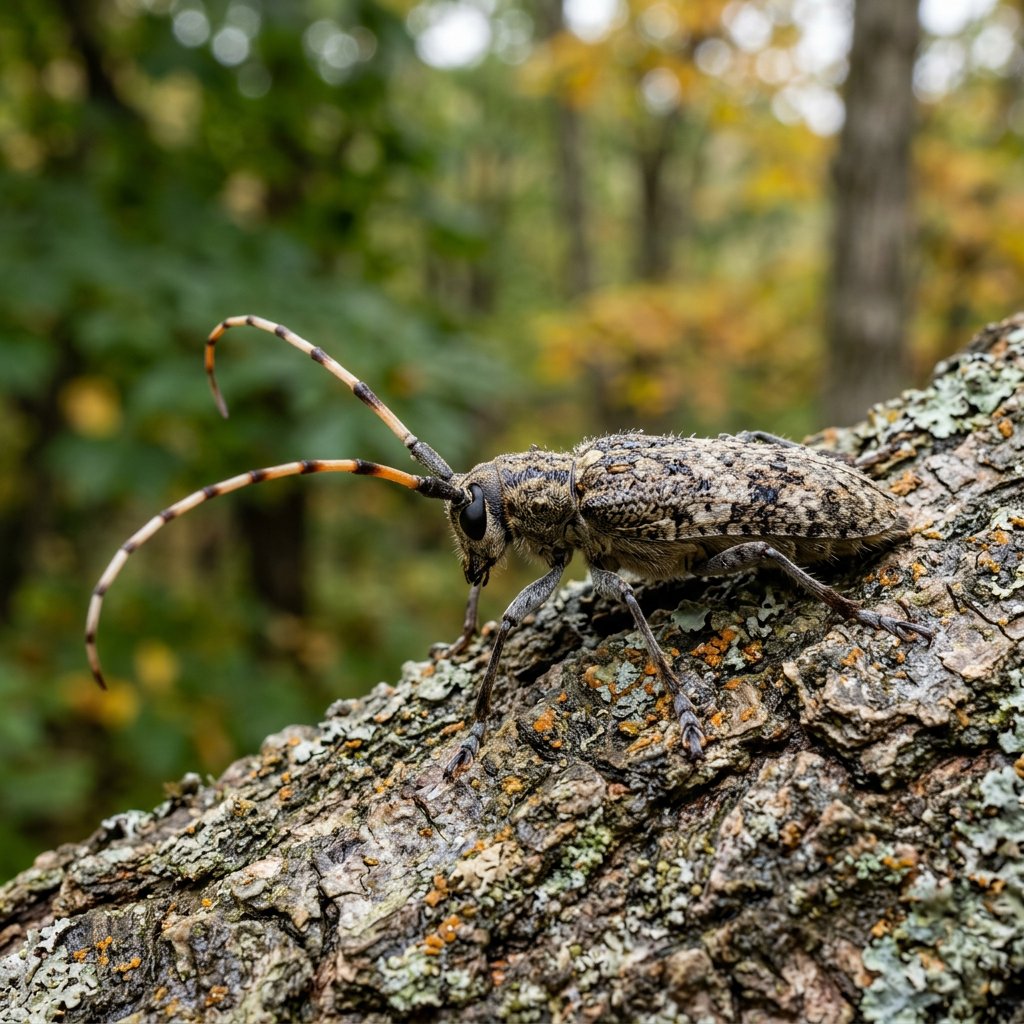
Known as the "Painted-horn Longhorn," Niphona picticornis is a master of disguise within the Mediterranean landscape. If you spot one resting on an old fig tree or a piece of dry wood, you might mistake it for a mere splinter of bark until its magnificent "painted" antennae start to twitch. This beetle is a fascinating example of how nature uses camouflage to hide in plain sight.
🔍 How to Identify
- 🎨 The "Painted" Antennae: Its most striking feature is its long, segmented feelers which feature alternating bands of cream and dark brown, giving it its "painted" namesake.
- 🪵 Bark-mimic Body: The body is rugged and cylindrical, covered in fine hairs that create a mottled grey, tan, and brown texture that perfectly mimics tree bark or lichen.
- 🛡️ Rugged Thorax: It has a sturdy, almost armored appearance with a textured midsection that helps it blend into the rough surfaces of the woody plants it inhabits.
🌲 Habitat & Ecology
- 🌳 The Wood Recycler: This beetle plays a vital role in the ecosystem’s cleanup crew. The larvae are wood-borers that spend their lives inside dead or weakened branches—particularly fig, oak, and mulberry—helping to break down old wood and return nutrients to the soil.
- 🌙 Crepuscular Habits: While they can be found during the day, they are most active during the twilight hours. They are not fast fliers; instead, they rely on their incredible camouflage to stay safe from birds and other predators.
⚠️ Safety & Toxicity
- ✅ Harmless Neighbor: Niphona picticornis is entirely non-toxic and lacks a stinger. It is considered a "friend" to the gardener as it primarily targets dead wood rather than healthy, living tissue.
- 🤏 Strong Mandibles: While not aggressive, like all longhorn beetles, they have strong jaws designed for wood. If you pick one up and handle it roughly, it may give a tiny, harmless "pinch," so it is best to observe them without touching.
✨ Fun Fact
The scientific name picticornis comes from the Latin words pictus (painted) and cornu (horn), a perfect description of the artistic banding found on its iconic antennae!
More Details








