Info
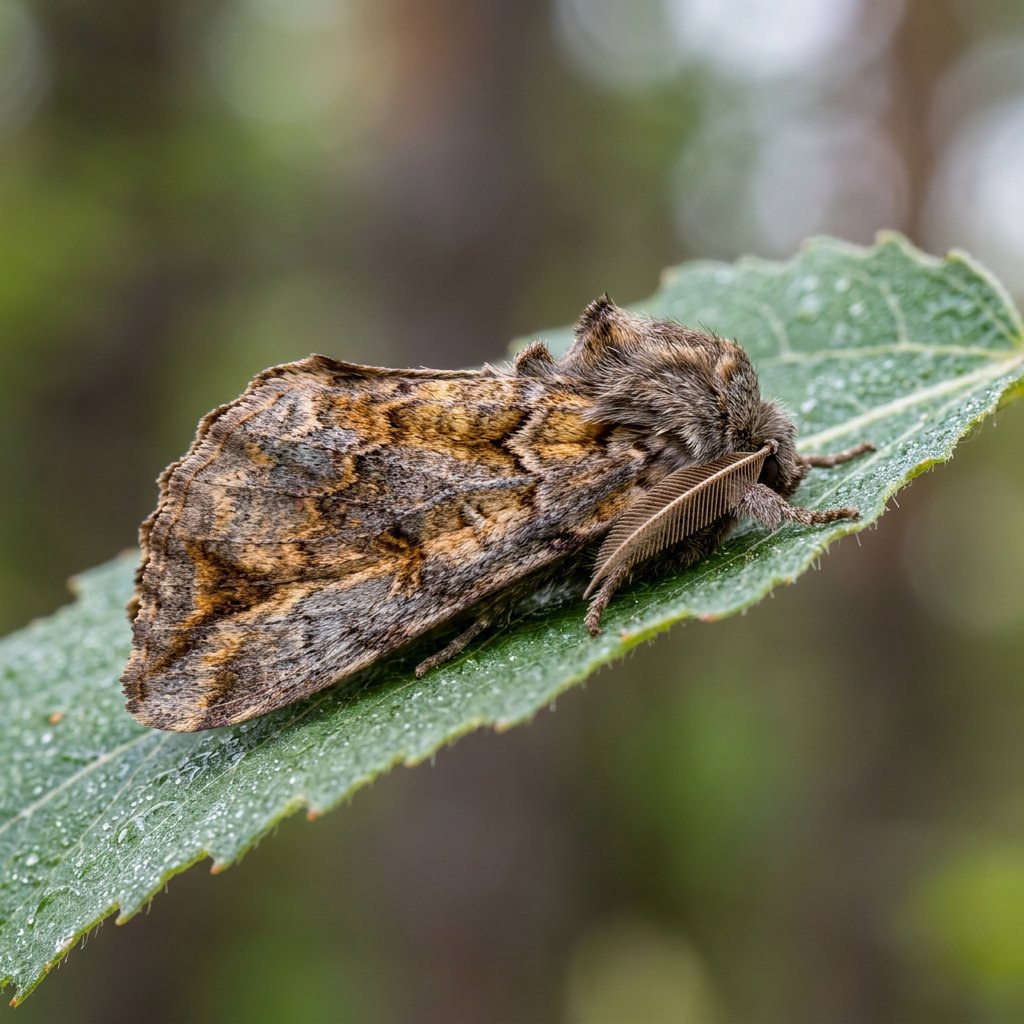
Known as the Pebble Prominent, this moth is a master of disguise that looks more like a weathered river stone or a piece of dried bark than a living creature. Its scientific name, ziczac, refers to the extraordinary jagged profile of its caterpillar, which sports a series of humps that break up its outline against a leaf. Found across Europe and North Africa, it is a quiet but fascinating resident of damp woodlands and garden edges.
🔍 How to Identify
- 🦋 The Resting "Tuft": When at rest, the moth holds its wings in a steep roof-like shape. A small tuft of scales on the back edge of the forewing sticks up, mimicking a broken splinter of wood.
- 🎨 Pebble Patterns: The forewings are a beautiful, subtle mix of tawny browns, purples, and greys. A dark, eye-like spot near the wing tip helps complete the illusion of a smooth, rounded pebble.
- 🐛 The Zig-Zag Larva: The caterpillar is unmistakable; it has three distinct humps on its back and often rests in a cramped "S" shape, making it look like a shriveled, dead leaf.
🌲 Habitat & Ecology
- 🌳 Willow & Poplar Lovers: You are most likely to spot the caterpillars on the undersides of Willow (Salix) or Poplar leaves. They prefer damp environments like marshes, stream banks, and moist garden corners.
- 🌙 Nighttime Navigator: The adult moths do not feed at all; their only goal is to find a mate. They are strictly nocturnal and are frequently drawn to porch lights or garden lanterns during the summer months.
⚠️ Safety & Toxicity
- ✅ Harmless: The Pebble Prominent is a "friend" to the gardener. It possesses no sting, no venom, and its caterpillars do not have irritating hairs.
- 🐶 Pet & Kid Safe: They are completely safe to observe closely or relocate by hand if you find one on a walkway. They are not known to be toxic to curious pets.
✨ Fun Fact
When the caterpillar feels threatened, it doesn't run away. Instead, it arches its body into a rigid "S" shape and stays perfectly still. This "bridge" posture makes it look exactly like a twig or a bit of bird dropping, successfully tricking hungry birds.
More Details








