Info
The Nudaurelia, often celebrated as the "Pine Emperor Moth" or "Cabbage Tree Emperor," is a member of the majestic Saturniidae family. These heavy-bodied moths are the royalty of the African night sky, often mistaken for small birds or bats when they flutter near porch lights. In many cultures, their appearance is seen as a sign of seasonal change, marking the transition into the wetter months when their massive caterpillars emerge.
🔍 How to Identify
- 👁️ The Ocelli: The most striking feature is the large, multi-colored "eyespots" on the hindwings. These rings of black, yellow, and white look like unblinking eyes designed to startle hungry birds.
- 🦋 Velvety Wings: Their wingspan is impressive, often reaching over 12cm. The base colors range from rich terracotta and deep oranges to mustard yellows, covered in a soft, fur-like texture.
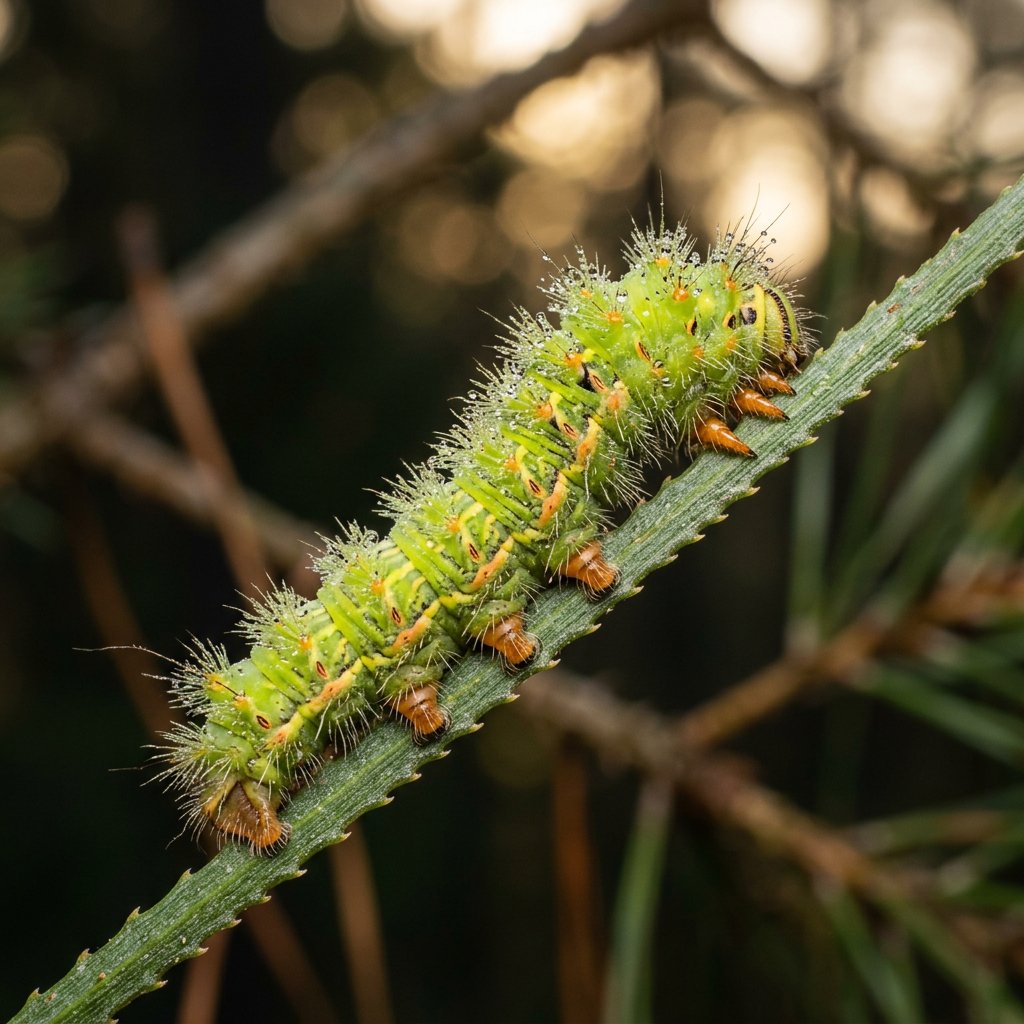
- 🐛 The Caterpillar: Before becoming a moth, the larva is a colorful "armored" tank. They are typically black or dark green with bright yellow or red tubercles (bumps) and stiff, bristly spines.
🌲 Habitat & Ecology
- 🍂 Master of Fasting: As adults, Nudaurelia moths do not have functioning mouthparts. They live for only a few days, fueled entirely by the fat reserves they built up as caterpillars, focusing 100% of their energy on finding a mate.
- 🌳 Forest Dwellers: You will most likely find them in woodlands or near commercial plantations. While they are native to indigenous trees like the Cabbage Tree (Cussonia), they have become quite fond of Pine and Eucalyptus, sometimes becoming a "beautiful pest" in forestry.
⚠️ Safety & Toxicity
- ✋ Handle with Care: While the adult moth is completely harmless and has no stinger or bite, the caterpillars are a different story. Their colorful spines can be sharp and may cause skin irritation or mild "stinging" sensations if handled roughly.
- 🐾 Pet Safety: If your dog finds a large Nudaurelia caterpillar, it’s best to move them away. While not typically deadly, the stiff bristles can cause mouth irritation or digestive upset if swallowed.
✨ Fun Fact
The "eyes" on the Nudaurelia’s wings are a form of automimicry. When a predator approaches, the moth suddenly flashes its hindwings; the sudden appearance of two large "eyes" tricks the predator into thinking it has accidentally stumbled upon an owl or a cat, giving the moth just enough time to fly away!
More Details








