Info
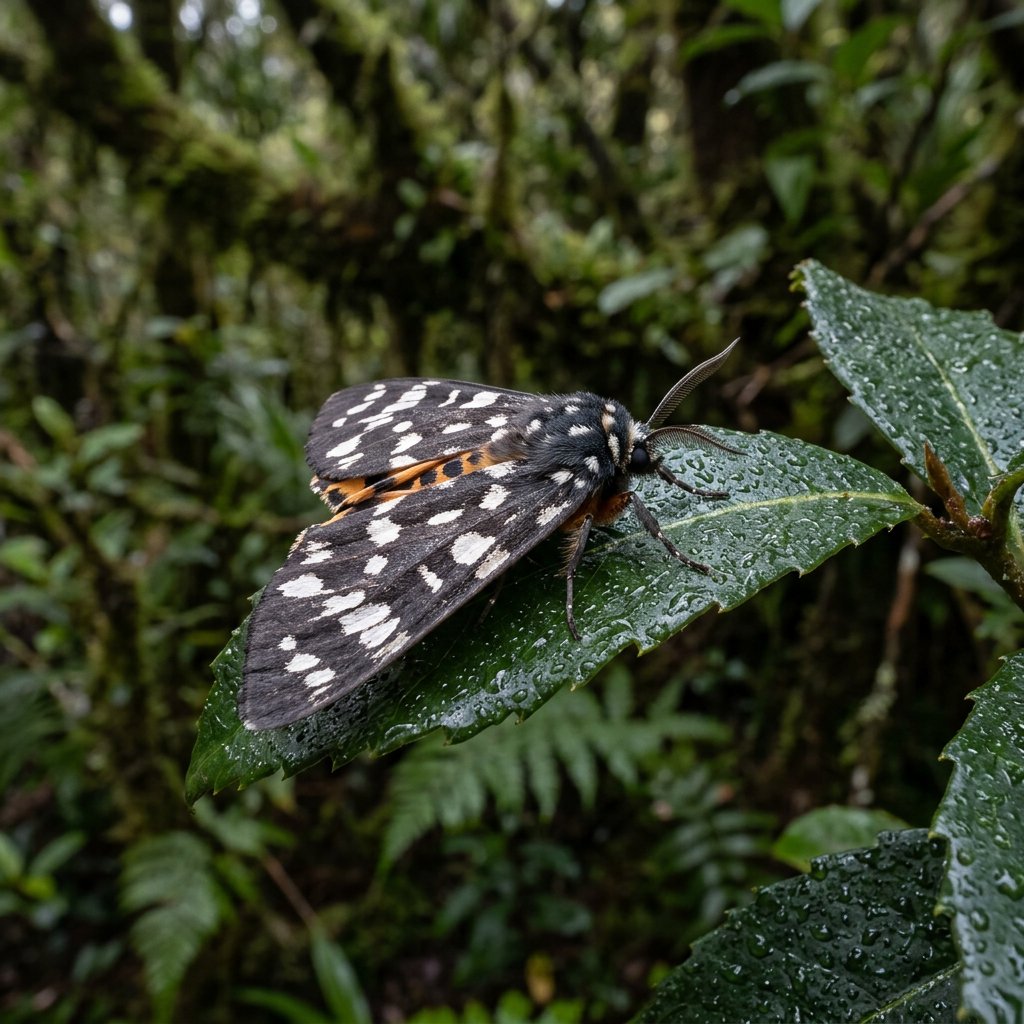
Meet the Magpie Moth, a striking day-flying insect that often tricks people into thinking it’s a butterfly. Known to the Māori people of New Zealand as Mokarakara, this moth is a bold garden resident that doesn't hide in the shadows. Its high-contrast "monochrome" wings and striped body are nature’s way of telling predators to stay away.
🔍 How to Identify
- 🦋 The Wings: Primarily velvety black with large, snowy white circular spots that create a "patchwork" or magpie-like appearance.
- 🐝 The Body: Unlike many dull moths, its abdomen is brightly banded with vivid orange or yellow and black stripes, resembling a wasp's warning colors.
- 🐛 The "Woolly Bear" Larvae: The caterpillars are distinctive—densely covered in black bristles with thin reddish-orange lines running down their backs.
🌲 Habitat & Ecology
- 🌼 Daytime Activity: Unlike most moths that wait for nightfall, the Magpie Moth is most active in bright sunshine, fluttering slowly around garden flowers and shrubs.
- 🥗 Specialized Diet: They are particularly fond of the Senecio family. If you have Cinerarias, Groundsel, or Ragwort in your garden, you are almost guaranteed to see these moths laying eggs on the undersides of the leaves.
- 🛡️ Chemical Defense: As caterpillars, they eat toxic plants and store those toxins in their bodies. This makes both the caterpillar and the adult moth taste terrible to birds, which is why they fly so confidently in broad daylight.
⚠️ Safety & Toxicity
- ✅ Status: Harmless to humans and pets.
- 🧤 Skin Sensitivity: While they don't bite or sting, the "hairy" caterpillars can cause mild skin irritation or an itchy rash for people with sensitive skin if handled directly. It is best to admire them without touching.
- 🌿 Garden Impact: They can occasionally defoliate your favorite Cinerarias, but they are a natural part of the ecosystem and rarely cause permanent damage to established plants.
✨ Fun Fact
The Magpie Moth is a master of "Aposematism"—the scientific term for using bright colors to advertise toxicity. Because they carry alkaloids from the Ragwort plant, they are one of the few insects that birds in New Zealand and Australia have learned to leave completely alone!
More Details








