Info
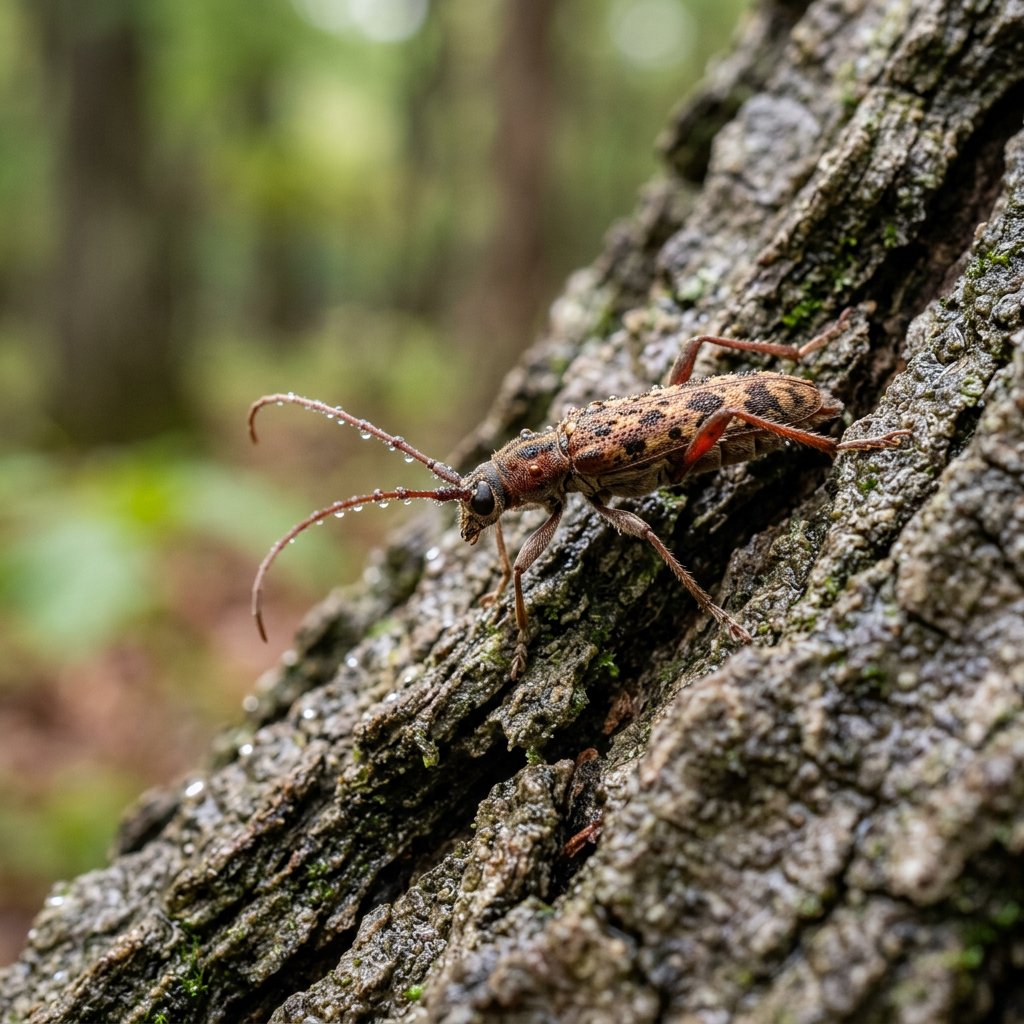
Often called the Spotted Longhorn Beetle, Obrium maculatum is a dainty, nocturnal visitor that many mistake for a tiny moth or a piece of bark at first glance. These slender beetles are members of the famous Longhorn family, but unlike some of their larger, more intimidating cousins, they are delicate creatures that spend most of their lives tucked away in the hardwood forests of North America.
🔍 How to Identify
- 🎨 Distinctive Markings: Look for a pale yellowish-tan body decorated with dark, irregular brown spots (maculations) on the wing covers.
- 📏 Slender Silhouette: They are remarkably small and thin, usually measuring only 4 to 10 millimeters in length, making them easy to overlook.
- 📡 Sweeping "Horns": True to their family name, they possess exceptionally long, thread-like antennae that often arch gracefully back past the end of their bodies.
🌲 Habitat & Ecology
- 🍂 Nature’s Recyclers: These beetles are the cleanup crew of the forest. Their larvae develop inside the dead and decaying twigs of hardwood trees like Oak, Hickory, and Hackberry, helping turn old wood back into soil.
- 🌙 Attracted to Light: While they spend their days hiding under leaves or bark, they are highly active at night. If you see a tiny, long-legged beetle fluttering near your porch light in mid-summer, it is likely an Obrium.
⚠️ Safety & Toxicity
- 🛡️ Completely Harmless: These insects are "friends" of the garden. They do not sting, and their mandibles are far too small and weak to bite humans or pets.
- 🏠 No Risk to Homes: Although they are "wood-boring" in their larval stage, they only target dead, unseasoned forest branches. They are not structural pests and will not damage your furniture, flooring, or the framing of your house.
✨ Fun Fact
The "horns" on this beetle aren't for fighting; they are actually highly sensitive chemical receptors. They use these massive antennae to "sniff" out the perfect piece of decaying wood or to find a mate in the pitch-black darkness of the forest canopy!
More Details








