Info
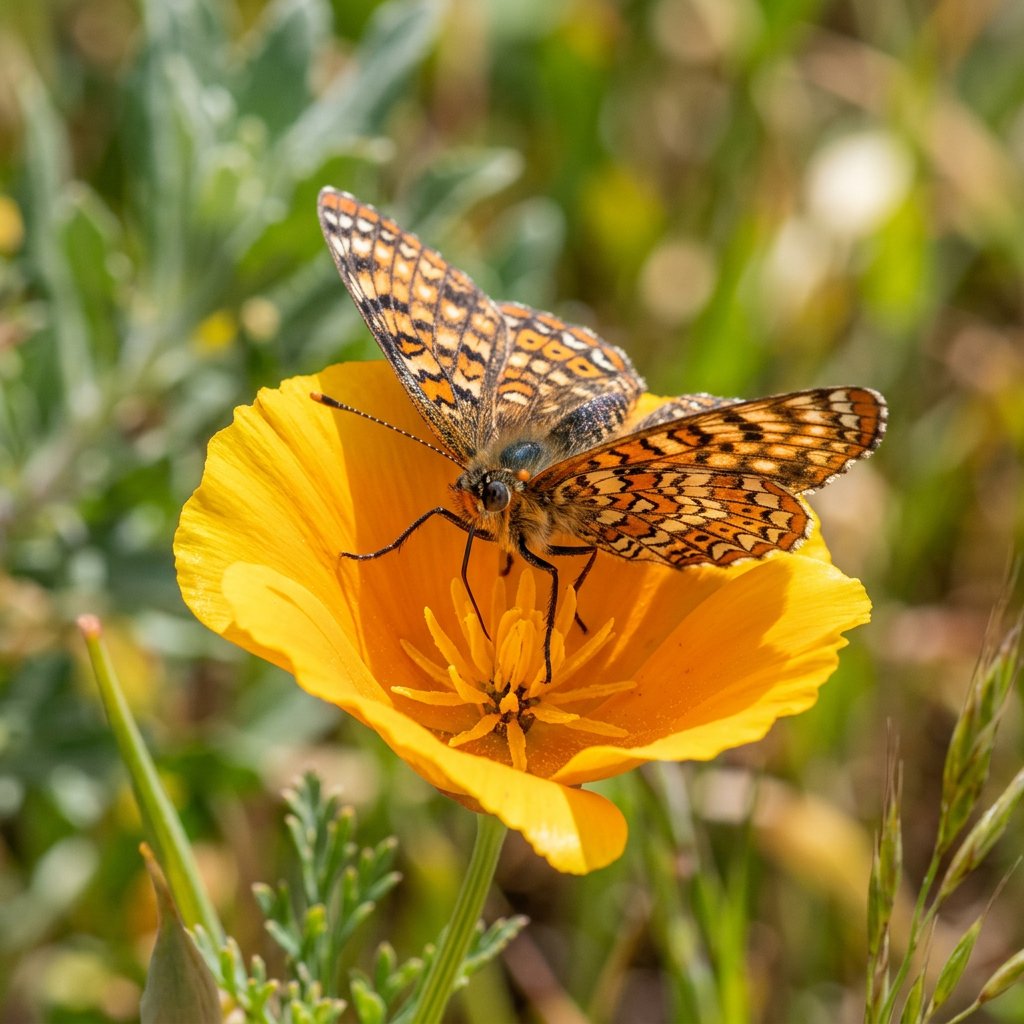
Known as the Chalcedon Checkerspot, this butterfly is a striking mosaic of color commonly found fluttering across the western United States. Named for its intricate, stone-like wing patterns that resemble chalcedony quartz, it is a frequent guest in wildflower meadows and chaparral. While its spiky caterpillar might look intimidating, this insect is a peaceful pollinator that adds a touch of stained-glass beauty to any landscape.
🔍 How to Identify
- 🦋 Wing Pattern: Features a complex "checkerboard" of creamy-white and vibrant orange-red spots set against a deep black or brownish-black background.
- 🎨 The Underside: When the wings are closed, they reveal an even more intense pattern of orange and cream bands, which helps them blend into dappled sunlight.
- 🐛 Larval Appearance: The caterpillars are charcoal black with rows of orange spots and are covered in short, stiff, black spines (scoli) that give them a "fuzzy" but prickly look.
🌲 Habitat & Ecology
- ⛰️ Hilltopping Heroes: You’ll often find males congregating on the very peaks of hills or ridges. This "hilltopping" behavior is their way of staking out territory to wait for passing females.
- 🍽️ Host Preferences: They are specialized diners, preferring the leaves of Monkeyflowers (Mimulus), Penstemons, and Snowberries. Their presence is a great sign of a healthy, biodiverse native plant community.
⚠️ Safety & Toxicity
- ✅ Friendly Pollinator: The Chalcedon Checkerspot is completely harmless to humans. It does not bite or sting, making it a safe species for children and hobbyists to observe closely.
- 🌿 Chemical Defense: As caterpillars, they ingest iridoid glycosides from their host plants. This makes the adult butterflies taste incredibly bitter to birds, providing a natural "shield" against hungry predators.
✨ Fun Fact
In a behavior known as "puddling," these butterflies often gather around damp soil or mud to sip mineral-rich water, which provides them with the specific nutrients and salts necessary for successful mating.
More Details








