Info
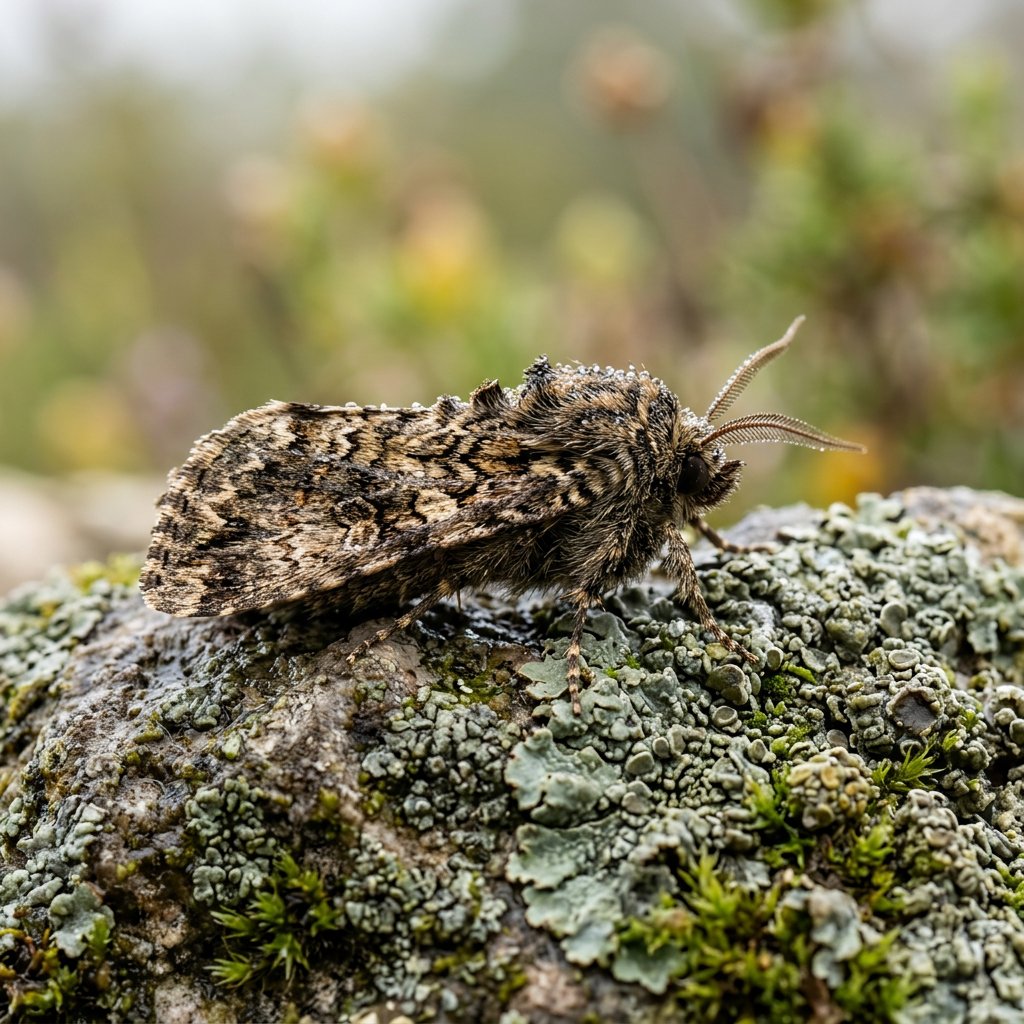
Known as the "Woolly Bear" moths in their larval stage, the Ocnogyna genus represents a group of resilient survivors often found in the Mediterranean and semi-arid regions. These moths are famous for their thick, fuzzy coats as caterpillars and a strange evolutionary twist: while the males are agile flyers, many females never take to the sky, lacking functional wings entirely.
🔍 How to Identify
- 🦋 Male Wings: The males feature earthy tones of cream, tan, or brown with dark, irregular spots or bands that provide perfect camouflage against dry leaf litter.
- 🐛 The "Woolly" Look: As caterpillars, they are densely covered in long, stiff hairs (setae), usually in shades of black, grey, or reddish-brown, which protect them from birds and lizards.
- 🕵️ Wingless Females: One of the most unique traits of many Ocnogyna species is that the females are "brachypterous," meaning their wings are tiny stubs, making them look more like plump, fuzzy beetles than moths.
🌲 Habitat & Ecology
- 🍃 Hardy Herbivores: These caterpillars are generalist feeders, happily munching on a variety of low-growing plants, grasses, and clover. They are often seen crossing paths or climbing garden walls in early spring.
- ☀️ Sun Lovers: They prefer open, sunny habitats like meadows, rocky hillsides, and coastal scrublands. Their dark, hairy bodies help them absorb heat quickly during chilly mornings.
⚠️ Safety & Toxicity
- 🚫 Irritant Hairs: While they do not bite or sting, the stiff hairs of the caterpillar are a defense mechanism. They can cause skin irritation or a mild rash (dermatitis) if handled roughly.
- 🐾 Pet Warning: Keep curious pets away from the "woolly" caterpillars. If ingested, the hairs can cause significant irritation to a dog or cat's mouth and throat.
✨ Fun Fact
Because the females cannot fly to find a mate, they stay perched near their cocoons and release powerful pheromones. The males have specialized, feathery antennae that act like high-tech "radars," allowing them to detect a female's scent from incredible distances!
More Details








