Info
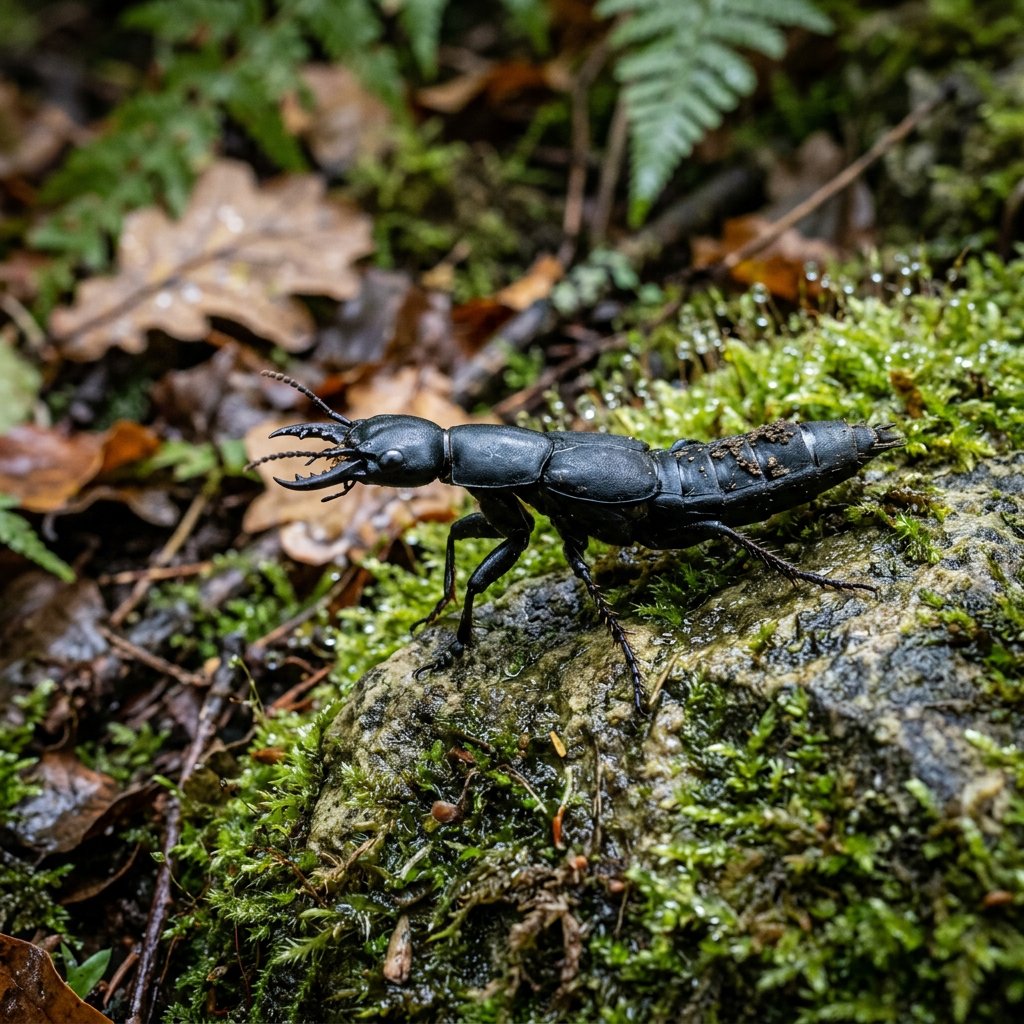
Often called the Devil’s Coach Horse, this sleek, jet-black beetle is the stuff of ancient folklore and nighttime garden drama. Famous for its dramatic, scorpion-like defensive posture, it has earned a reputation for being far more sinister than it actually is. In reality, it is a gardener's secret bodyguard, patrolling the shadows to keep pest populations in check.
🔍 How to Identify
- 🪲 The "Scorpion" Pose: Its most iconic trait is raising its flexible abdomen and opening its mandibles wide when threatened, mimicking a stinging scorpion to scare off predators.
- 🌑 Matte Black Body: A robust, elongated body (reaching up to 3cm) covered in fine hairs that give it a velvety, deep matte-black appearance.
- ⚔️ Short Wing Covers: Unlike many beetles, its wing covers (elytra) are very short, leaving most of its segmented abdomen exposed and mobile.
🌲 Habitat & Ecology
- 🐌 Slug Hunter: This is a fierce, flightless predator that feeds primarily on garden pests like slugs, snails, and woodlice. It uses its powerful jaws to crush its prey, making it an excellent ally for organic gardeners.
- 🌙 Night Patroller: It is primarily nocturnal, spending its days hiding in damp crevices under rocks, logs, or leaf litter. It prefers cool, moist environments where its prey is most active.
⚠️ Safety & Toxicity
- 🫦 A Sharp Nip: While it possesses no venom or stinger, its large mandibles can deliver a surprisingly sharp and painful bite if it is handled or stepped on with bare feet.
- 💨 Stink Defense: When agitated, it can emit a foul-smelling white fluid from glands at the tip of its tail. This "smell-gun" is its primary way of discouraging birds and curious pets.
- 🐾 Pet Safety: It is not toxic to dogs or cats, though the combination of a pinch and a bad smell usually ensures that pets leave them alone after the first encounter.
✨ Fun Fact
- 📜 In Middle Ages folklore, it was believed that this beetle could "curse" a person simply by pointing its raised tail at them. It was also rumored to be the creature that ate the core of the apple thrown away by Eve in the Garden of Eden!
More Details








