Info
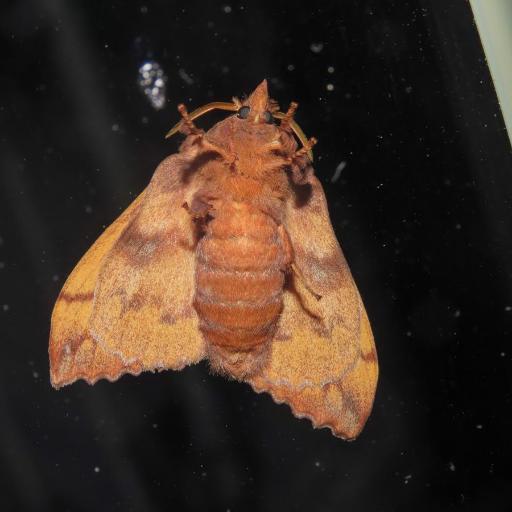
Known as the Plum Lappet, this moth is a master of disguise and a splash of fiery color in the twilight. When resting, it folds its wings in a roof-like shape, perfectly mimicking a dried, orange-red leaf to hide from predators. While it is a common sight in orchards across Eurasia, its vivid, toasted-orange hue makes it a favorite find for night-time nature observers.
🔍 How to Identify
- 🦋 The Wings: Broad, scalloped wings that are typically a rich orange-brown or brick-red, featuring a distinct small white spot in the center of the forewing.
- 🍂 The Posture: At rest, its hindwings protrude forward beneath the forewings, breaking its silhouette to look exactly like a jagged, fallen leaf.
- 🐛 The Caterpillar: Large and hairy with a bluish-grey or brown body, adorned with subtle orange markings and "lappets" (fleshy lobes) along its sides.
🌲 Habitat & Ecology
- 🍒 Dietary Preferences: The larvae are particularly fond of trees in the Rosaceae family, frequently munching on the leaves of Plum, Cherry, Pear, and Apple trees.
- 🌙 Night Life: As a nocturnal species, the adults spend their days hidden in foliage. They are most active during the mid-summer months, often drawn to porch lights or garden lanterns.
⚠️ Safety & Toxicity
- 🟢 Status: Completely harmless to humans and pets. They do not bite, sting, or carry venom.
- 🖐️ Caterpillar Caution: Like many "hairy" caterpillars, the bristles of the Plum Lappet larva can occasionally cause mild skin irritation or an itchy rash if handled roughly by sensitive individuals.
✨ Fun Fact
The name "Lappet" comes from the Latin word for "lobe." It refers to the small, decorative skin flaps found on the sides of the caterpillar, which help it blend perfectly into the twigs of fruit trees by softening its shadow!
More Details








