Info
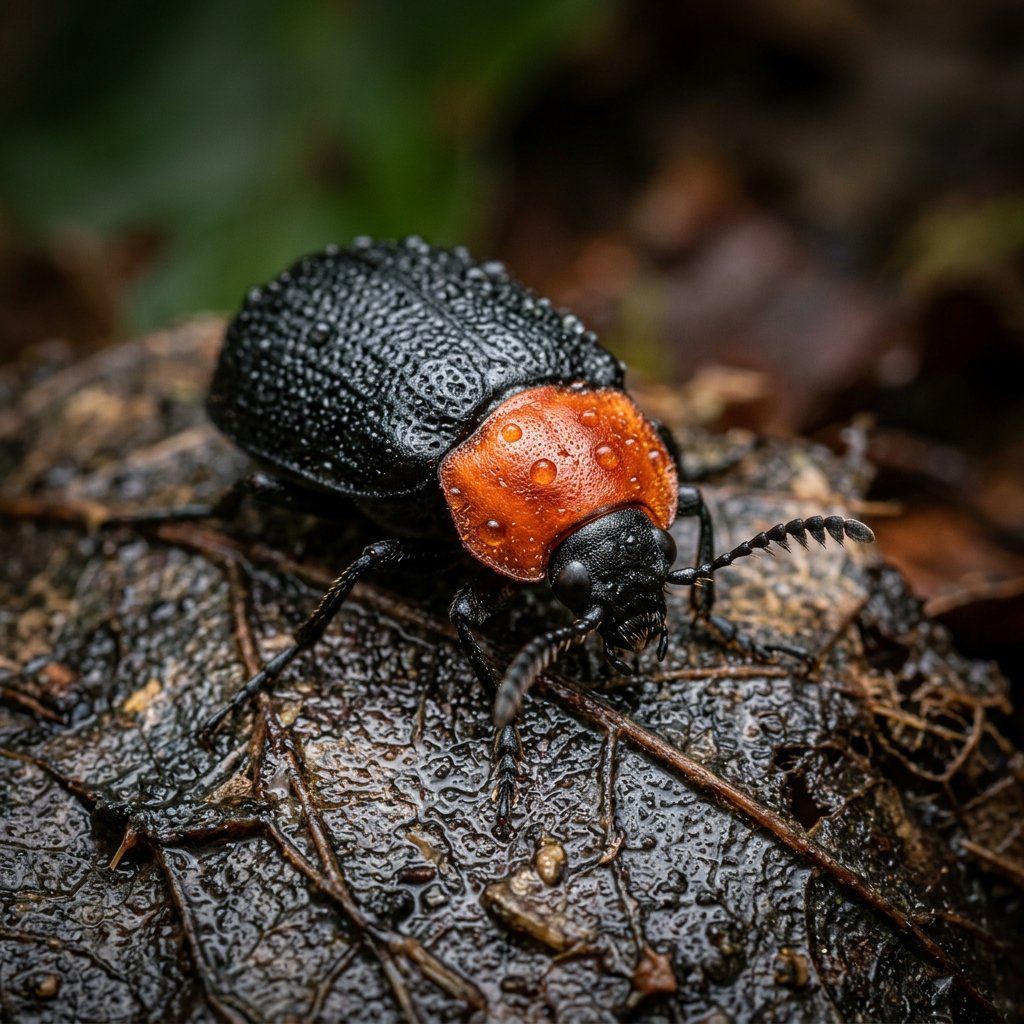
Meet the Red-breasted Carrion Beetle, nature’s most stylish recycler. While the idea of a "carrion" beetle might sound a bit macabre, these insects are essential members of the forest's cleaning crew. Often spotted in early spring, they are easily recognized by their bright orange "vests," making them look surprisingly formal for creatures that handle nature's leftovers.
🔍 How to Identify
- 🧡 The "Vest": The most striking feature is the broad, shield-like section behind the head (the pronotum), which is a vibrant orange or dull red.
- 🖤 Black Elytra: The wing covers are matte black, often featuring subtle longitudinal ridges, and are slightly wider toward the rear.
- 🥞 Flattened Shape: They possess a very flat body profile, an evolutionary gift that allows them to slide easily under carcasses or deep into thick leaf litter.
🌲 Habitat & Ecology
- 🪵 Woodland Specialist: Unlike many other scavengers that prefer open fields, this beetle is a forest lover. You are most likely to find them in deciduous woodlands where the ground remains damp and shaded.
- 🍽️ Eclectic Scavenger: While they are primarily necrophagous (feeding on dead animals), they aren't picky eaters. They are frequently found congregating on rotting fungi or even sipping fermenting sap from wounded trees.
- 🪰 Fly Competitor: By rapidly consuming decaying matter, they provide a vital service by outcompeting fly larvae (maggots), which helps keep the local "pest" fly population in check.
⚠️ Safety & Toxicity
- ✅ Non-Aggressive: The Red-breasted Carrion Beetle is a "friend" to the ecosystem. They do not sting and they do not have a painful bite.
- 🤢 Smelly Defense: If handled or threatened, they may reflexively vomit or secrete a foul-smelling liquid from their abdomen to deter predators.
- 🧼 Hygiene Note: Because they spend their lives around decaying organic matter, it is best to avoid touching them. If you do, a quick hand-wash is highly recommended to stay germ-free.
✨ Fun Fact
The "Stinkhorn" mushroom is a master manipulator of this beetle. The mushroom emits a pungent odor of rotting meat specifically to attract Oiceoptoma thoracicum. When the beetle lands on the fungus looking for a meal, it accidentally gets coated in spores, which it then carries to new locations—acting as a tiny, orange-vested delivery service for the mushroom!
More Details








