Info
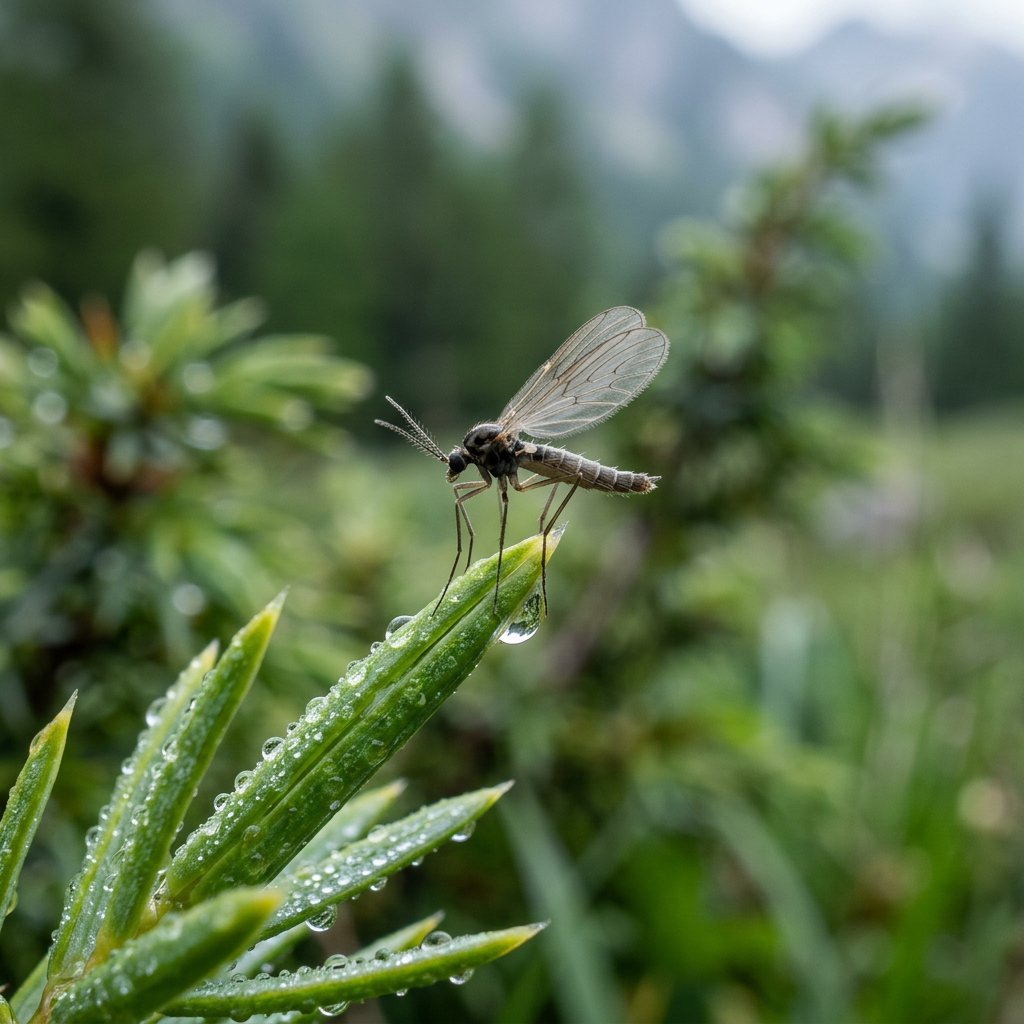
Commonly known as the Juniper Gall Midge, this tiny architect is more often identified by its "house" than its face. While the adult fly is nearly invisible to the naked eye, it leaves behind distinctive, artichoke-like galls on the tips of juniper branches. In many regions, these strange, clustered growths were once mistaken for the plant's own fruit or a bizarre mutation.
🔍 How to Identify
- 🪺 The Gall: Look for small, scale-like growths that resemble tightly packed miniature pinecones or artichokes at the ends of juniper twigs.
- 🪰 The Adult: A delicate, mosquito-like fly (though much smaller) with long, fragile legs and translucent wings. They are rarely seen, as their adult lifespan is extremely short.
- 🐛 The Larva: If you carefully peel back the scales of a fresh gall, you will find a tiny, bright orange-to-yellow maggot tucked safely inside a central chamber.
🌲 Habitat & Ecology
- 🌳 Host Specificity: These midges are highly picky eaters; they are almost exclusively found on the Juniperus communis (Common Juniper) and occasionally other juniper varieties.
- 🏗️ Chemical Engineering: In spring, the female lays eggs in the leaf axils. As the larvae feed, they inject specific chemicals that "trick" the juniper into growing a thick, protective leafy fortress around them.
- 🦅 The Food Web: While the midge lives off the tree, it is often hunted by tiny parasitic wasps that use long stingers to pierce the gall and lay eggs on the midge larvae inside.
⚠️ Safety & Toxicity
- 🛡️ Completely Harmless: The Juniper Gall Midge does not bite, sting, or transmit any diseases to humans or pets. It is a purely aesthetic resident of the garden.
- 🌿 Plant Health: While the galls might look "messy" to a perfectionist gardener, they rarely harm the overall health of the tree. There is no need for heavy pesticides; simply pruning the galls off is enough if you dislike the look.
✨ Fun Fact
The gall created by Oligotrophus juniperinus is a sophisticated "climate-controlled" nursery. Even in the dead of a freezing winter, the thick, overlapping layers of juniper scales provide enough insulation to keep the larva warm and hydrated until it is ready to emerge as an adult in the spring!
More Details








