Info
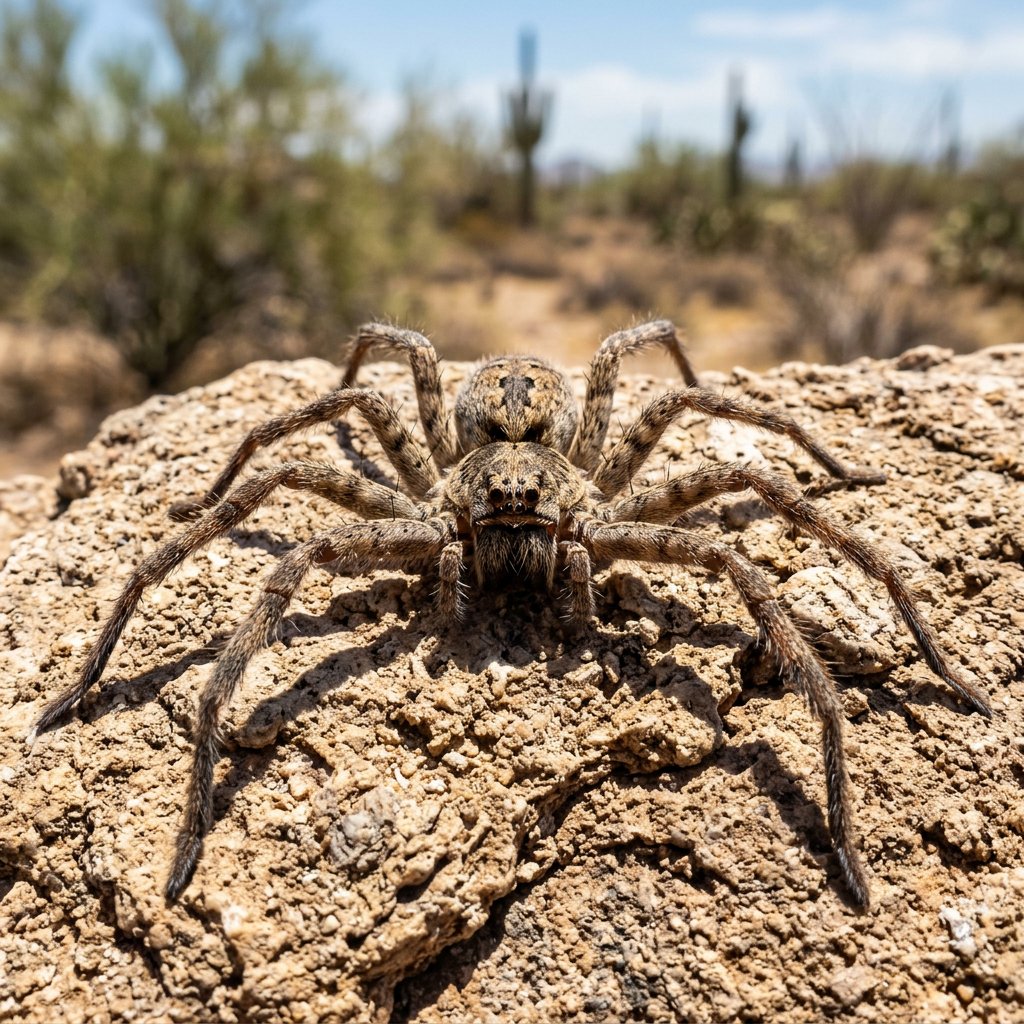
Often mistaken for a small tarantula due to its impressive size, the Giant Crab Spider is the Southwest’s most famous "wall-runner." Known for its incredible speed and "crab-like" sideways scuttle, this spider is a desert icon that prefers a life of active hunting over sitting in a web. While its appearance can be startling, it is a master of pest control, acting as a silent guardian against roaches and crickets.
🔍 How to Identify
- 🦵 The Leg Span: Its most striking feature is its long, thick legs that can span up to 2.5 inches. Unlike most spiders, its legs are oriented to the sides, allowing it to move laterally with ease.
- 🎨 Desert Camouflage: The body is typically a uniform sandy tan, pale beige, or grayish-brown, perfectly matching the bark of desert trees or sun-bleached wood.
- 🚫 No Web: You won’t find this spider hanging in a classic circular web; it is a "wandering spider" that roams surfaces to find its prey.
🌲 Habitat & Ecology
- 🌙 Nighttime Navigator: This species is strictly nocturnal. During the day, it hides in crevices, under peeling bark, or behind shutters. At night, it emerges to hunt using its excellent vibration-sensing abilities.
- 🦗 Beneficial Predator: In the ecosystem, they are top-tier insect hunters. They are particularly fond of large insects that other spiders can't handle, such as cockroaches and crickets, making them a "roommate" that pays rent by cleaning up pests.
⚠️ Safety & Toxicity
- 🛡️ Non-Aggressive: Despite its "scary" size, the Giant Crab Spider is quite shy and will almost always choose flight over fight. It will only bite if it is accidentally squeezed or provoked.
- 🐝 Minor Reaction: Their venom is not considered medically significant to humans. A bite is often compared to a bee sting—expect localized pain, redness, and slight swelling that usually fades within a few hours.
- 🐾 Pet Safety: While not lethal to cats or dogs, a bite could cause discomfort or a localized reaction, so it’s best to keep curious pets from "playing" with them.
✨ Fun Fact
The Giant Crab Spider is a world-class sprinter! It is capable of moving several feet in a single second, a speed that helps it chase down fast-moving prey and vanish into thin air when a human turns on a light.
More Details








