Info
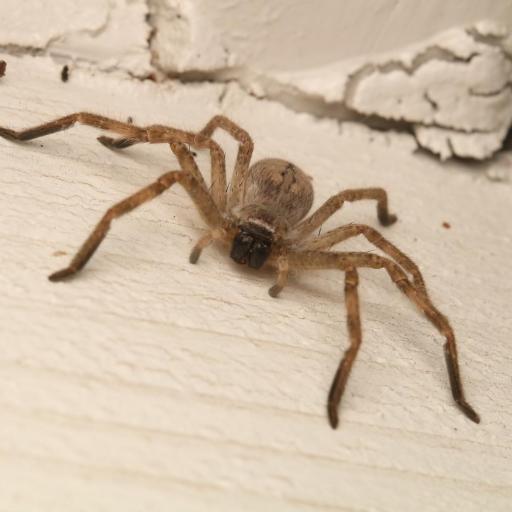
The Olios genus belongs to the famous family of Huntsman spiders, often called "Giant Crab Spiders" because of their wide, lateral stance and impressive leg span. While their large size and lightning-fast speed can give anyone a "jump-scare" when they scuttle across a wall, they are actually nature's expert exterminators, preferring to hunt down pests rather than hide in a web.
🔍 How to Identify
- 🕷️ The "Crab" Stance: Their legs are angled outward and forward rather than downward, allowing them to scuttle sideways into narrow crevices with incredible ease.
- 👀 Eight Little Eyes: They possess two rows of four eyes; the bottom row is typically straight, providing them with excellent motion detection for nocturnal hunting.
- 🎨 Camouflage Colors: Most species are dressed in shades of tan, grey, or rusty brown, often with fuzzy "socks" (scopulae) on their feet that allow them to climb smooth surfaces like glass.
🌲 Habitat & Ecology
- 🦟 The Natural Exterminator: Unlike many spiders, Olios species do not build webs to catch food. Instead, they are active pursuit predators that devour moths, beetles, and even large cockroaches.
- 🏠 Indoor Stealth: In the wild, they love living under loose tree bark. In residential areas, they are common "uninvited guests" found behind picture frames, under sofas, or near porch lights where insects congregate.
⚠️ Safety & Toxicity
- 🩹 Low Risk: While they do have venom to paralyze their prey, it is not considered medically significant to humans. A bite is rare and typically only occurs if the spider is pinched or crushed.
- 🐾 Pets & Kids: The sensation of a bite is often compared to a bee sting—sharp pain followed by localized swelling. While not deadly, it’s best to keep curious pets away to avoid a defensive nip.
✨ Fun Fact
The Olios is a master of the "wall-run." Because of specialized microscopic hairs on their feet called ungual tufts, they can sprint across a vertical ceiling at speeds that would make an Olympic sprinter jealous, often covering several feet in a single second!
More Details








