Info
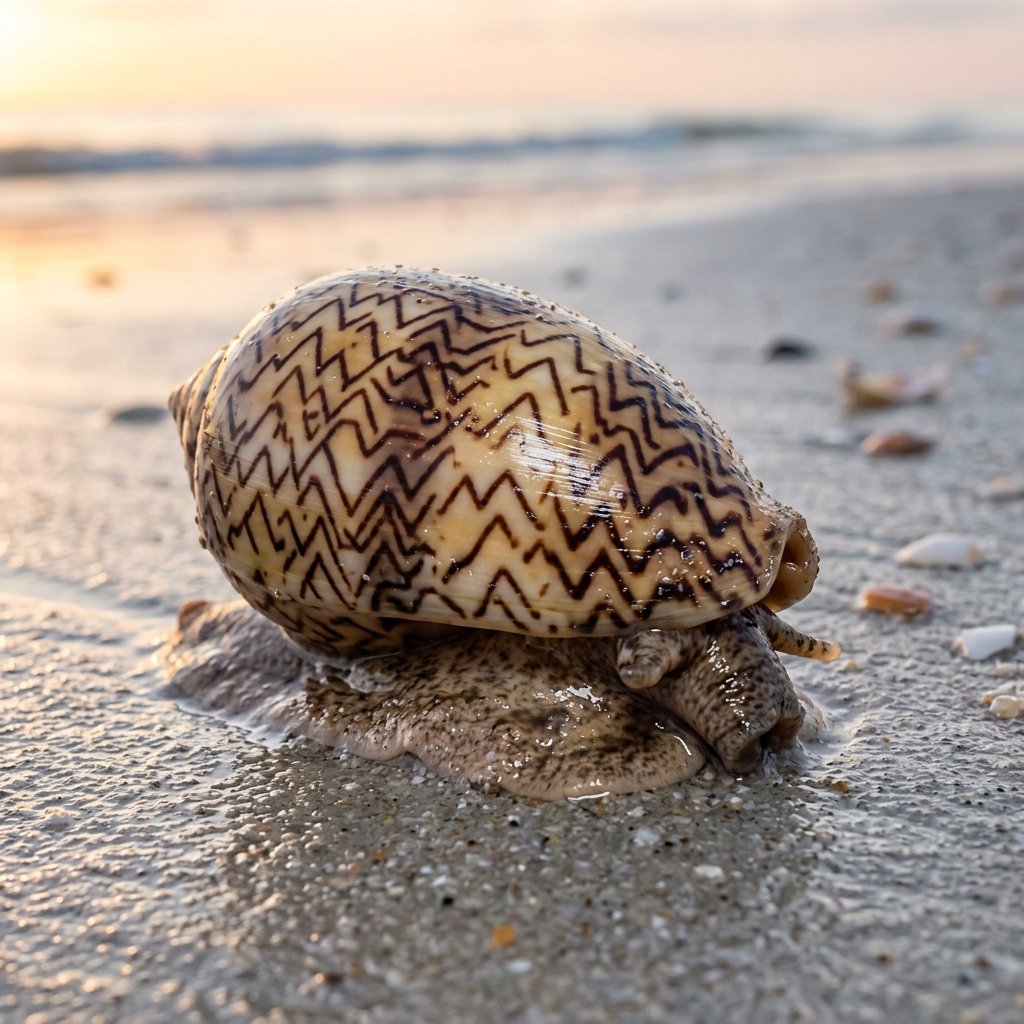
Known widely as the Lettered Olive, Oliva sayana is not actually an insect, but one of the most beautiful marine snails found along the sandy shores of the Atlantic. Named for the dark, zig-zag markings that resemble ancient calligraphy or "letters," this glossy predator is the official state shell of South Carolina and a favorite for beachcombers.
🔍 How to Identify
- 🐚 The Shell: A smooth, cylindrical, and highly polished shell typically reaching 2 to 3 inches in length. It lacks a "dull" side because the snail’s mantle covers the shell to protect it from abrasion.
- 🖋️ The Pattern: Features distinct, brownish-purple zig-zag lines over a cream or grayish background, looking almost like a secret code written by the sea.
- 🌊 The Foot: When active, the snail extends a large, fleshy "foot" that is much bigger than the shell opening, used for gliding over and under the sand.
🏖️ Habitat & Ecology
- 🏖️ Underground Lifestyle: These snails spend most of their time buried just beneath the surface of the sand near the low-tide mark. You can often track them by looking for the "V-shaped" trails they leave in the wet sand as they move.
- 🦀 The Silent Hunter: Don't let the pretty shell fool you—they are efficient carnivores. They hunt small bivalves and crustaceans, dragging their prey beneath the sand to consume it safely away from larger predators.
⚠️ Safety & Toxicity
- ✅ Completely Safe: Unlike the venomous "Cone Snails" found in the Indo-Pacific, the Lettered Olive is entirely harmless to humans. It does not bite, sting, or carry toxins.
- 🐚 Live Shell Warning: While safe, it is important to check if a shell is occupied before taking it home. If the snail is still inside, it is best (and often legally required) to return it to the water to preserve the local ecosystem.
✨ Fun Fact
The Lettered Olive was named by the famous American naturalist Thomas Say in the early 1800s. Because the snail's mantle (body) protects the shell from the scratching of sand and waves, the shell remains naturally shiny throughout the snail's entire life!
More Details








