Info
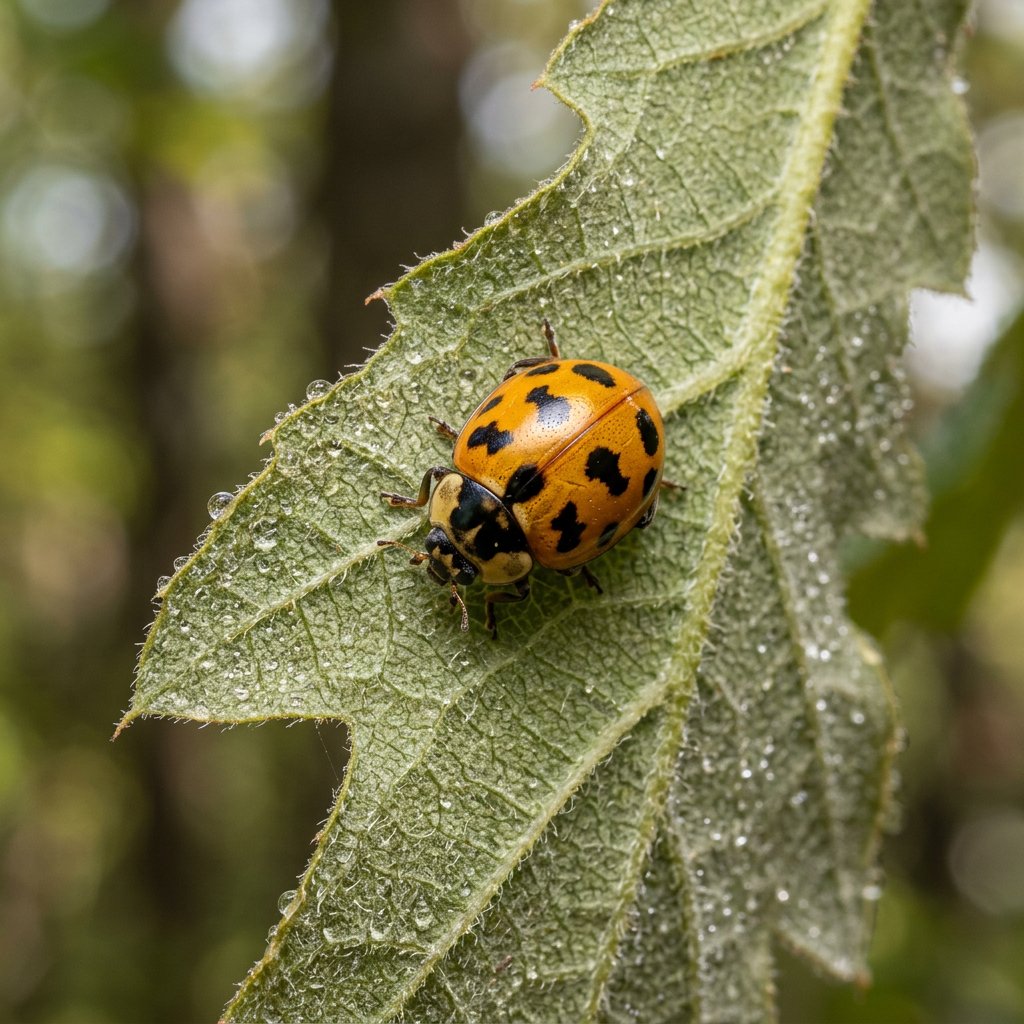
Known as the Ashy Gray Lady Beetle, this tiny predator is a master of disguise. Depending on where you find it, it might look like a smoky-gray pebble or a polished black gemstone with two glowing red spots. Regardless of its outfit, it is a dedicated "bodyguard" for your trees and shrubs, patrolling the leaves for pesky invaders.
🔍 How to Identify
- 🎨 Two-Faced Appearance: This species is "dimorphic," meaning it has two distinct color forms. One is pale gray with tiny black dots; the other is solid black with a single red or orange spot on each wing cover.
- 🛡️ The Pronotum Pattern: On the segment just behind the head, you’ll usually find white markings that look like a pair of "spectacles" or a wide, blocky "M."
- 📐 Body Shape: It has a classic dome-like ladybug shape but is slightly more oval and elongated than the common red Seven-Spotted Ladybug.
🌲 Habitat & Ecology
- 🍽️ The Psyllid Specialist: While most ladybugs hunt aphids, the Ashy Gray Lady Beetle has a particular craving for psyllids (jumping plant lice). They are nature’s best defense for citrus and oak trees.
- 🌳 Arboreal Lifestyle: Unlike some beetles that crawl in the grass, Olla V-nigrum prefers the high life. You will most likely spot them in the canopies of trees or on the undersides of large shrub leaves.
- ❄️ Overwintering: They are hardy survivors that huddle together in tree bark crevices or under leaf litter to stay warm during the winter months.
⚠️ Safety & Toxicity
- ✅ Status: A gardener’s "Best Friend."
- 👃 Reflex Bleeding: If they feel threatened, they may leak a tiny bit of yellow, smelly fluid from their leg joints. It’s not dangerous, but it tastes terrible to birds and might leave a faint stain on your skin.
- 👶 Safe for All: They do not sting and are not toxic to pets or children. On very rare occasions, they might give a tiny "nip" if they are looking for moisture, but it is harmless.
✨ Fun Fact
The black-and-red version of this beetle is a perfect example of "thermal melanism." Because black absorbs more sunlight, the dark-colored individuals can warm up faster in the morning, giving them a head start on hunting compared to their gray siblings!
More Details








