Info
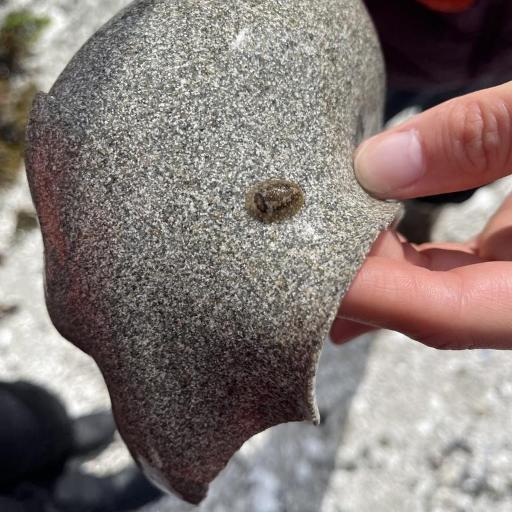
Often called the Barnacle-eating Nudibranch, this creature is actually a marine sea slug, not an insect! While its bumpy texture might remind you of a beetle or a larva, it is a master of disguise found in the cold, rocky waters of the North Atlantic and Pacific. They are famous among tide-poolers for their incredible "barnacle-mimic" camouflage and their highly specialized diet.
🔍 How to Identify
- 🐚 The Body: A flattened, oval shape covered in hundreds of small, rounded bumps known as tubercles, giving it a "crunchy" or textured appearance.
- 🎨 Coloration: A mottled palette of chocolate brown, rusty orange, and creamy white that perfectly blends with the mud and stones of the shoreline.
- 🪶 The Gill Frill: Look for a distinctive ring of feathery, plume-like gills on its lower back, usually arranged in a double semi-circle or "V" shape.
- 📡 Rhinophores: Two "horns" on the head that act as chemical sensors, helping the slug "smell" its prey in the water.
🌊 Habitat & Ecology
- 🏗️ The Barnacle Specialist: These slugs are dedicated predators of barnacles. They use a specialized tongue (radula) to rasp through the shells of their prey, effectively "cleaning" rocks of barnacle colonies.
- 🦀 Intertidal Zone: You are most likely to spot them during low tide, tucked away in moist crevices, under rocky ledges, or beneath seaweed where they hide from the drying sun.
- ❄️ Cold Water Lover: Unlike their tropical, neon-colored cousins, Onchidoris bilamellata prefers the chilly, temperate waters of the northern hemisphere.
⚠️ Safety & Toxicity
- ✅ Status: Completely harmless to humans.
- 🛡️ No Stings: Unlike some nudibranchs that store stinging cells from the jellyfish they eat, this species is non-toxic and does not sting. However, it’s best to observe them without touching to avoid damaging their delicate respiratory gills.
✨ Fun Fact
These sea slugs are known for their "mass migrations." During the winter and early spring, thousands of individuals will congregate in shallow water for a massive breeding event, leaving behind beautiful, coiled ribbons of white eggs that look like tiny lace trimmings on the rocks.
More Details








