Info
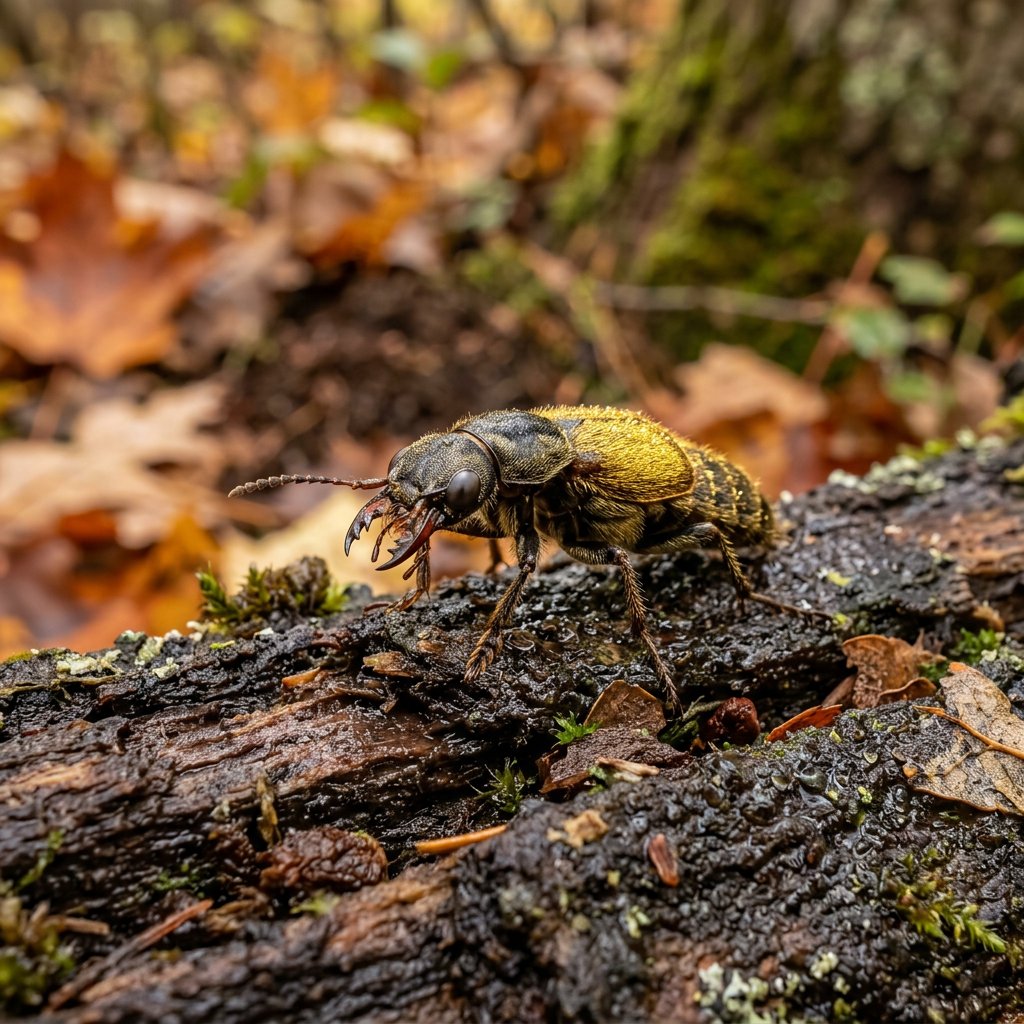
Often mistaken for a miniature, fuzzy scorpion due to its defensive posturing, the Golden-and-brown Rove Beetle is a fascinating member of nature’s "clean-up crew." Clad in a velvety coat of gold and chocolate-brown hairs, this beetle is a high-speed predator commonly found in forests and gardens. While its habit of hanging around decomposing matter might seem unappealing, it is actually a beneficial "friend" that helps control pest populations.
🔍 How to Identify
- 🧥 Velvety Pattern: It is covered in fine, shimmering hairs that create a mottled pattern of gold, grey, and brown, giving it a soft, "fuzzy" appearance compared to other shiny beetles.
- 🪲 Short Wing Covers: Like all rove beetles, its elytra (wing covers) are very short, leaving most of its segmented abdomen exposed and flexible.
- 👁️ Prominent Head: It has a wide head with large, bulging eyes and powerful, sickle-shaped mandibles used for grasping prey.
🌲 Habitat & Ecology
- 🥩 The Maggot Hunter: This beetle is a specialized predator. It frequents animal dung, compost, and carrion, not to eat the waste itself, but to hunt the fly larvae (maggots) that congregate there.
- 🍄 Fungal Forager: You will often spot them around rotting mushrooms or under damp leaf litter where they hide during the day, waiting for an opportunity to ambush smaller soft-bodied insects.
⚠️ Safety & Toxicity
- 🛡️ The Scorpion Bluff: When it feels threatened, it will arch its abdomen over its back and gape its jaws, mimicking a scorpion. This is a complete bluff—it has no stinger and no venom.
- 🚫 Handle with Care: While not dangerous, they are feisty. If you try to pick one up with your bare hands, it may deliver a small, pinch-like bite with its mandibles. It is best to observe their "scary" dance from a short distance.
✨ Fun Fact
Despite having very short wing covers, the Golden-and-brown Rove Beetle is an excellent flyer! It keeps its large, transparent wings intricately folded under those tiny covers and can deploy them in a split second to take flight.
More Details








