Info
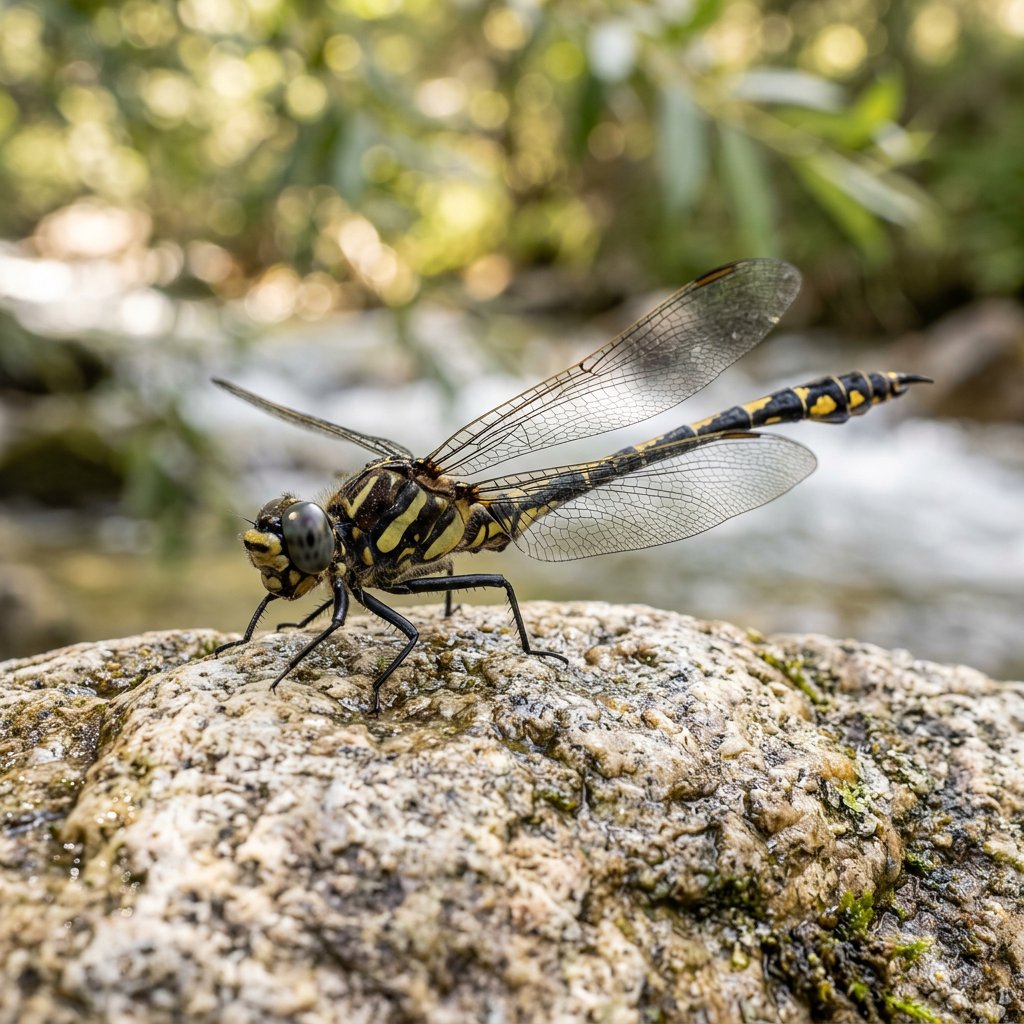
Known as the Large Pincertail, this striking dragonfly is a master of the riverbanks across Southwestern Europe. With its bold "warning" colors and formidable-looking tail, it often looks like a creature out of a prehistoric era. Despite its fierce appearance, it is a beneficial guardian of clean waterways, spending its days patrolling sun-drenched stones and clear streams.
🔍 How to Identify
- 🐲 The Pincers: Males possess dramatic, hook-shaped appendages at the end of their abdomen that resemble a pair of calipers or pincers.
- 👁️ Wide-Set Eyes: Unlike many other dragonflies, its large, blue-grey eyes are widely separated and do not touch at the top of the head.
- 🐝 Wasp Mimicry: The body is vibrantly patterned with black and yellow stripes, a natural "costume" used to trick birds into thinking it might be a stinging wasp.
- 💎 Thorax Markings: Look for two broad yellow stripes on the side of the thorax; the shape of these yellow bands is a key way to tell it apart from its close cousins.
🌲 Habitat & Ecology
- 💧 Clean Water Indicator: You will only find the Large Pincertail near high-quality, running water. They are very sensitive to pollution, making them excellent "bio-indicators" for the health of a river.
- 🪨 Sun Bather: It loves to "obelisk"—a behavior where it perches on sun-warmed rocks or sandy banks near the water’s edge, often pointing its abdomen toward the sun to regulate its body temperature.
- 🦟 Aerial Hunter: As a predator, it is a friend to hikers and gardeners alike, snagging mosquitoes, flies, and midges right out of the air with incredible precision.
⚠️ Safety & Toxicity
- 🛡️ Status: Completely harmless to humans and pets.
- 🚫 No Sting: While the "pincers" look intimidating, they are actually used by the male to hold the female during mating. They have no stinger and no venom.
- 🤏 Handle with Care: Like all dragonflies, they may attempt a tiny "pinch" with their mandibles if caught and held roughly, but they cannot break human skin and prefer to fly away.
✨ Fun Fact
The Large Pincertail is a true "water baby." Before it ever flies, it spends up to three or four years living underwater as a nymph, buried in the sand of riverbeds, waiting for the perfect summer morning to crawl out and transform!
More Details








