Info
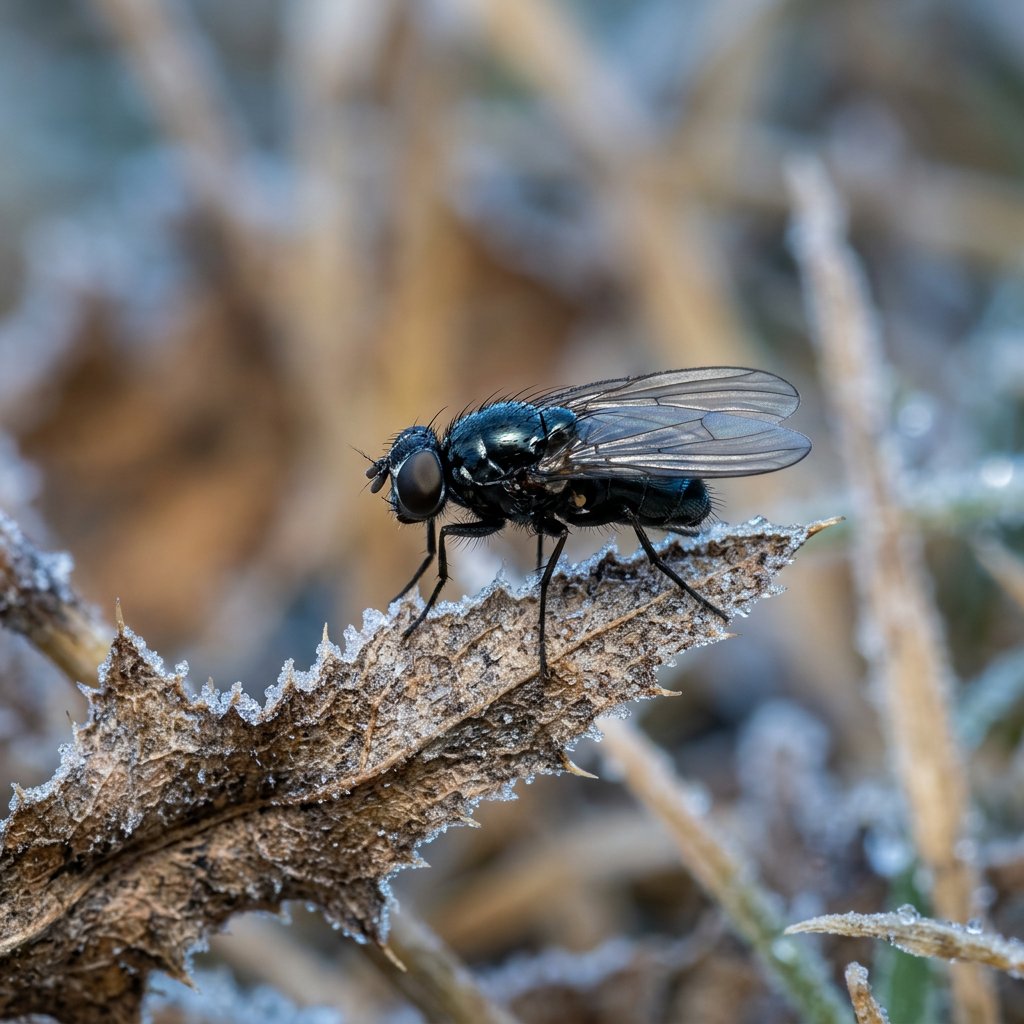
Known as the "Silent Scribbler" of the garden, Ophiomyia maura is a tiny fly that spends most of its life playing a high-stakes game of hide-and-seek inside leaf tissue. While the adult fly is a nondescript black speck, it is famous for the artistic, wandering silver trails it leaves behind on Goldenrods and Asters. Though these patterns might look like a disease, they are actually the "road maps" of a developing larva eating its way to maturity.
🔍 How to Identify
- 🪰 The Adult: A miniature, jet-black fly with a compact, shiny body. They are incredibly small (usually 2–3mm) and easily mistaken for common gnats.
- 🖋️ The "Mine": The most obvious sign is a narrow, winding white or silvery trail on the upper surface of a leaf. Unlike some miners that create blotches, Ophiomyia maura creates long, serpentine tunnels.
- 🧪 The Puparium: If you look closely at the end of a trail, you might find a small, dark, seed-like bump where the larva has settled down to transform into an adult.
🌲 Habitat & Ecology
- 🌼 The Goldenrod Specialist: This insect is a specialist, meaning it has a very specific "menu." You will almost exclusively find it on Goldenrods (Solidago) and occasionally certain species of Aster.
- 🍽️ Internal Diner: The larvae are "leaf miners." They live between the top and bottom layers of the leaf, protected from predators and the weather while they feast on the nutrient-rich interior cells.
- 🐝 Ecological Balance: While they do damage leaves, they rarely kill the plant. They serve as a vital food source for tiny parasitic wasps, which help keep the fly population in check naturally.
⚠️ Safety & Toxicity
- ✅ Harmless to Humans: This fly does not bite, sting, or carry diseases that affect humans. It is purely a garden inhabitant focused on its host plants.
- 🌿 Plant Health: In most cases, the damage is purely cosmetic. However, a very heavy infestation can reduce the plant's ability to photosynthesize, slightly weakening it.
- 🐾 Pet Friendly: There is no known toxicity to cats, dogs, or other backyard animals that might accidentally ingest a "mined" leaf.
✨ Fun Fact
The "scribbles" left by Ophiomyia maura are so distinctive that entomologists can often identify the specific species of fly just by looking at the shape and path of the tunnel, without ever seeing the insect itself!
More Details








