Info
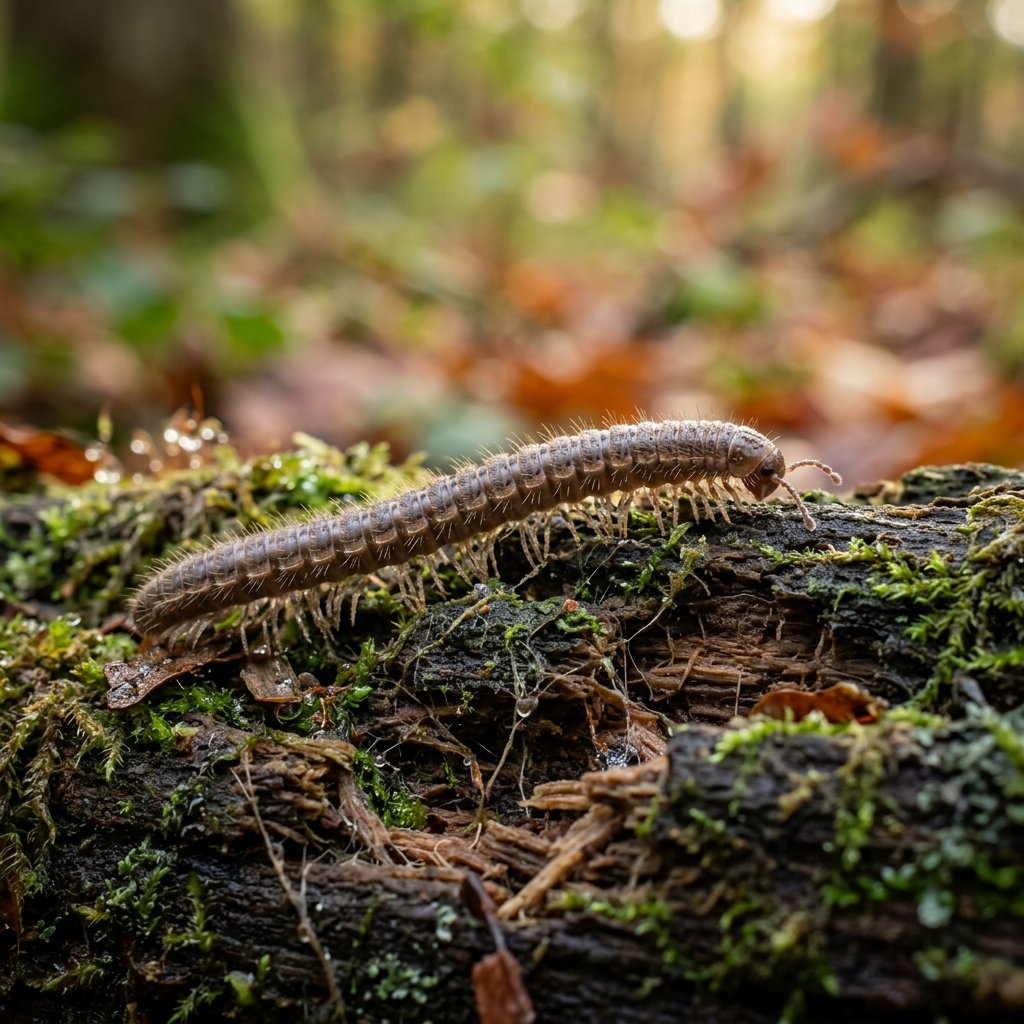
Often found hiding in the damp shadows of your garden, Ophyiulus pilosus—commonly known as the Common Snake Millipede—is frequently mistaken for a tiny twig or a worm. While you may find them tucked among the roots of your favorite greenery, they aren't actually plants! These leggy residents are nature’s tiny "janitors," working tirelessly beneath the surface to turn dead leaves into nutrient-rich soil.
🔍 How to Identify
- 🐛 The "Wire" Body: Unlike their flattened centipede cousins, these millipedes are perfectly cylindrical and smooth, looking almost like a piece of dark, polished wire.
- 🦵 Leg Waves: They feature two pairs of pale, cream-colored legs on almost every body segment. When they move, their legs create a mesmerizing, rhythmic wave-like motion.
- 🎨 Glossy Finish: Their bodies are typically a deep mahogany or midnight black with a distinct glossy sheen that helps them glide through tight soil crevices.
🌲 Habitat & Ecology
- 🍂 Nature's Recycler: These millipedes are detritivores. They spend their lives eating decaying wood, rotting leaves, and moss. They rarely ever touch healthy, living plants unless the soil is extremely dry and they are desperate for moisture.
- 🌀 The Watch-Spring Defense: Because they are slow-moving, they don't try to run from danger. Instead, they curl into a tight, flat spiral—much like a watch spring—to protect their soft underbelly with their hard outer shell.
- 💧 Moisture Seekers: They are most active at night or after a heavy rain. You’ll find them in the "Goldilocks zone" of your garden: under mulch, inside rotting logs, or beneath flower pots where it stays cool and damp.
⚠️ Safety & Toxicity
- 🛡️ Non-Aggressive: Snake Millipedes are completely harmless to humans. They do not bite, they do not sting, and they do not carry diseases.
- 🧴 Defensive Secretions: If they feel threatened (or are handled roughly), they may leak a pungent-smelling liquid from their sides. This fluid can cause mild skin irritation for some people and can leave a temporary yellowish-brown stain on your skin.
- 🐾 Pet Safety: They are non-toxic to pets, though a curious cat or dog might find the smell of their defensive "stink" quite unpleasant if they try to give the millipede a sniff!
✨ Fun Fact
Despite the name "millipede" translating to "a thousand feet," Ophyiulus pilosus usually only has between 80 and 200 legs. Interestingly, they are born with only three pairs of legs and add more segments and legs every time they molt as they grow older!
More Details








