Info
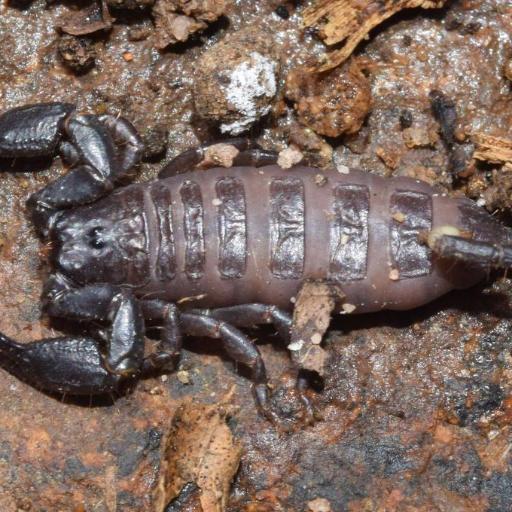
Often called the African Flat Scorpion or Crevice Scorpion, Opisthacanthus is a fascinating arachnid that looks like it has been flattened by a rolling pin. While often mistaken for a large insect, these are specialized hunters that have evolved to live in the tightest cracks of the natural world. In many cultures, their slow, deliberate movements and large claws give them a reputation for being more "patient" than their more aggressive, stinging cousins.
🔍 How to Identify
- 扁 Body Shape: Their most striking feature is an extremely flattened (pancake-like) body, which allows them to slide into rock fissures only a few millimeters wide.
- 🦀 The Claws: They possess disproportionately large, powerful-looking pedipalps (pincers) that are thick and rounded, used more for crushing prey than the tail is for stinging.
- 🦂 The Tail: Unlike many "scary" scorpions, their tail (metasoma) is relatively thin and short, often appearing weak compared to their bulky front half.
🌲 Habitat & Ecology
- 🌑 The Night Shift: These are strictly nocturnal creatures. They spend their days wedged deep inside rock crevices or under the bark of rotting logs in tropical and subtropical forests.
- 🍽️ Ambush Predators: Instead of roaming long distances, they wait at the edge of their crevice for a cockroach or beetle to wander by, then quickly snatch it with their powerful claws.
- 💧 Humidity Lovers: Unlike desert scorpions, Opisthacanthus species generally prefer humid environments and are often found near riverbeds or in lush woodlands.
⚠️ Safety & Toxicity
- 🐝 Status: Low medical significance. While all scorpions possess venom, the venom of Opisthacanthus is generally considered mild, often compared to a bee or wasp sting.
- 🤏 Pinch Over Sting: Because their pincers are so strong, they are much more likely to give you a painful "pinch" than to use their stinger.
- 🐾 Pet Safety: While not deadly to humans, their sting can be distressing for small pets like cats or dogs; it is best to observe them from a distance and not handle them.
✨ Fun Fact
- 🔦 Neon Glow: Like almost all scorpions, members of the Opisthacanthus genus will glow a brilliant, ghostly cyan-green if you shine a UV (blacklight) lamp on them in the dark!
More Details








