Info
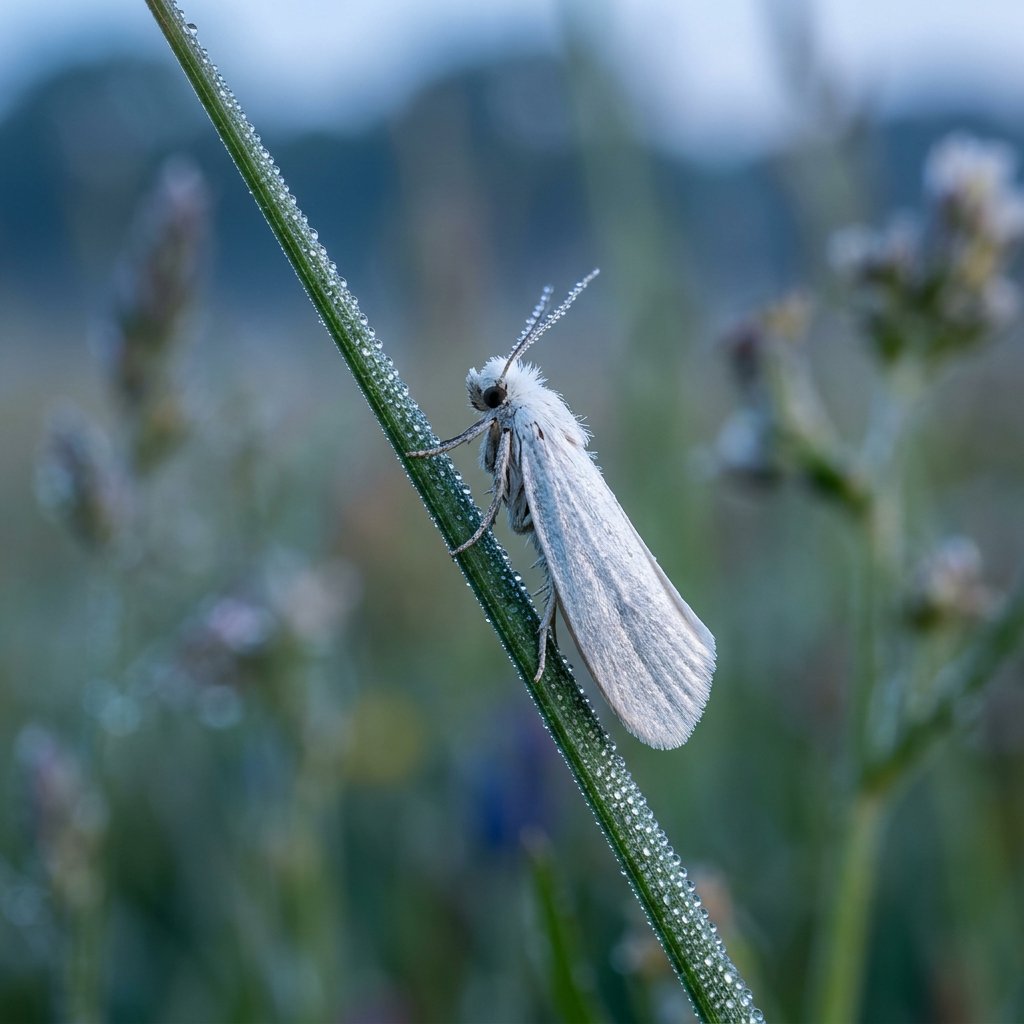
Known as one of the "Eyecap Moths," Opostega salaciella is a tiny, ethereal visitor that looks like a miniature scrap of white silk floating through the night. This primitive micromoth is often overlooked due to its size, but it is a fascinating example of specialized evolution. In the world of entomology, it is celebrated for its pristine, ghostly appearance and its unique "helmeted" face.
🔍 How to Identify
- 🕊️ Pristine Wings: The forewings are entirely snow-white with a silky, pearlescent sheen, completely lacking any spots or dark markings.
- 👁️ The Eyecap: Its most distinctive feature is a greatly enlarged basal segment of the antennae, which forms a concave "cap" that partially covers the eyes.
- 📐 Minute Stature: It is exceptionally small, with a wingspan of only 9 to 12 millimeters, making it a true "micro" insect.
🌲 Habitat & Ecology
- 🍃 Sorrel Specialist: The larvae are "stem-miners," meaning they live and feed inside the stems of Sheep's Sorrel (Rumex acetosella), carving out hidden tunnels as they grow.
- 🌙 Nocturnal Life: Adults are active during the mid-summer months (June and July). They are frequently attracted to artificial lights in gardens, heaths, and sandy grasslands.
- 🌬️ Low Flyer: Because of their delicate wings, they tend to stay low to the ground, fluttering through vegetation where their host plants are abundant.
⚠️ Safety & Toxicity
- ✅ Completely Harmless: This moth is a "friend" to the gardener. It does not bite, sting, or carry any known pathogens.
- 🐕 Pet Friendly: It is non-toxic to cats and dogs. Even if a curious pet managed to catch one, it poses no chemical or physical threat.
- 🌿 Non-Pest Status: Unlike the Clothes Moth or the Cabbage White, this species does not target household fabrics or vegetable crops.
✨ Fun Fact
The "eyecaps" that give this family its name aren't just for decoration—they act like tiny white helmets, protecting the moth's sensitive eyes and the base of its antennae from debris while it navigates through dense grass and soil.
More Details








